Tracking Weekly Consumption Patterns to Detect Early Signs of Illness in Cats
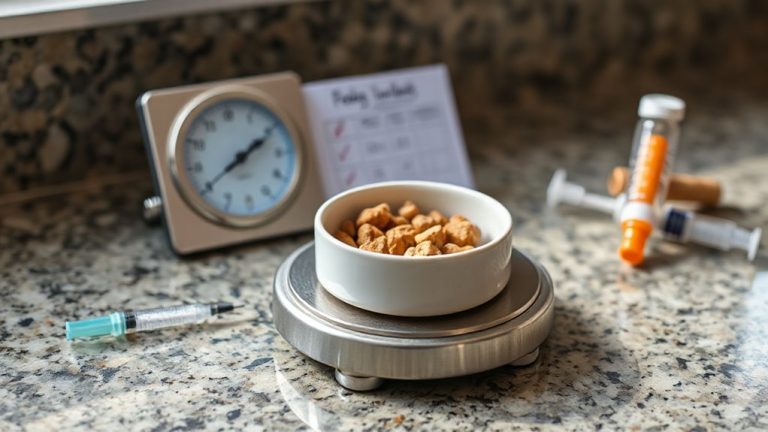
You can detect early illness by tracking your cat’s weekly food and water intake. Measure meals in grams using a digital scale accurate to ±1g; an abrupt 15–20% drop in daily calories-such as a 4-kg cat eating below 120 kcal/day-may signal disease. Monitor water intake with marked bowls; consumption over 45 ml/kg/day suggests polydipsia. Changes in urinary output, appetite, or eating preferences often precede diagnosis-understanding these patterns reveals hidden health shifts.
Notable Insights
- Monitor daily food intake for drops exceeding 15–20% over three days, as sudden appetite loss can signal underlying illness.
- Track water consumption to detect polydipsia, with intake above 45 ml/kg/day potentially indicating diabetes or kidney disease.
- Use a digital scale to measure food portions in grams for accurate caloric tracking based on kibble and wet food density.
- Record eating patterns and note changes like reduced kibble chewing, which may indicate dental pain or oral discomfort.
- Combine food and water logs with weight checks; unexplained weight loss of 5–10% warrants prompt veterinary evaluation.
Why Cats Hide Illness (And What Eating Habits Reveal)
While cats may not show obvious signs of illness, changes in their eating habits often serve as the earliest warning. This reluctance to display weakness stems from an instinctual behavior rooted in survival. In the wild, sick or injured animals become targets, so concealing illness is an evolutionary adaptation passed down through generations. Your cat’s ancestors depended on this trait to avoid predators and maintain status within social hierarchies. Today, even domesticated cats retain this masking mechanism. A measurable drop in daily food intake-just 15–20% over three days-can signal underlying issues like dental pain, gastrointestinal distress, or early renal dysfunction. Monitoring weekly consumption patterns allows detection before clinical symptoms appear. Smart feeders with usage tracking, accurate to ±2 grams per serving, provide precise data. These tools capture subtle deviations invisible to casual observation, enabling timely intervention. For accurate tracking, consider using a smart feeder with portion control auto feeders for cats.
What Normal Eating and Drinking Looks Like for Cats
You can spot early health issues in your cat by knowing what normal eating and drinking behaviors look like. Most healthy adult cats consume food in consistent portions across regular feeding schedules. Daily intake averages 240–300 kcal per 4.5 kg of body weight, split into 2–3 meals. Portion consistency prevents metabolic stress and supports digestive regulation. Water intake typically ranges from 30–50 ml per kg of body weight daily, influenced by diet type-wet food contributes substantially to hydration.
| Behavior | Normal Range |
|---|---|
| Meals per day | 2–3 |
| Daily calories | 240–300 kcal / 4.5 kg |
| Water intake | 30–50 ml / kg body weight |
| Feeding times | Consistent daily |
| Portion size | Minimal daily variation |
Sticking to feeding schedules and portion consistency improves metabolic predictability and long-term health monitoring.
How to Track Your Cat’s Weekly Food and Water Intake
A reliable method for monitoring your cat’s health starts with consistent tracking of weekly food and water intake. Use a dedicated log or app to record daily amounts consumed. Measure food in grams for precision; dry kibble averages 30–50 kcal per 10g, while wet food provides 25–35 kcal per 10g. Track your cat’s feeding schedule precisely-note time, portion size, and food variety, including any rotational diets. For water, measure intake using a marked bowl or smart dispenser; normal consumption is 30–50 mL per kg of body weight daily. Maintain consistency in feeding times and food types to reduce variables. Document changes in brand, flavor, or texture under food variety. Weigh portions daily using a digital scale accurate to ±1g. Record data every 7 days to identify trends. This structured approach guarantees early detection capabilities without diagnostic overreach.
Red Flags: Appetite or Thirst Changes That Signal Disease
What if a sudden shift in your cat’s eating or drinking habits signaled something more than just pickiness? Sudden weight loss, even 5–10% of body mass over weeks, demands immediate attention. It often accompanies hyperthyroidism or gastrointestinal disease. Increased water intake-over 45 ml per kg daily-may indicate systemic illness. Polydipsia frequently pairs with increased urination, exceeding 40 ml/kg/24 hours. Monitor consumption using calibrated pet bowls or smart feeders with measurement guides. A cat drinking 300 ml daily when previously consuming 150 ml has doubled input-a critical threshold. Appetite changes, especially anorexia lasting beyond 48 hours, risk hepatic lipidosis. Track food volume precisely: a 4-kg cat eating less than 120 kcal/day is under-consuming. These red flags aren’t behavioral-they’re physiological alarms. Document patterns weekly. Stable intake should vary less than 10%. Consistency matters. Deviations warrant vet evaluation before secondary symptoms emerge. Using a timed cat feeder can help maintain regular meal schedules and provide accurate portion control for reliable tracking.
Kidney Disease, Diabetes, and Dental Pain: What Shifts to Watch
Often, subtle shifts in consumption habits reveal early signs of serious conditions like kidney disease, diabetes, or dental pain. You may notice your cat drinking more water-polydipsia exceeding 100 ml/kg/day-which can signal diabetes or kidney dysfunction. Increased urination often follows, and you should monitor urine color; pale or clear urine in large volumes suggests impaired concentration ability, common in renal disease. Dental pain might reduce food intake, especially dry kibble, due to chewing discomfort. Watch for changes in breath odor: a uremic smell (ammonia-like) points to kidney failure, while a sweet or fruity odor may indicate diabetic ketoacidosis. Weight loss alongside increased appetite can reflect metabolic imbalance. These signs, when tracked weekly, provide objective data. Early detection through consistent monitoring improves prognosis markedly. You don’t need lab tests initially-behavioral and consumption trends offer critical clues. Supporting your cat’s kidney health with a proper diet, such as kidney care cat food, can slow disease progression and improve quality of life.
When to Call the Vet Based on Consumption Changes
How quickly should you act when your cat’s drinking or eating habits change? Immediate assessment is critical. Sudden shifts may signal underlying illness or environmental triggers like stress or diet changes. Monitor behavioral cues-lethargy, hiding, or aggression-alongside consumption patterns. Use this table to evaluate urgency:
| Change Duration | Food Change | Water Change | Action |
|---|---|---|---|
| <24 hours | None | Slight | Monitor |
| 24–48 hours | Decreased | Increased | Assess environment |
| 48–72 hours | Absent | Marked increase | Vet consult |
| >72 hours | Absent | Decreased | Emergency |
| Any duration | Vomiting after eating | Excessive urination | Call vet immediately |
Persistent changes beyond 48 hours require veterinary evaluation. Increased water intake-polydipsia-above 45 ml/kg/day or refusal to eat for over 72 hours risks hepatic lipidosis. Environmental triggers should be ruled out first. Behavioral cues support clinical diagnosis. Don’t delay.
On a final note
You can detect early illness by monitoring your cat’s weekly intake. Sudden drops in food consumption-or increases in water intake-may signal disease. Normal adult cats eat 200–300 kcal/day; deviations beyond 10% for two consecutive days warrant attention. Chronic kidney disease often shows as 20% increased water intake (polydipsia). Persistent changes require veterinary diagnostics, including blood chemistry and urinalysis, to confirm underlying conditions.