Care Coordination Among Veterinarians Prior to Deep Cleaning Sedated Geriatrics
You coordinate with your veterinary team to guarantee geriatric patients receive safe, individualized sedation for dental cleanings. Pre-anesthetic blood work, including CBC, chemistry panel, and urinalysis, identifies underlying organ dysfunction. You assess cognitive status, cardiac health, and medication interactions. Low-dose opioid-based protocols reduce cardiovascular stress, while reversible agents allow safer modulation. Intraoperative monitoring includes ECG, pulse oximetry, and capnography every 5 minutes. Team huddles align roles and emergency preparedness. Heated IV fluids maintain perfusion, and intubation secures the airway. Real-time dental charting with 1mm precision guides treatment. Post-procedure, you monitor recovery milestones and cognitive return. Clear discharge planning guarantees caregivers understand home care-your next steps keep risk even lower.
Notable Insights
- Review geriatric patient’s medical history and organ function to tailor sedation and cleaning protocols.
- Perform pre-anesthetic blood work and urinalysis to assess systemic stability and detect underlying conditions.
- Share recent dental radiographs and oral assessments among the veterinary team to guide treatment planning.
- Standardize intra-procedural roles and monitoring practices to ensure patient safety during deep cleaning.
- Confirm post-procedure recovery and discharge responsibilities to support a coordinated care transition.
How Vet Teams Prevent Risks in Senior Pet Sedation
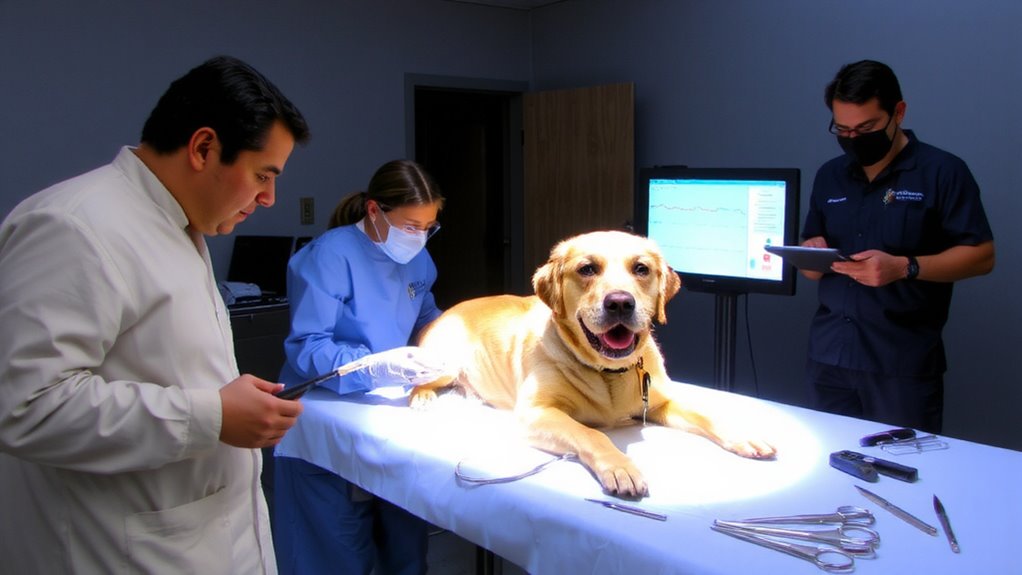
While age itself isn’t a disease, it often comes with changes that make sedation riskier for senior pets, so veterinary teams take extra precautions. You’ll monitor essential signs continuously using digital ECG, pulse oximetry, and capnography. Pre-anesthetic blood work checks organ function. Pain assessment begins preoperatively, using validated scales like the Glasgow Composite Measure Pain Scale to detect subtle discomfort. Dental imaging, including intraoral radiographs, reveals abscesses, tooth resorption, or bone loss-34% of pathology is subgingival and invisible without imaging. You’ll use low-dose opioid-based protocols to minimize cardiovascular depression. Intubation guarantees airway protection, and heated IV fluids maintain perfusion. Monitoring includes blood pressure every five minutes, with immediate intervention if systolic dips below 90 mmHg. Anesthesia recovery occurs in a quiet, padded area with supplemental oxygen. These coordinated steps reduce complications, guaranteeing safer procedures even in high-risk geriatric patients.
Reviewing Medical Histories for Geriatric Dental Care
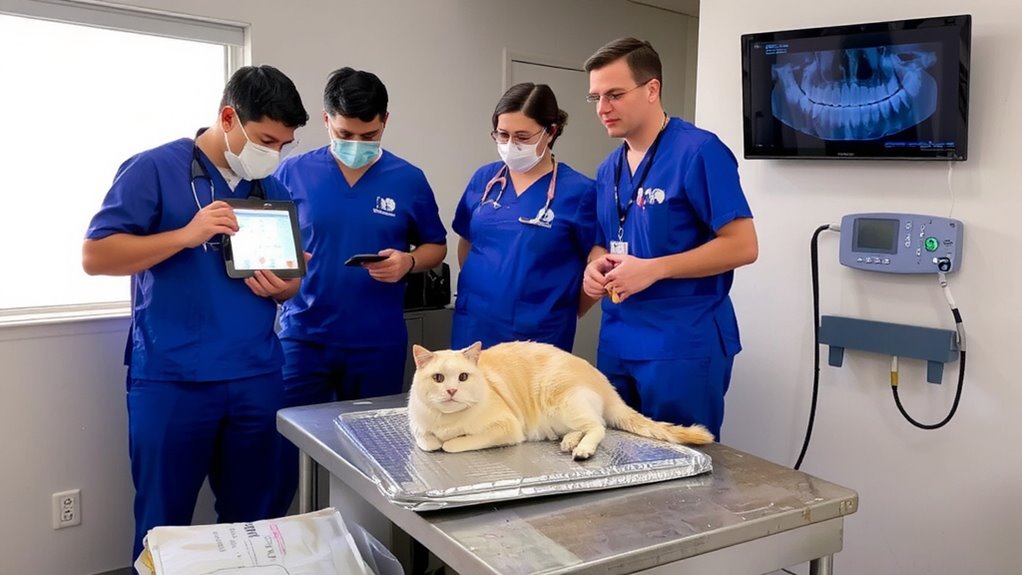
A thorough review of the patient’s medical history is your first line of defense in guaranteeing safe geriatric dental care. You must identify pre-existing conditions that could complicate oral procedures. Chronic kidney disease, diabetes, and cardiac issues are common and influence treatment planning. Note any prior dental surgeries or diagnoses such as tooth resorption, a painful condition where the tooth structure erodes, often requiring extraction. Gum recession, another frequent finding, exposes sensitive root surfaces and increases infection risk. These conditions demand modified approaches. You should assess past responses to sedation and current medication use, including NSAIDs or antibiotics. Lab results-like CBC, chemistry panels, and urinalysis-must be reviewed to confirm systemic stability. Dental radiographs from previous visits help track progression. Accurate documentation ensures all team members share critical insights. Your diligence minimizes complications during deep cleaning. Selecting appropriate hydration solutions, such as a properly installed water bottle for rabbits, supports overall wellness during recovery.
Spotting Anesthesia Risks in Older Pets
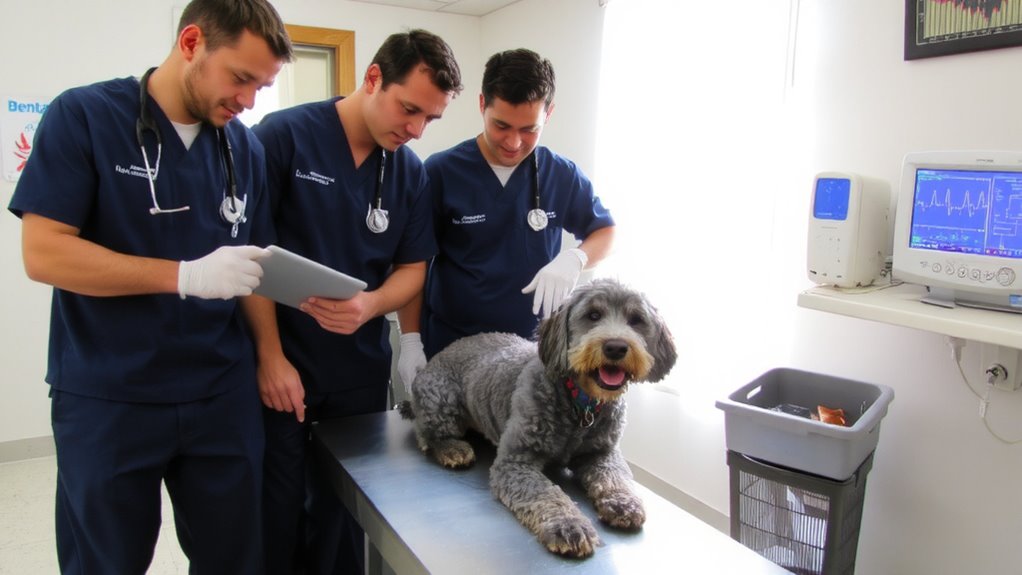
You’ve reviewed the medical history, and now it’s time to assess anesthesia risks specific to older pets. Cognitive decline can impair an older animal’s response to stimuli, increasing disorientation during recovery. This demands careful neurologic evaluation before proceeding. Organ degeneration, especially in the liver and kidneys, reduces metabolic clearance of anesthetic agents, raising overdose potential. Blood urea nitrogen and creatinine levels should be evaluated; elevations suggest renal compromise. Liver function tests, including ALT and ALP, indicate hepatic health-critical for drug metabolism. Echocardiograms or at least auscultation with blood pressure monitoring help detect occult cardiac disease. Reduced pulmonary elasticity in aged pets lowers oxygen exchange efficiency. Pre-anesthetic pulse oximetry and arterial blood gas analysis provide essential baselines. Identifying these risks early improves safety. Each physiological change narrows the margin of error.
Choosing Safe Sedation for Aging Animals
Because older animals have diminished physiological reserves, selecting the right sedative regimen requires careful consideration of pharmacokinetics and organ function. You must tailor sedation protocols to reduce cardiovascular and respiratory depression. Always review concurrent medications to avoid dangerous drug interactions. Pre-anesthetic bloodwork helps identify hepatic or renal impairments that alter drug metabolism.
| Drug Class | Onset Time | Considerations for Seniors |
|---|---|---|
| Benzodiazepines | 2–5 min | Minimal respiratory depression |
| Alpha-2 agonists | 5–10 min | Causes bradycardia; use reduced doses |
| Opioids | 5–15 min | Slowed clearance in renal disease |
| Ketamine | 1–2 min | Avoid in uncontrolled hypertension |
| Propofol | <1 min | Rapid clearance; ideal for short sedation |
Adjust dosages cautiously and monitor continuously.
Coordinating Vet Teams for Senior Pet Dental Work
When managing geriatric dental procedures, effective coordination among veterinary team members is essential to guarantee patient safety and procedural efficiency. You conduct team huddles before each case to assign roles, review patient history, and confirm equipment readiness. These briefings reduce procedural delays by up to 30% and improve communication clarity. You perform dental charting in real time, using a standardized 42-point oral scoring system to document periodontal pocket depths, tooth mobility, and lesions. Accurate charting assures treatment consistency and supports long-term monitoring. Each team member uses sterile, calibrated periodontal probes with 1mm increments for precision. You maintain a structured workflow: one technician monitors anesthesia, while another assists the veterinarian with instrumentation. Clear role delineation during the procedure enhances safety and reduces cognitive load. You update medical records immediately post-procedure, assuring continuity of care.
Pre-Op Checklists for Geriatric Pet Anesthesia
A pre-op checklist is the cornerstone of safe geriatric pet anesthesia, ensuring no critical step is overlooked. You must verify the patient’s CBC, serum chemistries, and cardiac evaluation within 72 hours of the procedure. Confirm existing anesthesia protocols are adjusted for age-related declines in hepatic and renal function. Pre-anesthetic fasting is required-6 hours for food, 2 for water-to reduce aspiration risk. Assess hydration status and correct electrolyte imbalances before proceeding. You’ll determine sedation timing based on comorbidities; for instance, animals with compromised airways receive preemptive oxygen support 15 minutes pre-induction. Use alpha-2 agonists cautiously in geriatric patients due to heightened cardiovascular sensitivity. Include IV catheter placement and intraoperative fluid therapy rates-typically 5–10 mL/kg/hr-in your plan. Double-check emergency drug dosages and availability. Every team member must review the checklist, confirming anesthesia protocols and sedation timing align with individual patient needs. This systematic approach minimizes perioperative risks.
Safer Recovery: Monitoring & Handoffs
You’ve made certain the pre-op steps are complete, but the patient’s stability isn’t guaranteed until recovery is managed with equal rigor. Continuous post-anesthetic monitoring guarantees early detection of complications in geriatric patients. Pain management begins during recovery, using multimodal protocols tailored to species, weight, and comorbidities. Effective handoffs between veterinary team members reduce errors and maintain care continuity. Integrating pet health trackers can enhance post-anesthetic monitoring by providing real-time physiological data. Discharge planning starts at recovery onset, evaluating mobility, mentation, and essential stability.
| Parameter | Monitoring Frequency |
|---|---|
| Heart rate | Every 5 minutes |
| Respiratory rate | Every 5 minutes |
| Body temperature | Every 15 minutes |
| Pain score | Every 10 minutes |
Document all observations, adjust analgesia as needed, and confirm caregiver understanding before release. Recovery isn’t complete until safe parameters are sustained and discharge planning is finalized.
On a final note
You minimize risks in geriatric dental sedation through coordinated care. Pre-anesthetic bloodwork-including CBC, ALT, creatinine, and glucose-guides protocol decisions. You use multimodal analgesia with drugs like buprenorphine and local blocks to reduce sedative load. Drugs such as dexmedetomidine or low-dose ketamine maintain hemodynamic stability. Capnography and continuous ECG monitoring detect arrhythmias or hypoventilation early. Post-procedure, you maintain thermal support and monitor pain scores every 15 minutes during recovery.