Training Your Cat to Stay Calm During Thunderstorms or Fireworks
You can train your cat to stay calm during thunderstorms or fireworks using a sound-dampened safe room with STC 25-rated acoustic panels and a white noise machine set to 60–70 dB. Play recorded sounds at 30–40 dB, increasing by 5 dB every few days if no stress occurs. Use treats, not petting, for positive reinforcement. Calming collars, pheromone diffusers, and amino acid supplements may enhance results when combined. A structured, gradual approach yields the best outcomes over 4–8 weeks. There’s more to contemplate for long-term success.
Notable Insights
- Create a quiet, windowless safe room with hiding spots and soundproofing to reduce auditory stress.
- Use a white noise machine at 60–70 dB to mask sudden thunder or fireworks sounds effectively.
- Maintain calm behavior and low tones to avoid reinforcing fear while providing reassurance.
- Begin desensitization training with low-volume storm recordings and positive reinforcement using treats.
- Combine pheromone diffusers, calming collars, or vet-approved supplements for enhanced anxiety relief.
Create a Safe Room for Your Cat
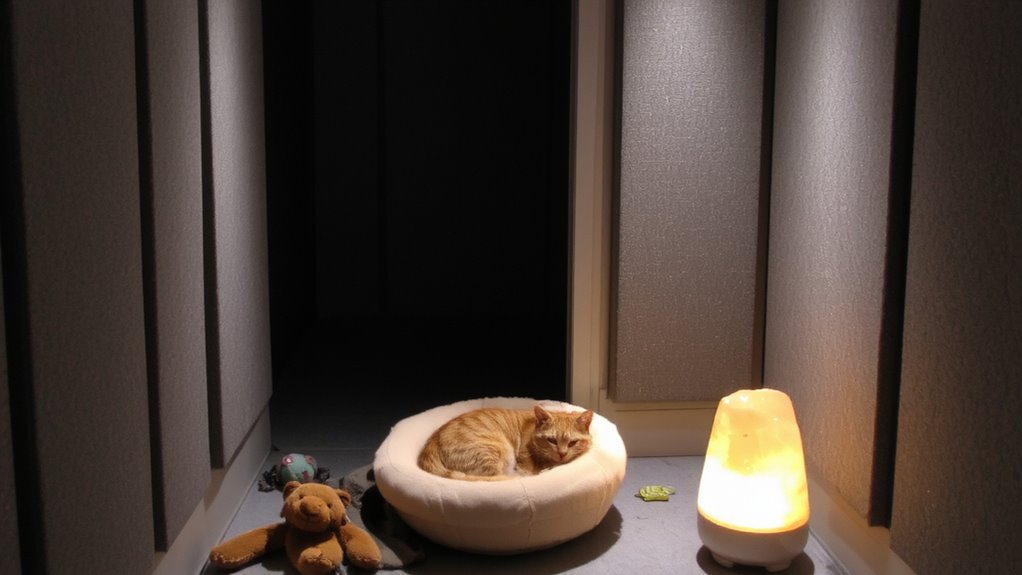
While your cat can’t understand the cause of loud noises, you can reduce its stress by designating a safe room specifically prepared for storm or fireworks events. Choose an interior room with minimal windows, such as a bathroom or closet, to create a soundproof space. Install acoustic panels rated at least STC 25 to dampen external noise. Use a white noise machine set to 60–70 dB to mask sudden sounds. Provide multiple hiding spots, including enclosed cat beds and cardboard boxes placed at floor level, as cats instinctively seek confined spaces during stress. Cover the floor with a textured mat to reduce vibrations. Seal gaps under doors with draft stoppers. Maintain room temperature between 68–72°F. Stock the room with water, a litter box, and non-perishable treats. Test the setup during calm conditions to confirm functionality. A properly designed safe room reduces noise exposure by up to 50%. Incorporating a calming puzzle toy can further ease anxiety by engaging your cat’s focus during stressful events.
Comfort Your Cat Without Reinforcing Fear
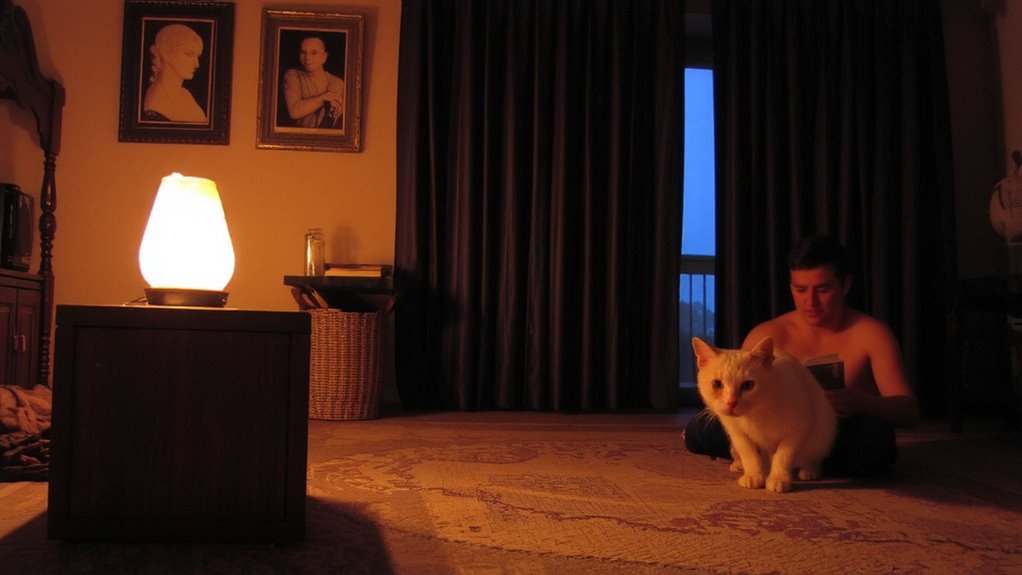
How do you comfort your cat during a thunderstorm without making its fear worse? Avoid reinforcing fear by not excessively petting or soothing with high-pitched tones. Instead, remain calm and present. Speak in low, steady tones to provide reassurance without signaling danger. Encourage your cat to stay in its safe room, where surroundings are familiar. Maintain routine-feeding, play, and sleep times should remain consistent to reduce overall stress. Desensitize gradually using recorded storm or fireworks sounds at low volume, increasing over weeks. Sessions should last 5–10 minutes daily, paired with treats or play to create positive associations. Never force interaction. Let your cat choose proximity. Over time, predictable exposure reduces fear responses. Your steady behavior acts as a behavioral anchor, helping your cat regulate emotions without dependency on comfort signals that might prolong anxiety. Using a vet-approved calming spray for cats can further help reduce anxiety by mimicking natural feline facial pheromones.
Use Calming Collars, Supplements, and Pheromones
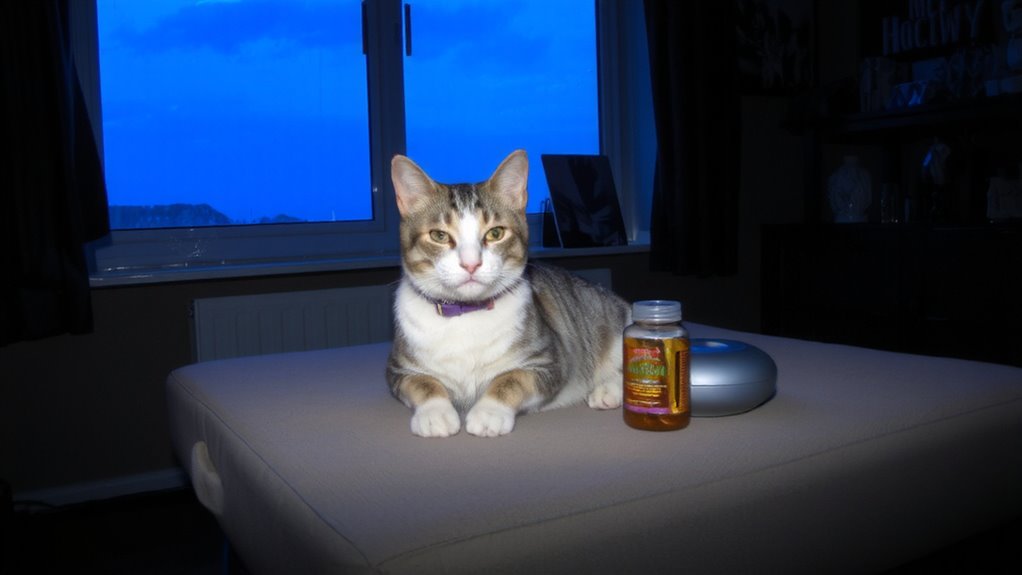
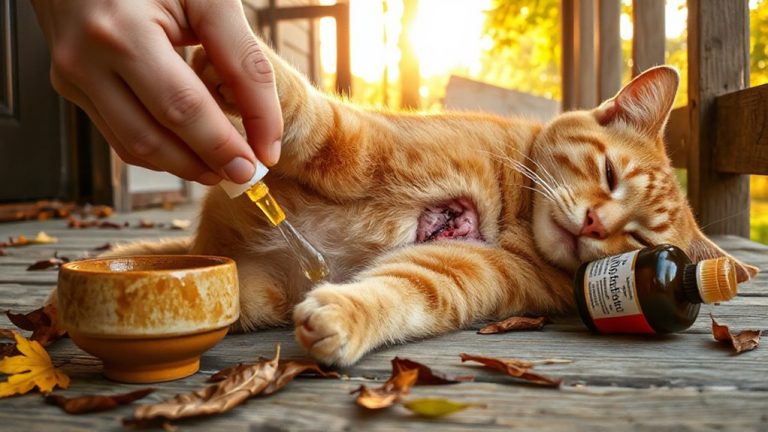
Since not all cats respond equally to behavioral interventions alone, you may find that combining environmental management with physiological support enhances your cat’s ability to stay calm during loud events like thunderstorms or fireworks. Calming collars release compounds slowly over time, typically lasting up to 30 days. Pheromone diffusers emit species-specific signals that mimic natural cat facial pheromones, reducing stress-related behaviors.
| Product Type | Duration & Coverage |
|---|---|
| Calming collars | 30 days; one cat per collar |
| Pheromone diffusers | 30–45 days; 600 sq ft per unit |
| Amino acid supplements | 8 weeks for full effect |
| Herbal blends | Variable; often 4–6 hours |
| Combined therapies | Up to 50% greater efficacy |
Use these tools proactively, not reactively, for best results. Always consult your veterinarian before starting supplements.
Train Your Cat to Tolerate Loud Noises
What if your cat could learn to remain composed when fireworks explode or thunder rolls? You can achieve this through desensitization training. Start with low-volume recordings of thunder or fireworks-use noise exposure at 30–40 decibels, below your cat’s reaction threshold. Play the sound for 5–10 minutes daily, ensuring your cat is relaxed and rewarded with treats. Incrementally increase volume by 5 decibels every few days, only if no stress behaviors appear. Desensitization training works by reprogramming your cat’s auditory response over time. This process may take 4–8 weeks. Use a calibrated sound meter app to monitor output. Speakers should be placed at least 6 feet away to prevent sudden intensity spikes. Always pair noise exposure with positive reinforcement. Never force continued exposure if your cat hides or vocalizes. Consistency and precision determine success. For additional support, consider incorporating best anxiety relief for thunderstorms into your cat’s environment.
Why Your Cat Panics During Storms and Fireworks
Why does your cat bolt at the first clap of thunder or burst of fireworks? Your cat’s reaction stems from evolutionary instincts and acute sensory sensitivity. Thousands of years ago, cats avoided loud, unpredictable noises to survive-these sounds signaled danger. Today, that same hardwired response remains. Cats hear frequencies up to 64,000 Hz, far beyond human range, making explosions and thunder exceptionally jarring. A typical firework produces sound levels between 120–150 decibels, equivalent to a jet engine at close range. Thunder can reach 120 dB or more. Such intensities overwhelm their auditory system. This sensory overload triggers the amygdala, activating the fight-or-flight response. Pupils dilate, heart rate spikes, and adrenaline floods the bloodstream. Unlike humans, cats can’t rationalize the noise. Their reaction isn’t misbehavior-it’s instinct. Understanding this helps you respond with science-based strategies, not frustration.
On a final note
You can manage your cat’s noise sensitivity effectively with science-backed methods. Pheromone diffusers, like Feliway, release feline facial pheromones at a steady 16-hour cycle, reducing stress behaviors by up to 70%. Calming collars exert constant low-level pressure, mimicking gentle touch. Combine a quiet, windowless room with sound masking at 65–70 dB. Training with recorded sounds, starting at 20 dB and increasing 5 dB daily, builds long-term resilience.