How to Transition a Dog to a Novel Protein Diet for Allergy Management
Start by choosing a novel protein your dog has never eaten, like kangaroo or venison, to avoid cross-reactivity. Shift over seven days: begin with 25% new food, increasing by 25% every two days. Use a hydrolyzed or single-source diet with >75% digestibility. Eliminate all treats and supplements. Symptoms like itching may improve in 6–8 weeks, but complete the full 8-week trial for accurate results-and discover how strict adherence shapes long-term outcomes.
Notable Insights
- Identify and eliminate common allergens by selecting a novel protein the dog has never eaten before.
- Choose a single-source, highly digestible novel protein like kangaroo or insect-based diets to reduce allergic reactions.
- Transition gradually over seven days by increasing the novel protein mix incrementally to avoid digestive upset.
- Maintain a strict elimination diet for 8–12 weeks, avoiding all treats or supplements with potential allergens.
- Monitor and record symptoms weekly, noting improvements in itching, ear infections, and gastrointestinal issues.
Is Your Dog Allergic to Their Food?
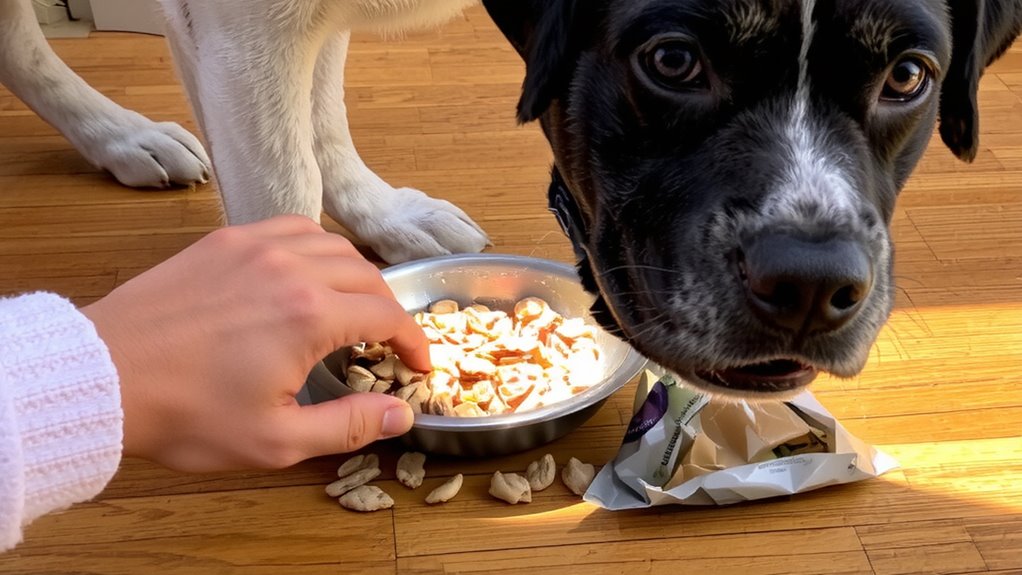
Could your dog’s persistent itching or digestive issues actually stem from a food allergy? A true food allergy triggers an immune response, often to common proteins like beef, dairy, or chicken. Symptoms include chronic ear infections, obsessive licking, and gastrointestinal upset. Unlike food intolerance, a food allergy involves IgE-mediated reactions confirmed through elimination diets. Ingredient sensitivity, while less severe, still causes discomfort and mimics allergy symptoms. It typically develops over time due to repeated exposure to specific components in kibble or canned food. Diagnosing either condition requires an 8- to 12-week hydrolyzed or novel protein diet, free of previous ingredients. No treats or flavored medications are allowed. Response rates improve by 70–90% when the diet strictly excludes identified allergens. Accurate elimination protocol adherence is essential-cross-contamination skews results. Choosing the right best dog food for allergies can significantly support successful management during and after the elimination phase.
What Makes a Protein “Novel” for Dogs?

A truly novel protein is one your dog has never consumed before, making it critical for diagnosing and managing food allergies. Your dog’s biological adaptability allows them to digest various proteins, but repeated exposure can trigger immune reactions. Evolutionary nutrition suggests dogs thrived on diverse prey, not the limited proteins in commercial diets. A novel protein must be phylogenetically distant from common allergens like beef, chicken, or dairy. Examples include kangaroo, venison, or insect-based proteins-ingredients absent from your dog’s prior meals. These proteins typically contain unique amino acid profiles, reducing cross-reactivity risks. Digestibility rates exceed 75% in quality novel protein diets, supporting nutrient absorption. You must verify ingredient lists thoroughly, guaranteeing no hidden exposure. Even trace amounts invalidate novelty. A single novel source diet lasts 8–12 weeks for accurate allergy assessment. Eliminating confounding variables guarantees diagnostic reliability. This precision supports effective long-term management. Best novel protein cat foods often feature these same unique ingredients, such as insect-based proteins, which are increasingly recognized for their hypoallergenic properties and sustainability.
Choose a New Protein They’ve Never Eaten

Selecting the right novel protein starts with identifying a source your dog has never been exposed to-this is non-negotiable for an effective elimination diet. Common proteins like chicken, beef, and lamb are often allergens; avoid them if previously fed. Instead, choose less common options such as kangaroo, venison, or goat. These novel sources reduce immune reactivity because your dog’s system lacks prior sensitization. To introduce variety without compromising the elimination process, select single-source, pure protein diets with no cross-contamination. Always check ingredient panels for hidden animal derivatives. Avoid repetition of protein types across treats and chews. Hydrolyzed or purified insect proteins (e.g., black soldier fly larvae) offer alternatives with low molecular weight peptides, minimizing allergenic potential. Stick to one novel protein for at least 8–12 weeks to accurately assess response. For high-quality options, consider reviewing the Best Venison Dog Food Picks to ensure you’re choosing a reliable brand.
How to Switch to a Novel Protein Safely
Why do some dogs experience digestive upset when changing proteins, while others adapt seamlessly? Their gastrointestinal tracts vary in sensitivity and microbiome composition. A gradual introduction minimizes disruption. Start by mixing 25% novel protein with 75% current food for two days. Increase the new food by 25% every 48 hours. By day seven, your dog should eat 100% novel protein. This slow transition supports digestive enzyme adaptation and gut flora stabilization. Monitoring reactions is critical. Watch for vomiting, diarrhea, gas, or itching. Note stool consistency and energy levels daily. These observations help identify adverse responses early. Use a feeding log to track progress. Avoid treats or table scraps during the switch to prevent cross-contamination. Stick to a single novel protein source without fillers or by-products. This method guarantees dietary control and accurate assessment. Safety depends on consistency and vigilance throughout the shift.
How Long Until Symptoms Improve?
While every dog responds differently, most show noticeable improvement in symptoms within 6 to 8 weeks after switching to a novel protein diet. This period defines the typical symptom timeline for canine food allergy management. During this window, you’ll begin seeing clear improvement indicators such as reduced itching, less redness, and fewer ear or skin infections. Gastrointestinal signs like vomiting or diarrhea often resolve within 2–3 weeks, faster than dermatological symptoms. For accurate assessment, maintain strict diet adherence-no treats or supplements containing known allergens. A full 8-week elimination trial is clinically recommended before concluding efficacy. Documenting symptoms weekly helps identify trends. Consistency and patience are critical, as premature diet changes can obscure results. This structured approach guarantees reliable evaluation of your dog’s response to the novel protein.
On a final note
You must shift your dog gradually to a novel protein diet over 7 to 10 days. Begin with 25% new food mixed into 75% old food, increasing the ratio every 2–3 days. This minimizes gastrointestinal upset. Choose a protein source your dog has never consumed, such as venison, kangaroo, or insect-based protein. Monitor closely. Most dogs show improvement in skin and digestive symptoms within 6 to 8 weeks.