How to Transition a Cat From Dry to Wet Food to Support Weight Loss
Switch your cat from dry to wet food gradually to support weight loss. Start with 25% wet and 75% dry for days 1–3, then increase the wet ratio every 3–4 days. Choose low-calorie wet foods under 100 kcal per 5.5 oz can, with ≥10g protein and ≤5g carbs per 100 kcal. Feed 2–3 measured meals daily using a digital scale, aiming for 20–30 kcal per pound of ideal body weight. Monitor weekly weight changes and adjust portions by 5–10% as needed. Replace free-feeding with scheduled meals to control intake. Expect softer stools initially; hydration improvements may increase urine clump volume. Track food volume and appetite closely. Further details on managing digestive responses and ensuring nutritional balance follow.
Notable Insights
- Replace high-calorie dry food with low-calorie wet food to reduce daily kilocalorie intake by up to 30%.
- Choose wet foods with high protein (≥10g per 100 kcal) and low carbohydrates (≤5g per 100 kcal).
- Transition gradually over 7–10 days, starting with 25% wet food and increasing the ratio every 3–4 days.
- Feed 2–3 measured meals daily using a digital scale, targeting 20–30 kcal per pound of ideal body weight.
- Monitor weekly weight changes and stool quality, adjusting portions by 5–10% if needed.
Why Wet Food Helps Cats Lose Weight
Most cats consume too many dry calories without realizing it. Dry kibble typically contains 300–40 delegates per cup, making overconsumption easy. Wet food offers higher moisture-typically 70–80% water content-helping your cat feel full with lower calories. A 3-ounce can of wet food averages 70–100 kcal, markedly reducing caloric density per gram. This shift supports satiety while decreasing overall energy intake. Higher moisture content also promotes urinary health and mimics the natural prey diet. Cats eating wet food drink less from bowls because hydration comes directly from meals. Replacing dry with wet food lowers total daily kilocalorie intake by up to 30%. You can maintain portion control more effectively. The increased water mass adds volume without adding energy. This metabolic advantage is clinically significant for weight management. Consistency in feeding wet food leads to gradual, sustainable weight loss. Choosing a best wet food for diabetic cats ensures optimal nutrient balance while supporting blood sugar regulation.
Choose the Best Wet Food for Weight Loss
When selecting wet food to support your cat’s weight loss, prioritize formulas with high protein and low carbohydrate content, since cats are obligate carnivores and metabolize protein more efficiently than carbs. Look for foods with named animal proteins-like chicken, turkey, or salmon-as the first ingredients to verify high ingredient quality. Avoid by-products, fillers, and artificial additives. Opt for lower calorie density options, typically under 100 kcal per 5.5-oz can, to manage intake without sacrificing volume. Moisture content should be at least 75% to support hydration and satiety.
| Feature | Ideal Range |
|---|---|
| Protein | ≥10g per 100 kcal |
| Carbohydrates | ≤5g per 100 kcal |
| Calorie Density | <100 kcal per 5.5 oz |
How Much to Feed: Portions and Schedules
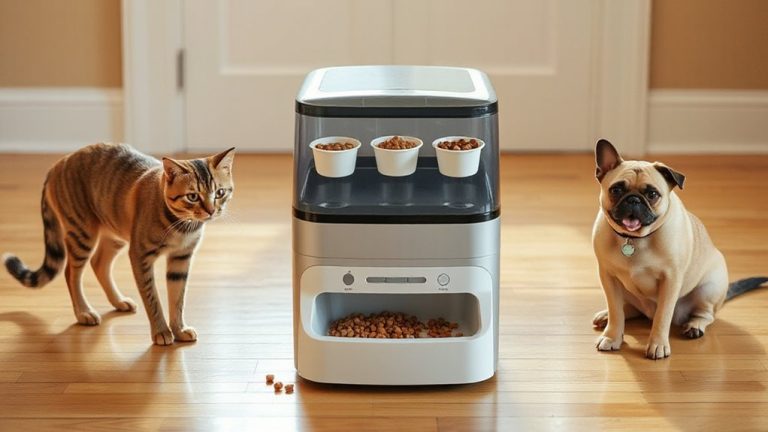
Start by feeding your cat 2 to 3 small meals per day, each portion calculated to meet their target caloric intake for weight loss. Portion control is essential to prevent overfeeding, which can stall progress. Use a digital kitchen scale to measure food accurately-aim for 20–30 kcal per pound of ideal body weight daily. Adjust based on veterinary guidance and your cat’s response. Feeding frequency supports metabolic regulation; spreading intake across multiple meals reduces hunger-related begging. Canned food typically contains 70–80% moisture, so volume doesn’t equate to dry food amounts-do not substitute equal parts. Follow feeding guidelines on the product label as a starting point, then customize. Monitor weight weekly, adjusting portions by 5–10% if needed. Consistency in timing and portion size enhances effectiveness. Automate meals with timed feeders if necessary. A reliable cat auto feeder can help maintain precise portion delivery and feeding schedules, especially for busy households. Proper portion control and feeding frequency form the foundation of successful feline weight management.
Transitioning From Dry to Wet Food for Weight Loss
Although your cat may be accustomed to dry food, switching to wet food is a critical step in supporting healthy weight loss. Wet food has higher moisture content and lower caloric density, promoting satiety with fewer calories. The shift in food texture helps mimic natural prey, encouraging slower, more mindful eating. Adjusting the feeding environment minimizes distractions and supports portion control. Start by mixing 25% wet food with 75% dry, increasing the wet ratio every 3–4 days. Use scheduled meals instead of free-feeding to regulate intake. For optimal results, consider selecting from the top canned cat food picks based on nutritional quality and palatability.
| Day Range | Wet Food Ratio | Dry Food Ratio | Caloric Density (kcal/g) | Moisture Content (%) |
|---|---|---|---|---|
| 1–3 | 25% | 75% | 4.0 | 12 |
| 4–6 | 50% | 50% | 3.5 | 18 |
Watch for These Adjustment Signs
How is your cat responding to the change in diet? Monitor for appetite changes during the shift to wet food. Some cats eat more initially due to higher palatability, while others may temporarily reduce intake. Track daily food volume in ounces and feeding frequency to detect patterns. Adjust portion sizes based on ideal body weight-typically 2–2.5% of body weight in wet food per day. Litter habits often shift as moisture intake increases. Expect softer stools initially, but consistent diarrhea or constipation warrants evaluation. Urine clump volume may increase due to improved hydration-a positive sign. Observe for straining, blood, or odor changes. These signs usually resolve within 7–10 days. Persistent issues may indicate an underlying condition, not just diet change. Document all observations to share with your veterinarian. Early detection guarantees safe, effective weight loss.
Fix Picky Eating and Digestive Issues
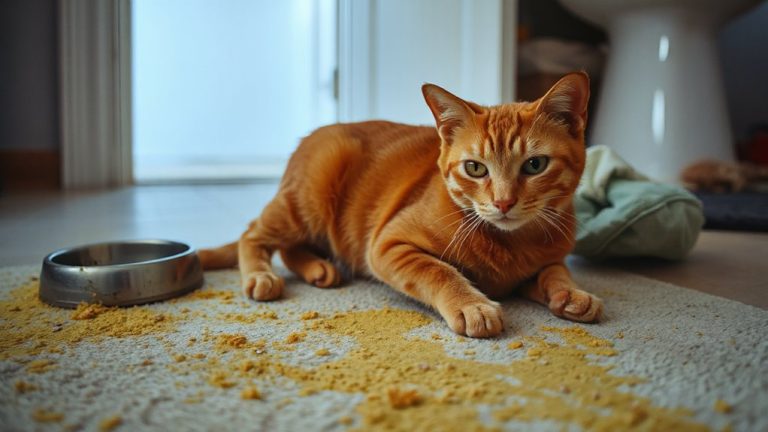
Why does your cat refuse to eat the new wet food or seem uncomfortable after meals? Sudden changes disrupt feline food preferences and trigger appetite fluctuations. Cats possess highly sensitive taste and smell receptors, making them selective. Shift gradually: mix 25% wet with 75% dry food for two days, then increase wet content by 25% every 48 hours. This slow integration minimizes gastrointestinal stress. Use sealed, refrigerated wet food portions; discard leftovers after one hour at room temperature to prevent spoilage. Monitor stool consistency-soft stools indicate digestive intolerance. Opt for hydrolyzed protein or limited-ingredient formulas if sensitivities persist. Feed smaller, frequent meals to stabilize digestion and curb pickiness. Guarantee the wet food contains at least 70% moisture to support hydration and satiety. Consistent feeding times regulate metabolic cues, reducing appetite fluctuations. Patience and precision guarantee a successful shift to weight-supportive wet nutrition.
On a final note
You can successfully shift your cat to a weight-loss plan using wet food. Wet food typically contains 70–80% moisture, reducing calorie density. Feed 2–3 measured meals daily, following label guidelines or veterinary recommendations. Gradually introduce wet food over 7–10 days, mixing increasing amounts with dry food. Monitor body weight every two weeks; aim for 1–2% loss per week. Adjust portions if weight plateaus.