Diagnosing and Treating Feline Upper Respiratory Infections in Multi-Cat Households
You can diagnose feline URI by recognizing early signs like sneezing, nasal discharge, and appetite loss, especially in multi-cat homes where viruses spread fast via fomites. FHV-1 and FCV are confirmed with PCR testing. Treat with antivirals or antibiotics like doxycycline if bacterial infection is present. Isolate the sick cat in a dedicated room, using a 1:32 bleach solution for daily disinfection. Vaccinate regularly with intranasal modified-live vaccines every six months. Maintain HEPA filtration with CADR ≥200 cfm to reduce airborne pathogens. Implement strict hygiene protocols including separate bowls, litter boxes, and footwear. Supportive care includes hydration, appetite stimulation, and stress reduction through pheromone diffusers and consistent routines. You’ll find further guidance on managing outbreaks effectively under controlled conditions.
Notable Insights
- Identify early signs like sneezing, nasal discharge, and appetite loss to detect URI promptly in multi-cat homes.
- Confirm diagnosis through veterinary evaluation, including PCR testing for viruses like FHV-1 and FCV.
- Initiate isolation of sick cats in a dedicated, disinfected space to prevent rapid disease spread.
- Treat with antivirals or antibiotics such as doxycycline when secondary bacterial infections are present.
- Implement strict disinfection, vaccination, and stress reduction to control URI outbreaks effectively.
What Causes Upper Respiratory Infections in Cats?
Although most upper respiratory infections in cats stem from viral agents, bacterial involvement can complicate or exacerbate the condition. You’ll often see feline herpesvirus (FHV-1) and feline calicivirus (FCV) as primary culprits. Viral transmission occurs rapidly through aerosolized droplets, direct contact, or fomites like food bowls and bedding. These viruses compromise the respiratory epithelium, weakening natural defenses. That damage creates an ideal environment for bacterial colonization. Secondary pathogens such as *Chlamydia felis*, *Bordetella bronchiseptica*, and *Mycoplasma* spp. take advantage of this vulnerability. Bacterial colonization prolongs illness and may lead to pneumonia or chronic sinusitis. In multi-cat settings, high stress and close proximity increase susceptibility. Transmission rates rise when ventilation is inadequate or hygiene protocols lapse. Vaccination reduces viral shedding but doesn’t eliminate infection. You must manage both viral and bacterial components to effectively control outbreaks and maintain respiratory health in your feline population.
How to Spot Early Signs of URI in Multi-Cat Homes
Where do you begin when monitoring for early signs of upper respiratory infections in multi-cat homes? Start by observing each cat daily for subtle behavior changes. Cats with URI often withdraw, sleep more, or avoid interaction-early red flags. You might notice appetite loss, where a cat skips meals or eats markedly less than usual. This can lead to rapid weight decline, especially concerning in kittens or seniors. Watch for sneezing, nasal discharge, or ocular tearing, which frequently accompany these shifts. In multi-cat settings, infections spread quickly via direct contact or shared surfaces. Monitor litter box use, grooming habits, and vocalization patterns-deviations suggest illness. Early detection hinges on consistency and attention to detail. Tracking symptoms for over 24 hours increases diagnostic accuracy. While mild signs may persist briefly, prolonged changes demand action. Identifying issues early limits outbreaks and supports faster recovery across the group.
When to Take Your Cat to the Vet for URI Symptoms
You’ve been watching closely, tracking changes in behavior, appetite, and litter box habits-especially in a multi-cat home where one cat’s illness can spread fast. If your cat shows persistent sneezing, ocular or nasal discharge, or difficulty breathing, seek veterinary care promptly. Early intervention improves outcomes. Lethargy or refusal to eat for over 24 hours signals concern. Dehydration risk increases quickly, particularly in kittens or seniors. Your vet will assess symptoms and review your cat’s vaccination schedule-up-to-date vaccines reduce severity but don’t guarantee prevention. Diagnostic tests may include PCR screening to identify causative agents like feline herpesvirus or calicivirus. Based on results, your vet may prescribe antibiotic options such as doxycycline or azithromycin if secondary bacterial infection is present. Prompt treatment limits transmission and supports faster recovery across your household.
How to Isolate a Sick Cat Safely
When isolating a sick cat, setting up a dedicated recovery space is essential to prevent disease transmission. Safe containment requires a quiet, low-traffic room like a spare bathroom or large closet. The space must be physically separated from other cats, with solid walls and a closed door. Use plastic drop cloths under bedding to protect flooring and simplify sanitation. Clean barriers include impermeable materials such as vinyl or laminate that resist viral particles. Clean all surfaces daily with a veterinary-grade disinfectant like diluted bleach (1:32 ratio). Avoid carpeted or porous surfaces. Provide separate food bowls, litter boxes, and bedding used only in isolation. Handle the sick cat last, and wash hands thoroughly between interactions. Change clothes and disinfect shoes if possible. This protocol limits pathogen spread through fomites. For households with multiple cats, consider using a large, low-entry litter box to accommodate both isolation and shared-space littering needs.
Treatments That Work for Cat URI
What options actually work when treating feline upper respiratory infections? Antibiotic therapy is effective only if a bacterial infection is confirmed, commonly using doxycycline at 5–10 mg/kg orally every 24 hours for 7–14 days. It won’t help with viral causes like feline herpesvirus. Steam inhalation reduces nasal congestion safely. You can expose your cat to steam from a hot shower for 5–10 minutes, two to three times daily. Humidity loosens mucus, improving breathing. Saline nasal drops (0.9% sodium chloride) clear discharge when applied at 1–2 drops per nostril every 6–8 hours. Force-feeding may be necessary if your cat stops eating, as nutritional support maintains immune function. Eye treatments, such as topical antibiotics or antivirals, address conjunctivitis. Always follow your vet’s dosing instructions precisely. These treatments ease symptoms and support recovery when applied correctly and consistently.
How to Stop URIs Spreading Among Cats
Feline upper respiratory infections remain highly contagious, especially in multi-cat environments, even after treatment begins. To halt transmission, you must combine strict vaccine protocols with rigorous environmental disinfection. Vaccines reduce severity but don’t confer complete immunity-administer modified-live intranasal vaccines every six months for at-risk groups. Isolate infected cats immediately in separate rooms with dedicated feeding and cleaning tools.
| Measure | Frequency | Effective Agent |
|---|---|---|
| Surface disinfection | Daily | Diluted bleach (1:32 with water) |
| Litter changes | Twice daily | Clumping silica or clay |
| Air filtration | Continuous | HEPA filter, CADR ≥ 200 cfm |
Bleach inactivates herpesvirus and calicivirus within 10 minutes. Replace air every hour using HEPA systems. Vaccination and disinfection together disrupt the transmission cycle more effectively than either used alone.
Cut Stress to Boost Cat Immunity
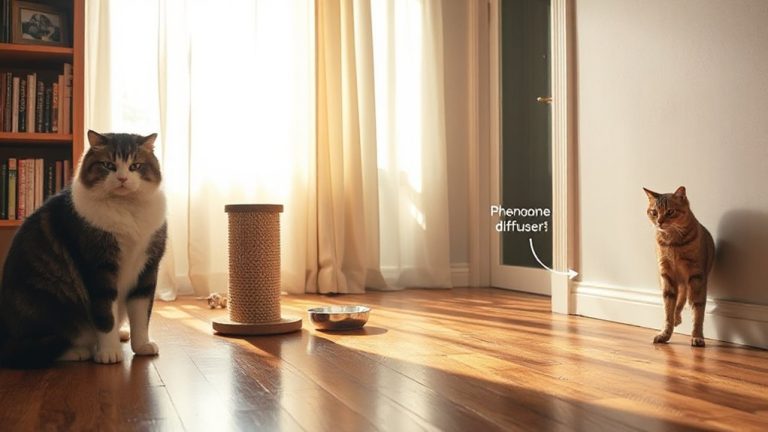
Though often overlooked, stress plays a direct role in weakening your cat’s immune defenses, making it harder to fight off or recover from upper respiratory infections. You must prioritize environmental enrichment to reduce anxiety. Provide vertical spaces like cat trees (minimum height: 36 inches) and interactive toys that mimic prey movement. Rotate toys weekly to maintain novelty. Routine consistency is equally critical-feed, clean, and interact at the same times daily. Irregular schedules elevate cortisol, suppressing lymphocyte production by up to 40%. Use pheromone diffusers (Feliway® Classic, effective within 30 minutes, coverage up to 700 sq ft) to signal safety. Limit household changes and isolate stressful events. Multi-cat homes need one litter box per cat, plus one extra, placed in low-traffic areas. These steps lower glucocorticoid levels, enhancing immune surveillance. Stress reduction isn’t optional-it’s a medical intervention.
On a final note
You must act quickly to control feline URIs in multi-cat homes. Isolate infected cats immediately using separate food bowls, litter boxes, and dedicated cleaning supplies. Disinfect surfaces with a 1:32 bleach solution daily. Maintain ideal humidity (40–60%) to ease breathing. Administer prescribed antivirals or antibiotics as directed. Vaccinate all cats against feline herpesvirus and calicivirus. Reduce stress to sustain immune function.