Safe Material Composition for Aquaria: Choosing the Right Materials for Health
Choose materials that won’t leach toxins or degrade in water, as even trace chemicals like phthalates or heavy metals harm aquatic life. Use glass, borosilicate, or food-grade HDPE and acrylic (PMMA), which resist UV, moisture, and temperature shifts. Make certain sealants are 100% aquarium-safe silicone-acetic-cure types need 48–72 hours to off-gas. Avoid painted plastics unless labeled safe. Test rocks and driftwood for reactivity. Certified, inert materials prevent unseen risks to your tank’s ecosystem. There’s more to contemplate about material performance under long-term submersion.
Notable Insights
- Use aquarium-safe glass, borosilicate, or food-grade acrylics to prevent chemical leaching into water.
- Avoid materials containing BPA, phthalates, or plasticizers due to toxin release risks in aquatic environments.
- Select 100% aquarium-safe silicone or two-part epoxy for durable, non-toxic structural bonding.
- Choose inert natural materials like cured driftwood or freshwater rocks to maintain water chemistry stability.
- Soak new decorations and test for odors or cloudiness to detect potential leaching before aquarium use.
What Makes a Material Aquarium-Safe?
Safety first-when it comes to aquaria, even inert-looking materials can leach harmful substances. A material is aquarium-safe only if it resists chemical leaching over time. Chemical leaching occurs when toxins like phthalates or heavy metals dissolve into water, endangering aquatic life. You must verify that any material has been tested for prolonged water exposure without degradation. Structural integrity is equally essential-materials must withstand constant moisture, temperature shifts, and mechanical stress. For instance, certain plastics warp at temperatures above 140°F, compromising their form and function. Glass, borosilicate, and specific acrylics maintain stability under standard aquarium conditions. Certified food-grade or medical-grade polymers often meet safety thresholds. Avoid materials that crack, cloud, or soften in water. Always confirm manufacturer specifications for water resistance and non-toxicity. The best choices combine zero leaching with long-term structural durability, ensuring a stable, healthy aquatic environment.
How to Identify Aquarium-Safe Plastics
How can you tell which plastics won’t harm your aquarium? Look for materials labeled as food-grade or aquarium-safe to minimize chemical leaching. Avoid plastics containing BPA, phthalates, or softeners, as they degrade in water and release toxins. UV resistance is critical for tanks exposed to sunlight or strong lighting, preventing brittleness and cracking over time. Below is a comparison of common aquarium plastics:
| Plastic Type | UV Resistance | Chemical Leaching Risk |
|---|---|---|
| PVC (rigid) | Moderate | Low (if unpigmented) |
| Acrylic (PMMA) | High | Very Low |
| Polyethylene (HDPE) | High | Very Low |
| Polystyrene | Low | High |
Use only opaque or translucent HDPE and acrylic for long-term submersion. Clear PVC must be thoroughly rinsed to remove plasticizers. Always avoid painted or laminated plastics unless explicitly labeled safe.
Best Aquarium-Safe Sealants and Adhesives
Silicone sealants form the backbone of reliable aquarium construction, just as careful plastic selection guarantees long-term tank integrity. You must use 100% aquarium-safe silicone adhesives, free of mold inhibitors or biocides that harm aquatic life. These silicones cure to form flexible, waterproof bonds with tensile strength averaging 1.2 MPa, adhering permanently to glass and acrylic. Acetic-cure (acetoxy) silicones work well but emit vinegar-like fumes during curing-allow 48–72 hours to fully cure before water exposure. For structural repairs or bracing, epoxy resins offer superior rigidity and compressive strength up to 10,000 psi. Two-part epoxy resins bond dissimilar materials, resist water degradation, and maintain stability across temperature shifts. Always verify product labels specify aquarium safety. Never use household silicones or adhesives containing toxic additives.
Safe Rocks, Driftwood, and Substrates
When adding natural elements to your aquarium, you need to make certain they won’t alter water chemistry or release harmful substances. Proper rock sourcing prevents mineral leaching, especially in soft water setups. Avoid limestone or dolomite unless you intend to raise pH and hardness.
| Material | Safe If… |
|---|---|
| Rocks | Inert, sourced from freshwater |
| Driftwood | Properly cured to stop leaching |
| Substrates | Uncoated, chemical-free |
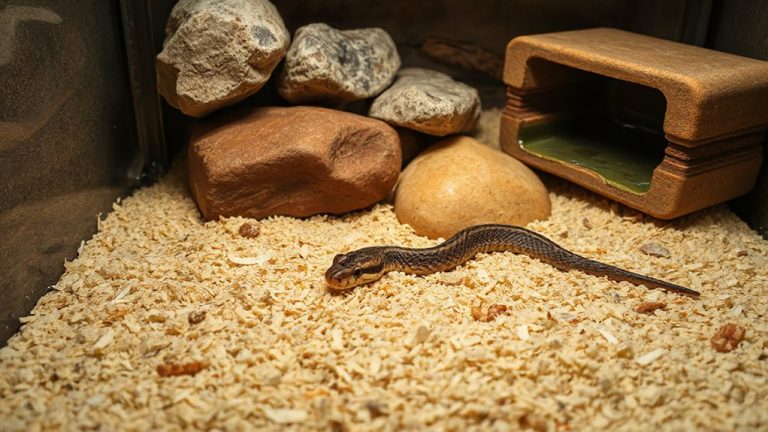
Driftwood curing is essential; soak wood for 1–4 weeks to remove tannins and stabilize buoyancy. Use dechlorinated water and change it frequently. Never use painted, treated, or marine driftwood. For substrates, choose natural sands or gravels tested for silicate content. All materials must undergo visual inspection and water compatibility testing before introduction. Consider using a secure exercise pen enclosure if housing terrestrial animals near aquatic setups to prevent contamination.
Toxic Aquarium Ornaments: What to Watch For
While some aquarium decorations appear harmless, many contain materials that can leach toxins or disrupt water parameters over time. You should avoid ornaments containing heavy metals like lead, copper, or zinc, even in trace amounts-these are toxic to fish and invertebrates at concentrations as low as 0.1 mg/L. Chemical leaching is common in cheap resin or painted decorations, especially when exposed to fluctuating pH levels. PVC and ceramic decorations labeled as “aquarium-safe” typically resist degradation and won’t alter water chemistry. Always check for manufacturer certifications. Non-certified items may release formaldehyde or phthalates over time. Soak all new ornaments in dechlorinated water for 24–48 hours before use to test for odor or cloudiness. If either appears, discard the item. Proper scrutiny prevents contamination and guarantees long-term tank stability.
On a final note
You must prioritize inert, non-leaching materials to maintain aquarium health. Plastics labeled FDA-compliant or NSF-5 are safe for prolonged water contact. Use 100% silicone sealants containing no biocides or mildew inhibitors. Choose natural rocks like granite or lava rock with low solubility; avoid marble, which alters pH. Always test driftwood for tannin release. Verify ornament composition-avoid zinc, copper, or painted coatings that degrade.