Temperature Tolerance Ranges: How to Keep Different Pets Comfortable Year-Round
You should keep your bird’s environment between 65–80°F, avoiding drafts and sudden shifts. Dogs tolerate 50–85°F, though brachycephalic breeds overheat above 80°F. Cats regulate well between 68–78°F using behavioral adaptations. Reptiles need thermal gradients with basking zones at 85–100°F and UVB lighting within 12 inches. Rabbits stay healthy at 68–72°F, while hamsters may enter torpor below 60°F. Maintaining proper humidity and ventilation is critical across species. Each pet has precise needs you’ll want to explore further.
Notable Insights
- Maintain birds in 65–80°F (18–27°C) with no drafts or sudden temperature changes.
- Keep guinea pigs and rabbits in stable temperatures of 68–72°F (20–22°C) to prevent heatstroke.
- Ensure dogs stay within 50–85°F, adjusting for breed-specific heat or cold sensitivity.
- Provide cats with draft-free environments, leveraging their natural fur insulation and heat-regulating behaviors.
- Offer reptiles thermal gradients with basking zones at 85–100°F and proper UVB lighting year-round.
What Temperature Range Is Safe for Common Pets?
A safe temperature range for common pets depends on the species, as each has unique physiological needs. For bird care, maintain 65–80°F (18–27°C); drafts and sudden fluctuations cause stress. Canaries and parakeets tolerate lower limits near 60°F (16°C) if acclimated. Small mammals like guinea pigs and rabbits thrive at 68–72°F (20–22°C). Temperatures above 80°F (27°C) increase heatstroke risk in rabbits. Dwarf rabbits show thermal distress at 78°F (26°C) with humidity above 70%. Hamsters need 65–75°F (18–24°C); below 60°F (16°C), they may enter torpor. Chinchillas require cool, dry air-55–70°F (13–21°C)-due to dense fur. Poor ventilation at 72°F (22°C) raises respiratory disease risk in small mammals. Always monitor ambient temperature with a calibrated digital thermometer. Avoid placing cages near windows or heaters. Consistent thermal conditions support metabolic stability. You must prioritize species-specific ranges in bird care and small mammals.
Dog Temperature Needs: Staying Safe in Heat and Cold
How well do you know your dog’s limits when the thermostat swings? Dogs typically tolerate temperatures between 50°F and 85°F, but individual thresholds vary by dog breeds and coat type. Brachycephalic breeds, like Bulldogs, are highly sensitive to heat above 80°F due to compromised respiratory anatomy. Conversely, Huskies and other northern breeds withstand cold as low as -20°F thanks to insulating double coats. Seasonal shedding impacts thermoregulation-dogs shed undercoats in spring to reduce heat retention. Never leave dogs unattended in vehicles; internal temperatures exceed 100°F within 10 minutes, even with windows cracked. In cold weather, limit outdoor exposure below freezing, especially for short-coated breeds. Provide insulated bedding and monitor for shivering or lethargy. Use climate-appropriate grooming and shelter to maintain core body temperature, ideally between 100.5°F and 102.5°F.
How Cats Cope With Temperature Shifts
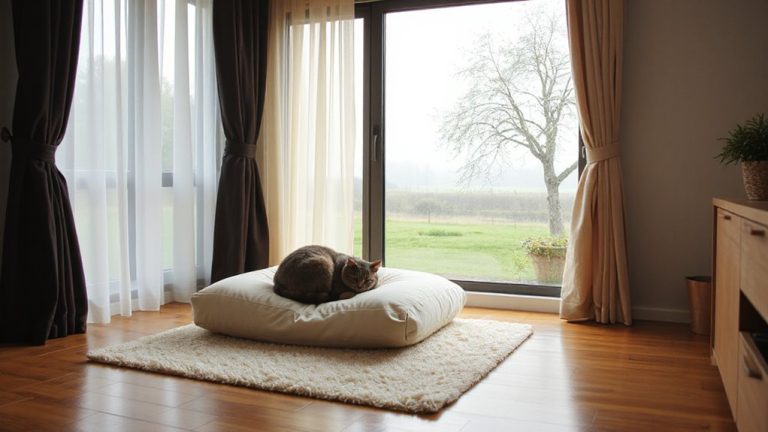
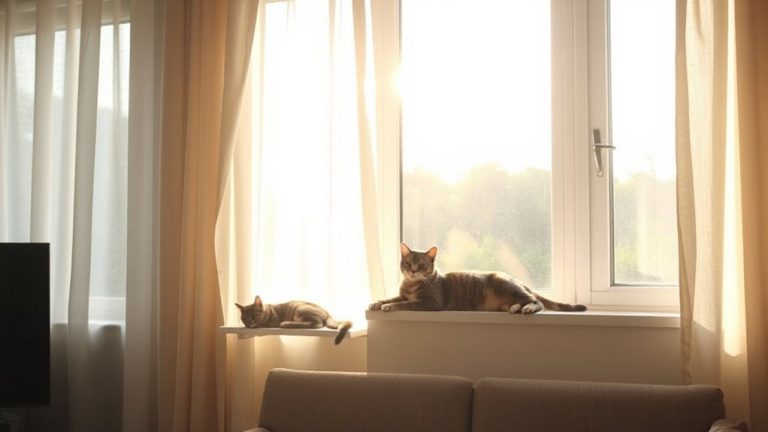
Why do cats seem unfazed by chilly drafts or sunbathed tiles? Cats manage temperature shifts through behavioral adaptations and acute sensory sensitivity. Your cat’s skin contains thermoreceptors that detect minute changes in ambient temperature, triggering immediate responses. They seek warmth by curling on heated surfaces or stretching in sunlit spots, optimizing heat absorption. Conversely, in hot conditions, they stretch out on cool floors to maximize surface contact and heat dissipation. These behavioral adaptations regulate body temperature efficiently. A cat’s normal core temperature ranges from 100.5°F to 102.5°F, requiring minimal deviation. Their fur provides insulation, reducing reliance on external heating. You’ll notice they avoid drafts when cold, showing heightened sensory sensitivity to airflow. These natural mechanisms make cats resilient across seasonal shifts. Provide stable indoor environments, but rest assured-your cat uses precise physiological and behavioral tools to stay within its thermal comfort zone.
Reptile & Amphibian Habitat: Heat, Humidity, and Lighting Needs
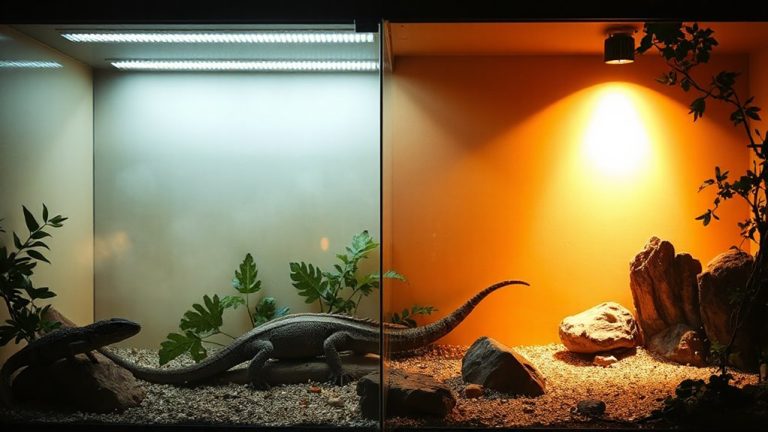
Maintaining precise environmental conditions is non-negotiable when housing reptiles and amphibians. You must provide thermal gradients to allow proper thermoregulation. This means setting up a warm side and a cool side in the enclosure-typically 5–10°F (3–6°C) apart-so your pet can move as needed. For most reptiles, basking zones should reach 85–100°F (29–38°C), depending on species. Humidity levels are just as critical; tropical animals require 60–80% relative humidity, measurable with a calibrated hygrometer. UVB exposure is essential for vitamin D3 synthesis and calcium metabolism. Use a linear fluorescent UVB 5.0 or 10.0 bulb, replacing it every 6–12 months. Position the light 6–12 inches from the basking site, with no glass or plastic blocking output. These parameters mimic natural habitats and support long-term physiological health. For accurate monitoring, consider using one of the best hygrometers for reptiles to ensure consistent humidity levels.
Aquarium Temperature Guide for Tropical and Cold-Water Fish
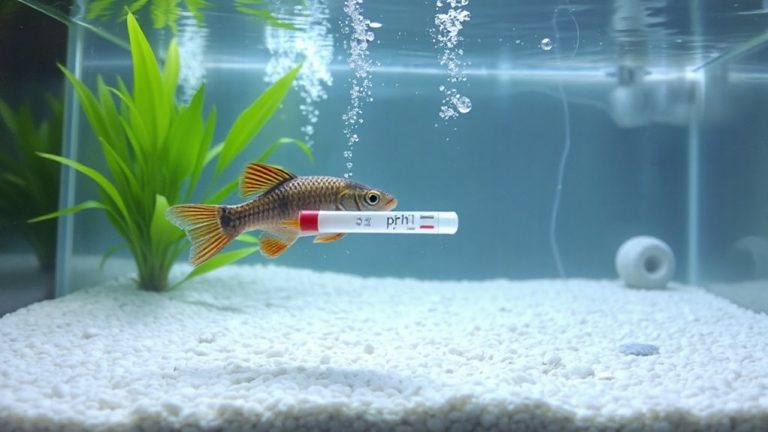
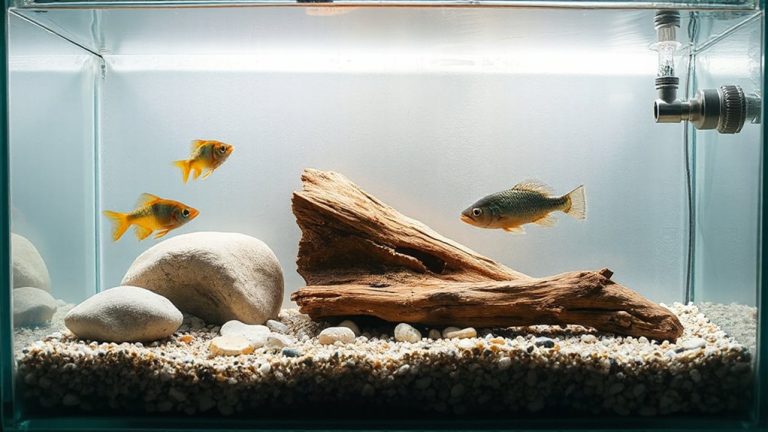
What if your aquarium’s temperature was off by just a few degrees? For tropical fish, even a 2–3°F deviation from their ideal 75–80°F range can cause stress, suppress immunity, and degrade water quality. You must use a reliable submersible heater with a precision thermostat, calibrated monthly. Cold-water species like goldfish thrive at 60–70°F; higher temperatures accelerate metabolism, shortening lifespans. You need a chiller or shade during summer to maintain this range. Poor thermal stability promotes algae and ammonia spikes. Seasonal acclimation is critical-adjust temperatures gradually, no more than 2°F per day, to avoid shock. Digital thermometers with remote sensors offer real-time monitoring. Stable temperature guarantees maximum dissolved oxygen and nitrifying bacteria activity. You can’t neglect equipment specs: heaters should deliver 3–5 watts per gallon. Thermal consistency isn’t optional-it’s foundational to aquatic health. For small setups, choosing the right best heaters for small aquariums ensures accurate and safe temperature control.
On a final note
You must maintain precise temperature ranges to keep pets healthy year-round. Dogs thrive between 68°F and 72°F indoors; below 45°F, hypothermia risk increases. Cats tolerate 65°F to 75°F but struggle in heat above 80°F. Reptiles need species-specific gradients-bearded dragons require 75°F (cool) to 110°F (basking). Tropical fish demand 76°F to 80°F; cold-water fish prefer 60°F to 70°F. Humidity, lighting, and insulation directly impact thermal stability.