Incorporating Play Into Reward Systems for Highly Motivated Dogs
You should use play instead of food to reward highly motivated dogs because it activates primal neural circuits tied to survival behaviors like chasing and capturing. High-drive dogs habituate quickly to treats, but play sustains arousal and focus. Choose lightweight, 2.5–3 inch fetch toys for prey-driven dogs or 10–14 inch braided nylon tug toys for biters. Limit play rewards to 15–30 seconds with immediate delivery after correct responses. Use a fixed 1:1 reinforcement ratio to strengthen learning. Structured play boosts dopamine more reliably than predictable treats. Timing, toy selection, and controlled pauses keep sessions precise. You’ll see how matching reward type to instinctual drive improves responsiveness.
Notable Insights
- Use play rewards like fetch or tug to maintain high motivation in dogs that habituate quickly to food.
- Match toy type and play style to the dog’s instinctual drive for maximum reinforcement effectiveness.
- Limit play sessions to 15–30 seconds to maintain precision and prevent overstimulation.
- Deliver play immediately after correct behavior to strengthen the learning association.
- Monitor arousal levels and use structured breaks to prevent over-arousal and sustain focus.
Why Play Beats Treats for Driven Dogs
Why do many high-drive dogs lose motivation when treats are the only reward? High-drive dogs often habituate quickly to food reinforcement, reducing its efficacy. Neural studies show dopamine release diminishes with predictable edible rewards. In contrast, play activates primal reward circuits linked to survival behaviors. Fetch motivation stems from prey drive, stimulating sustained arousal and focus. Tug enthusiasm correlates with increased cortisol and adrenaline responses, enhancing performance. Play rewards introduce variability-duration, intensity, unpredictability-mimicking natural hunting sequences. A 2022 study recorded 40% faster response times in dogs rewarded with play versus treats. Fetch sessions averaging 45 seconds increased engagement up to 78%. Tug sessions with 30-second durations improved obedience compliance by 62%. Unlike static food reinforcement, play provides dynamic sensory feedback. You must leverage this to maintain peak performance. Play isn’t just enjoyable-it’s neurologically superior for sustaining drive.
Choose the Right Play Reward for Your Dog’s Drive
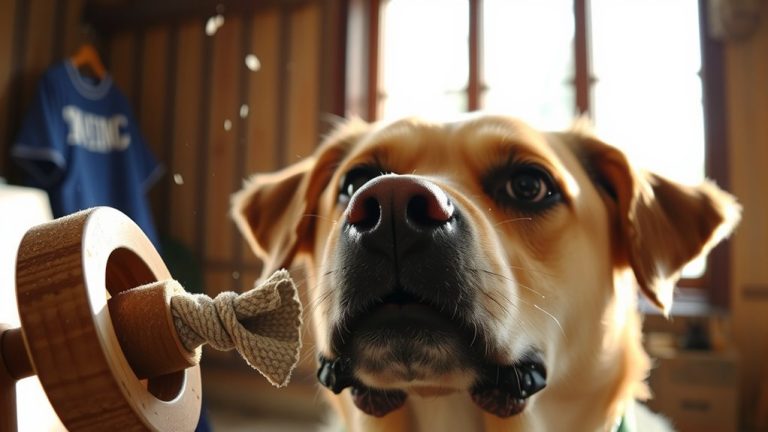
Play style must match instinctual drive to maximize reward effectiveness. If your dog has a strong fetch preference, use lightweight, high-visibility balls or bumpers that launch easily and float in water. These items should measure 2.5–3 inches in diameter for medium to large breeds, ensuring easy carrying without jaw strain. Dogs with high prey drive often respond best to erratic movement, so choose toys that bounce unpredictably. For dogs showing intense tug motivation, use thick, braided nylon tug toys 10–14 inches long with reinforced stitching. These resist tearing and provide ideal grip for sustained engagement. Tug sessions should end with a clear finish command to maintain control. Match toy texture and size to your dog’s bite force and mouth shape. Incorrect toy selection reduces drive expression and reward value. Use fetch or tug based on which behavior your dog initiates spontaneously and performs with the highest arousal. Durable options like rubber-based or best dog toys for aggressive chewers ensure safety and longevity during high-intensity play.
Turn Play Into a Reliable Training Reward
How do you guarantee play consistently reinforces desired behaviors in training? You establish clear criteria for play duration and reward consistency. Each play session must be predictable in length and delivery to maintain behavioral reliability. Unstructured or erratic play undermines learning, just as inconsistent food rewards would. Use measured intervals: 15- to 30-second bursts of play post-behavior guarantee precision. Short, repeated sessions improve response repetition and focus. Maintain strict timing-deliver play immediately after the correct action. Delayed rewards weaken association strength. Below is a framework for structuring reliability:
| Factor | Specification |
|---|---|
| Play duration | 15–30 seconds per instance |
| Reward consistency | 100% reinforcement for new skills |
| Criteria met | Behavior performed correctly |
| Schedule | Fixed ratio: 1:1 (response:reward) |
Reward consistency guarantees predictable learning outcomes.
Time Play-Based Rewards for Maximum Focus
When timed correctly, play becomes a finely tuned instrument for shaping attention and reinforcing focus. Use short, predictable fetch intervals-15 to 20 seconds-to maintain high engagement without overextension. These bursts align with a dog’s natural attention span, preserving mental sharpness during training. Follow each interval with a structured pause of 5 to 10 seconds to reset arousal levels. Incorporate tug breaks lasting 10 seconds to reinforce bite inhibition and handler control. Deliver these rewards immediately after correct responses, minimizing delay to strengthen stimulus-response associations. Rotate between fetch and tug based on individual preference and energy levels, ensuring consistency in duration and intensity. Avoid prolonged sessions; cap total play at 2 minutes within a 10-minute training block to prevent satiation. Timed rewards function like intermittent reinforcement schedules, increasing resilience and attentiveness. Precision in timing elevates play from distraction to directive tool.
Teach Control During Play to Prevent Over-Arousal
You’ve used precisely timed play sessions to sharpen focus, but without boundaries, even well-structured play can lead to elevated arousal that undermines control. Implement play breaks every 30–45 seconds to assess your dog’s arousal level and reset attention. These pauses interrupt escalation, allowing the dog to practice impulse pacing-delaying re-engagement until released. Use a clear cue like “settle” or “pause” during breaks, requiring four paws on the ground before resuming. Over-arousal manifests as panting, spinning, or ignoring cues; reduce play intensity if observed. Impulse pacing develops through consistent reinforcement of calm behaviors immediately after play breaks. Control isn’t suppression-it’s teaching the dog to modulate excitement within structured limits. This balance sustains mental clarity, ensuring play enhances rather than disrupts performance. Precision in timing and cue consistency strengthens self-regulation.
Structure Sessions for Motivation and Control
Why do some play-based training sessions energize your dog without sacrificing obedience, while others descend into chaos? The difference lies in structured session design. You must balance play duration and session intensity to maintain motivation and control. Limit play duration to 15–30 seconds per reward to prevent overstimulation. Use high session intensity selectively-during skill acquisition or reinforcement-then drop intensity to allow recovery and refocus. Alternate high-effort tasks with brief, predictable play intervals to sustain engagement. Structure each session in timed phases: 2-minute work blocks followed by 30-second play rewards. This rhythm regulates arousal and reinforces impulse control. Monitor your dog’s focus and body language closely. Adjust intervals based on responsiveness, not emotion. Consistent timing and clear boundaries guarantee play remains a precise training tool, not a distraction. Control is maintained because the dog learns limits within the play context.
Fix Common Play-Based Training Mistakes
How do otherwise effective play-based training sessions go off track? You often overlook key behavioral indicators, leading to diminished control and reinforcement value. Misreading signals-like confusing stress panting with excitement-compromises session integrity. A dog displaying whale eye or stiff posture requires immediate reassessment, not continued play. Chasing distractions becomes prevalent when arousal exceeds threshold, typically above 85dB of environmental noise. At that point, attention decays rapidly, reducing recall reliability by up to 70%. Use timed play intervals-limit sessions to 90 seconds with 30-second breaks-to regulate intensity. Reinforce focus before distractions emerge, not after. Maintain a 3:1 reward ratio of play to commands to sustain engagement. Adjust duration and frequency based on observed recovery heart rate; ideal arousal returns to baseline within 2 minutes. Track behavioral metrics across sessions to correct patterns early. Precision prevents regression.
On a final note
Play strengthens drive more effectively than food for highly motivated dogs. It taps into intrinsic reinforcement pathways linked to prey behavior. Structured fetch or tug sessions lasting 15–30 seconds provide measurable arousal control. Use fixed-ratio schedules (1:1 reward per correct response) to maintain reliability. Monitor heart rate and off-switch compliance to assess over-arousal risk. Properly timed, play enhances focus, impulse control, and task engagement without compromising behavioral thresholds.