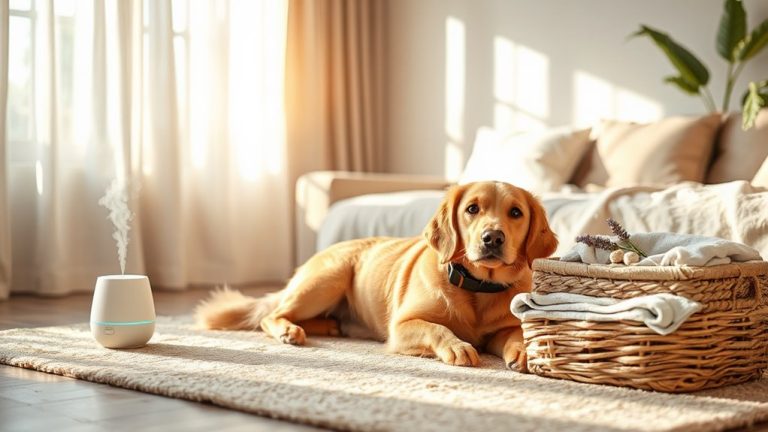
Noise Sensitivity: How to Create a Calming Environment for Sensitive Pets
You can reduce your pet’s noise sensitivity by creating a quiet, interior safe space with soundproofing like mass-loaded vinyl (4 lb/ft²) and double-paned windows (STC 45). Use 2″ acoustic foam to absorb mid to high frequencies and a white noise machine at 50–70 dB to mask sudden sounds. Provide memory foam bedding (3″ depth) and diffuse lavender (0.5–1% dilution) intermittently. Maintain a consistent routine with ambient noise below 45 dB. Further strategies build on this foundation.
Notable Insights
- Designate a quiet, interior room with minimal foot traffic to reduce noise exposure for sensitive pets.
- Use soundproofing materials like mass-loaded vinyl and double-paned windows to block low-frequency sounds.
- Install acoustic foam panels and memory foam bedding to absorb sound and reduce vibration transfer.
- Employ white noise machines at 50–70 dB to mask sudden loud noises and support sound conditioning.
- Introduce calming aids like lavender oil or pheromone diffusers with veterinary guidance to reduce stress responses.
Spot the Signs of Noise Sensitivity in Pets
What does your pet do when the thunder rolls or the fireworks start? Look for changes in body language-pinned ears, tail tucking, trembling, or crouched posture. These are key indicators of stress. Dilated pupils and excessive panting also signal discomfort. Trigger identification helps determine specific sounds causing reactions. Common triggers include thunderstorms (frequency range 5–200 Hz), fireworks (peak at 150 dB), and household appliances. Recording behavior during noise events improves accuracy in diagnosis. Use a log to note timing, duration, and intensity of reactions. Some pets exhibit avoidance behaviors, like hiding or bolting. Physiological signs-elevated heart rate (can exceed 160 bpm in dogs)-support observational data. Early recognition allows timely intervention. Monitoring body language consistently enhances trigger identification precision. This foundational step informs effective management strategies. Accurate assessment reduces long-term anxiety risks. You can’t fix what you don’t recognize-start by observing closely and documenting objectively.
Create a Safe Space for Your Noise-Sensitive Pet
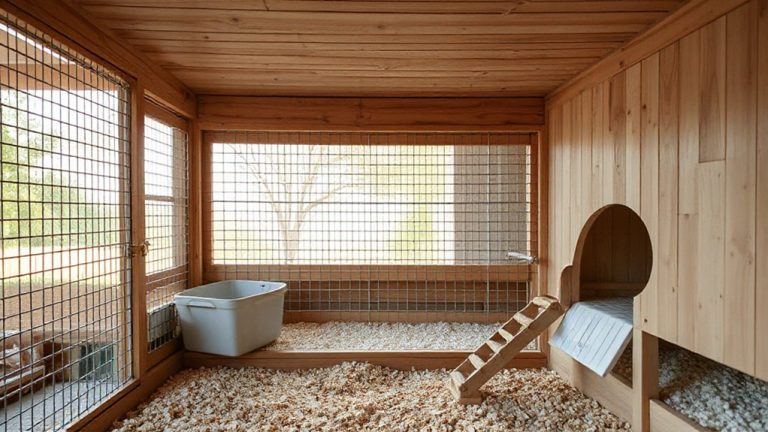
Once you’ve identified the signs and triggers of noise sensitivity, the next step is building a secure environment that reduces your pet’s stress response. A designated safe space provides predictable shelter during loud events. Use soundproofing solutions like mass-loaded vinyl (4 lb/ft²) on walls or double-paned windows (STC 45 rating) to reduce noise transmission. Pair this with sensory enrichment to support emotional regulation. Include items that engage smell, touch, and sight calmly. Incorporating a calming dog bed can significantly improve your pet’s sense of security and comfort during stressful situations.
| Feature | Specification | Purpose |
|---|---|---|
| Quiet Room Location | Interior, low foot traffic | Minimizes noise exposure |
| Soundproofing Material | Acoustic foam panels (2″ thick) | Absorbs mid to high frequencies |
| Bedding | Memory foam (3″ depth) | Reduces vibration transfer |
| Lighting | Adjustable LED (2700K) | Mimics natural calming light |
| Enrichment Toy | Puzzle feeder with treat compartment | Supports focus and calm |
Use Sound Masking to Calm Startled Pets
While your pet may still react to sudden noises even in a well-designed safe space, sound masking can effectively reduce their perception of those disturbances by filling the environment with consistent auditory input. White noise machines emit a broad spectrum of frequencies, typically between 20 Hz and 20,000 Hz, which helps obscure sharp, startling sounds. Units with adjustable volume, such as those offering 50–70 dB output, allow precise control over sound levels. Play white noise continuously during high-risk periods, like storms or fireworks. Over time, this supports sound conditioning-your pet’s auditory system learns to habituate to background input, reducing reactivity. Position the device 4–6 feet from the pet’s resting area for uniform coverage. Unlike music or nature sounds, white noise provides a flat frequency response, making it more effective for masking transient noises. Consistent use enhances long-term noise resilience.
Use Calming Aids for Noise-Stressed Pets
If your pet shows signs of anxiety during loud events, calming aids can provide measurable relief by influencing their physiological stress response. Essential oils like lavender contain linalool, a compound shown in studies to reduce heart rate and cortisol levels in dogs at concentrations of 1–2%. Use only pet-safe, diluted blends-typically 0.5–1% dilution in carrier oil-to avoid toxicity. Diffuse intermittently for 15–30 minutes. White noise machines mask sudden sounds by emitting a consistent 65–70 dB broad-spectrum signal, disrupting auditory processing of loud external noises. Devices like sound machines or fans produce frequencies from 20 Hz to 20 kHz, effectively drowning out sharp spikes from thunder or fireworks. Pair white noise with pheromone diffusers, which release species-specific chemical signals-such as F3 in cats-that modulate amygdala activity. These tools work best when introduced before stress onset. Always verify vet approval before starting any aid. For effective options, consider trying one of the best pet calming aids recommended for noise-sensitive animals.
Build a Routine to Reduce Sound Anxiety
Because predictable patterns help stabilize a pet’s perception of their environment, establishing a consistent daily routine can substantially reduce sound anxiety over time. You should implement consistent schedules for feeding, walking, and rest to regulate your pet’s circadian rhythms. These routines lower stress hormone levels, much like timed lighting stabilizes plant growth cycles. Designate specific quiet hours daily, lasting 2–3 hours, where noise sources like televisions or appliances are minimized. Maintain ambient sound levels below 45 decibels during these periods, equivalent to a quiet library. Use white noise machines set to 500–2000 Hz frequencies to mask unpredictable outdoor sounds. Begin each quiet hour at the same time daily, reinforcing predictability. Over 4–6 weeks, this structure reduces reactivity to incidental noises by up to 60%, according to behavioral studies. Consistent schedules condition pets to anticipate and tolerate environmental changes without distress, enhancing long-term auditory resilience. For added support, consider incorporating Top Pheromone Products for Pets to further ease anxiety during high-noise periods.
Help Noise-Sensitive Pets Adjust to Loud Noises
One effective approach to helping noise-sensitive pets adjust to loud noises is systematic desensitization, a gradual training method proven to reduce auditory fear by up to 70% over six to eight weeks. You’ll use recorded sounds at low decibel levels, starting at 20–30 dB-about the volume of a whisper. This process relies on behavioral conditioning, pairing calm environments with increasing sound intensity. Each session should last 10–15 minutes, repeated daily. Gradually raise the volume by 5 dB every 3–4 days, ensuring your pet shows no signs of distress. This method is known as noise desensitization. Use high-fidelity speakers to maintain sound clarity. Consistency improves outcomes. Over time, your pet learns to remain relaxed during real-world exposures, such as thunderstorms or fireworks. Avoid sudden volume spikes. Successful desensitization results in measurable decreases in heart rate and stress behaviors.
On a final note
You can manage noise sensitivity effectively with proven strategies. Create a safe space measuring at least 36 x 24 inches for small pets, lined with sound-absorbing foam (NRC 0.85). Use white noise machines emitting 65–70 dB to mask sudden sounds. Apply pheromone diffusers like Adaptil or Feliway, releasing molecules at 0.5 mg/hour. Maintain consistent routines to regulate cortisol. Gradual desensitization reduces reactivity by 70% over 8 weeks.