Understanding the Lighting Needs of Exotic Pets for Optimal Health
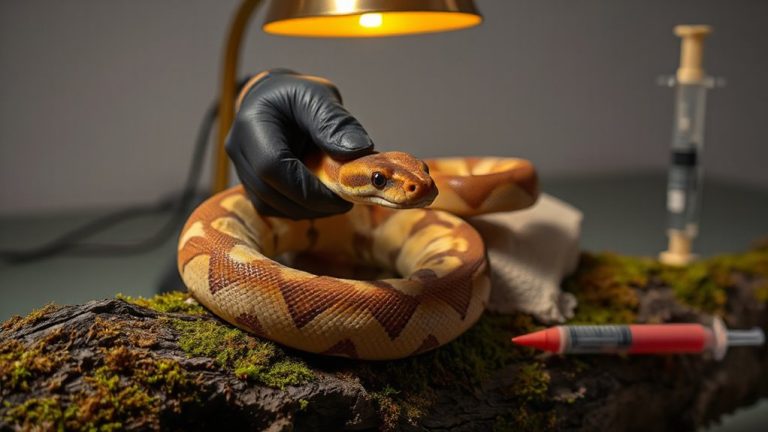
You need proper lighting to keep your exotic pet healthy. Use UVB bulbs (290–320 nm) like T5 HO 6% or 10% tubes, replaced every 6–12 months, to enable vitamin D3 synthesis and prevent metabolic bone disease. Maintain a 75–95°F thermal gradient with ceramic emitters or incandescent bulbs. Provide UVA (25–45 µW/cm²) to support feeding and mating behaviors. Match photoperiods to habitat-12 hours for tropical species, seasonal shifts for temperate ones. Always monitor with a Solarmeter 6.5 and thermostat-accuracy matters more than you think.
Notable Insights
- Provide a temperature gradient using appropriate heat sources to support reptile thermoregulation and digestion.
- Ensure UVB exposure with T5 HO or mercury vapor bulbs to enable vitamin D3 synthesis and prevent metabolic bone disease.
- Replace UVB bulbs every 6–12 months, as output degrades even if the bulb still emits visible light.
- Use red or black nighttime lighting to maintain heat without disrupting circadian rhythms.
- Match photoperiods to species’ natural habitat using timers, with seasonal adjustments for temperate species.
Support Health With Proper Exotic Pet Lighting
Proper lighting isn’t just about visibility-it’s a critical component of your exotic pet’s long-term health. You must provide heat gradients to enable effective thermoregulation. Most reptiles rely on a thermal gradient ranging from 75°F (24°C) on the cool side to 95°F (35°C) on the basking side, depending on species. Use ceramic heat emitters or daylight incandescent bulbs during the day. At night, maintain appropriate temperatures with non-light-emitting heat sources. Nighttime illumination should be minimal and red- or black-spectrum if observation is necessary, as white light disrupts circadian rhythms. Avoid continuous bright lighting-12 hours on, 12 hours off mimics natural cycles. Monitoring with digital thermometers and thermostats guarantees gradient stability. Correct lighting setup reduces stress, supports digestion, and prevents metabolic disorders. Always tailor lighting to your pet’s specific behavioral and physiological needs. For reptiles like bearded dragons, providing adequate UVB exposure is essential, and selecting the right UVB bulbs can significantly impact their overall health and well-being.
Use UVB Light for Strong Bones and Vitamin D
While visible light supports activity and heat, it’s the invisible UVB spectrum-wavelengths between 290 and 320 nanometers-that enables your reptile to synthesize vitamin D3 in its skin. Without adequate UVB, your pet can’t absorb calcium properly, leading to weakened bones and metabolic bone disease. Proper UVB exposure directly supports calcium metabolism and maintains phosphorus balance in the bloodstream. T5 HO fluorescent tubes with 6% or 10% UVB output are recommended for most diurnal reptiles. Place the fixture 12–18 inches from the basking site, depending on the manufacturer’s safe exposure guidelines. UVB output degrades over time; replace bulbs every 6–12 months. Mesh screens can block up to 50% of UVB, so mount lights inside the enclosure. Guarantee 10–12 hours of daily exposure with a reliable timer. You’re not just providing light-you’re enabling a critical biological process.
Choose UVA to Encourage Natural Behavior
UVA light plays a key role in how your exotic pet sees and interacts with its environment. Many reptiles and birds perceive UVA wavelengths, which influence feeding, mating, and social behaviors. Providing UVA enrichment supports natural vision and promotes behavioral stimulation. Without it, your pet may become lethargic or display abnormal actions. Use full-spectrum bulbs that emit 315–400 nm UVA to match your pet’s biological needs. Below are common lighting options:
| Bulb Type | UVA Output (µW/cm²) | Lifespan (hours) |
|---|---|---|
| Fluorescent Tube | 25–35 | 6,000 |
| Compact UVB | 20–30 | 5,000 |
| Mercury Vapor | 35–45 | 8,000 |
| LED Hybrid | 15–25 | 10,000 |
| Halogen | 10–20 | 2,000 |
Choose fixtures with proven UVA output and replace them before output degrades. Consistent UVA enrichment guarantees long-term behavioral stimulation.
Match Light Cycles to Your Pet’s Habitat
How would your pet’s health change if its day and night cycles matched those of the wild? You’d see improved metabolism, better sleep, and more natural behaviors. Matching light cycles to your pet’s native habitat is essential. Day length directly affects circadian rhythms. For example, reptiles from equatorial regions need 12 hours of light year-round, while those from temperate zones require changing photoperiods. Seasonal variation matters-many amphibians rely on shorter days in winter to trigger brumation. Use programmable timers to adjust lights gradually, mimicking natural shifts. A 10–14 hour summer cycle might drop to 8–10 hours in winter, depending on species. LED or fluorescent fixtures with timer controls allow precise management. Failing to simulate these patterns disrupts hormone production and weakens immunity. You’re not just providing light-you’re recreating a biological blueprint.
Avoid These 5 Exotic Pet Lighting Mistakes
If you’re not measuring light output with a meter, you’re guessing-and that can harm your pet. UVB levels must be species-specific: too little causes metabolic bone disease, too much leads to eye damage. Relying on guesswork instead of a Solarmeter 6.5 leaves your pet at risk. Improper bulb placement alters exposure gradients. Mounting fixtures too close creates overheating risks; too far reduces UVB efficacy. Position reflectors correctly and maintain a 12-inch minimum distance for 100W bulbs. Replace fluorescent tubes every 6–12 months-output degrades before visible failure. Using household bulbs is dangerous: wrong color temperature and no UV spectrum. Halogen bulbs emit excessive infrared, increasing skin temperature by 3–5°C unpredictably. Never use unshielded bulbs in enclosures. Thermal burns and dehydration follow. Always pair lighting with accurate thermometers and hygrometers. Your pet’s health depends on precision, not approximation. Lighting isn’t optional-it’s medical-grade husbandry.
How to Light Common Exotic Pets Correctly
Why do some reptiles thrive under artificial light while others develop health issues despite similar setups? The answer lies in species-specific lighting requirements. You must replicate natural conditions precisely. Provide UVB lighting for diurnal reptiles-10–12% UVB output for bearded dragons, 2–5% for leopard geckos. Use a 12-hour on/off cycle with timers for consistency. Heat gradients are essential: create a basking zone at 95–110°F (35–43°C) and a cooler end at 75–85°F (24–29°C). Achieve this with halogen or ceramic heat emitters. Light positioning matters-mount UVB lamps 6–12 inches above the basking spot, replacing them every 6–12 months. Use mesh-free enclosures or guarantee no obstruction between lamp and reptile. Proper setup prevents metabolic bone disease and supports thermoregulation. Always measure output with a digital UV meter and thermometer.
On a final note
You must provide species-specific lighting to support health and natural function. UVB at 2–5% output for reptiles enables vitamin D3 synthesis and calcium metabolism. Use UVA 320–400 nm wavelengths to stimulate feeding and breeding. Maintain 12-hour photoperiods with consistent timers. Avoid glass or plastic between lamps and animals-these block essential rays. Always replace fluorescent tubes every 6–12 months. Proper irradiance prevents metabolic bone disease and promotes longevity.