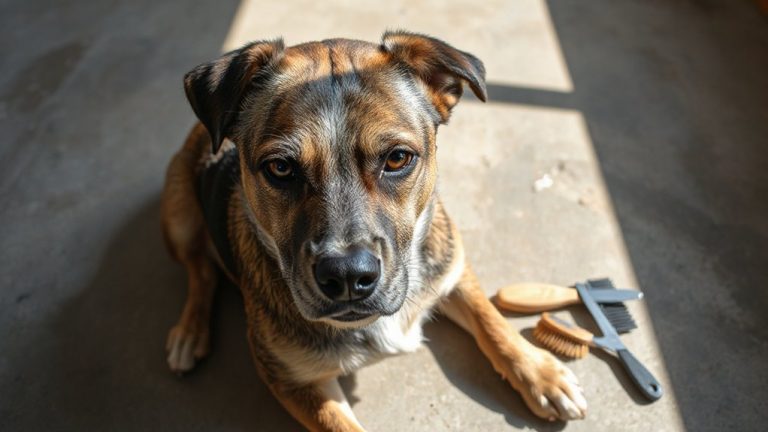
Using a Deshedding Blade on a Dog With a Loose Undercoat in Spring
You can effectively remove loose undercoat in spring using a deshedding blade at a 30-degree angle to the skin. Apply light, consistent pressure in short strokes following hair growth. The blade’s teeth, spaced 1–2 mm apart, target only dead undercoat without cutting guard hairs. It works best on double-coated breeds shedding up to 70% more seasonally. Avoid using it on matted or irritated skin. Proper technique and blade maintenance guarantee safe, efficient results each season. More details on ideal tools and timing follow.
Notable Insights
- Spring shedding increases loose undercoat, making deshedding blades ideal for removing dead hair efficiently.
- Use a 30-degree angle with light pressure to safely target loose undercoat without irritating skin.
- Focus on dense areas like the rump and flank, working in 2-inch sections with the hair’s natural lay.
- Avoid using blades on matted fur; detangle first with a wide-tooth comb to prevent pain and breakage.
- Clean the blade after use and replace it if dull, as sharp stainless steel lasts over 50 uses.
Why Your Dog Sheds More in Spring
While daylight hours increase in spring, your dog’s body responds to the changing light cycle by triggering hormonal shifts that regulate coat growth. These shifts stimulate the shedding of the dense winter undercoat to prepare for warmer weather. Temperature changes play a key role-rising ambient heat prompts your dog’s skin to release oils that loosen old hair follicles. You’ll notice more fur on furniture and clothing. This natural process, known as molting, peaks in early to mid-spring. Seasonal allergies can worsen shedding; histamine responses inflame follicles, accelerating hair loss. Dogs with double coats, such as Huskies or Golden Retrievers, shed up to 70% more during this period. Grooming frequency should increase to manage loose hair. Failure to remove dead undercoat can lead to matting, reduced airflow, and skin irritation. Ambient humidity and indoor heating also influence shedding intensity.
How to Use a Deshedding Blade Safely
You can manage your dog’s seasonal shedding more effectively by using a deshedding blade correctly. Hold the blade at a 30-degree blade angle to the coat-too steep risks skin irritation, too flat reduces hair removal efficiency. Apply light, consistent pressure; effective pressure control prevents cuts and guarantees only dead undercoat is removed. Most deshedding blades feature blunt-tipped teeth spaced 1–2 mm apart, designed to pass over the skin safely while pulling loose fur. Work in 2-inch sections, moving with the grain of the coat. Avoid repeated passes over the same area to minimize skin stress. High-quality blades use stainless steel edges that retain sharpness through 50+ uses. Never press down hard-the tool does the work when used properly. Proper blade angle and pressure control maximize effectiveness while protecting your dog’s skin. Always clean the blade after use to maintain performance. For best results, consider a tool from the top deshedding tools based on expert evaluations.
Brushing Thick Double Coats the Right Way
A double coat’s dense underlayer and protective topcoat demand a methodical brushing approach to prevent matting and manage heavy shedding. You must assess the undercoat texture first-dense, soft fur requires a different technique than coarse or woolly types. Begin with a high-quality deshedding blade, holding it at a 30-degree blade angle to the skin to avoid irritation while effectively capturing loose undercoat hairs. Apply light, even pressure in short strokes, moving with the hair’s natural lay. This angle maximizes efficiency without cutting topcoat guard hairs. Brush in sections, especially on thick areas like the rump and flank, where matting starts. Lift the topcoat gently to reach the underlayer directly. Regular, consistent brushing reduces shedding by up to 90% during spring. Proper technique preserves coat health and improves blade performance over time.
When Not to Use a Deshedding Blade (And What to Use)
Why would you risk damaging your dog’s coat with the wrong tool? Never use a deshedding blade on matted fur-it pulls, causing pain and worsening matting concerns. The blade’s close-set teeth, typically 0.5–1.2 mm apart, snag tangled hair instead of cutting cleanly through loose undercoat. Using it on mats increases friction, raising the risk of skin abrasions. Avoid it also if your dog has sensitive skin; the firm pressure needed may trigger irritation or micro-tears. Conditions like dermatitis or allergies demand gentler solutions. Instead, use a wide-tooth comb (teeth spaced 3–6 mm apart) to detangle first. For sensitive skin, opt for a soft slicker brush with fine, bent wires to reduce surface pressure. These tools manage shedding safely without compromising skin integrity or coat structure. For persistent tangles, consider one of the best pet dematting tools recommended for effective, pain-free removal.
How Deshedding Blades Remove Loose Undercoat
When used correctly, a deshedding blade efficiently removes loose undercoat hair by targeting only the dead or dying hairs ready to shed. The tool’s fine, curved edge slides just beneath the topcoat, capturing undercoat without cutting healthy guard hairs. Your blade technique is critical-use short, overlapping strokes in the direction of hair growth, applying light, consistent pressure. Too much force can damage the skin or pull live hairs. The effectiveness depends on your dog’s coat texture; blades work best on dense, double coats with a soft underlayer, like those of Huskies or Golden Retrievers. Fine or wiry single coats may not respond as well. Properly designed blades have teeth spaced 0.5 to 1.2 mm apart, optimized to trap loose undercoat while letting air pass. This precision reduces friction and prevents heat buildup.
Tools to Reduce Shedding Between Sessions
You’ve trimmed the loose undercoat with a precision deshedding blade-now maintain that reduction between grooming sessions with tools designed to manage daily shedding. Shedding prevention relies on consistent seasonal care. Use these tools to capture loose hair before it disperses. A high-quality deshedding shampoo can further support coat health by loosening dead hair during bathing.
| Tool | Function & Specifications |
|---|---|
| Rubber curry brush | 3-inch textured surface; lifts dead hair during bathing |
| Double-sided slicker | Fine-wire pins, 1-inch density; removes tangles and undercoat |
| Stainless steel comb | Teeth spaced 0.5mm apart; detects matting early |
| Grooming glove | Silicone nibs, hand-sized; ideal for short daily passes |
| Forced-air dryer | 120 CFM airflow; blows out undercoat without heat damage |
Each supports shedding prevention while preserving coat health. Choose tools based on coat density and hair length.
On a final note
You should use a deshedding blade weekly during spring to manage loose undercoat efficiently. These tools feature closely spaced, sharp stainless steel teeth-typically 0.5 mm thick-that penetrate the topcoat and extract dead undercoat hairs without damaging skin. Always brush first to prevent matting. Avoid using on single-coated or short-haired breeds, as it may cause irritation. Pair with an undercoat rake or slicker brush between sessions for best coat health and reduced shedding.