Creating a Pet Emergency Kit for Households With Hamsters and Rats
Keep your hamsters and rats safe with a secure, escape-proof carrier made of rigid, BPA-free plastic, measuring at least 12 x 8 x 8 inches and featuring latching closures with gaps no larger than 0.25 inches. Guarantee 20% of the surface area is ventilated. Store 7–10 days of pelleted diet in sealed mylar pouches and provide 8 oz of fresh water per rodent daily in BPA-free containers. Use reflective mylar blankets and fleece-lined hideouts to maintain warmth. Include sterile saline, antiseptic ointment, and non-adhesive gauze for first aid. A hygrometer helps monitor ideal 40–60% humidity. Everything you need to maintain their health and safety in one organized system is within reach.
Notable Insights
- Use a secure, ventilated carrier with transparent sides and latching closures to safely transport rodents during emergencies.
- Store a seven-day supply of sealed water and pelleted food in mylar or airtight containers to maintain freshness and prevent contamination.
- Include reflective mylar blankets and nesting materials to help regulate body temperature and reduce stress.
- Pack a rodent-specific first aid kit with saline, antiseptic ointment, and non-adhesive dressings in a waterproof container.
- Monitor microclimate conditions using a hygrometer and include bedding, waste bags, and disinfectant wipes for sanitation.
Build a Hamster and Rat Emergency Kit: What to Pack
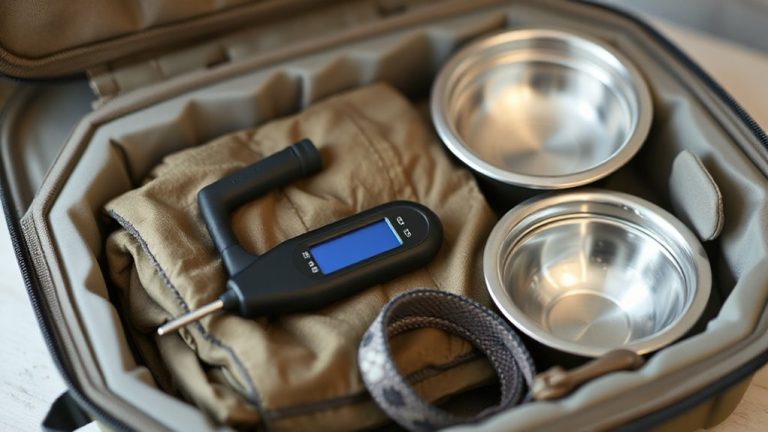
While preparing for emergencies might seem overwhelming, assembling a proper kit for your hamster or rat guarantees their survival during unexpected situations like power outages or evacuations. You need a secure, escape-proof carrier with adequate cage ventilation-minimum 20% open surface area on sides and top-to maintain airflow without drafts. Include a compact, chew-resistant food container holding 7–10 days of lab block diet, measured at 5–10 grams daily depending on species. Rotate bedding every 48 hours to minimize ammonia buildup; pack enough paper-based or aspen substrate for three bedding rotations. Add thermal insulation like a reflective emergency blanket to stabilize temperature between 65–75°F. Include a small hygrometer to monitor humidity (ideal: 40–60%). Carry waste bags, vinyl gloves, and disinfectant wipes for sanitation. Use a labeled, waterproof tote (minimum 12″ x 8″ x 10″) to organize all components efficiently.
Store Fresh Food and Water for Emergencies
A reliable supply of fresh food and water is essential for sustaining your hamster or rat during extended emergencies. Use sealed, BPA-free containers for water storage, with a minimum capacity of 8 fluid ounces per rodent per day. Store enough for at least seven days, rotating supplies every six months to maintain freshness. For dry food, choose sealed mylar pouches or airtight polyethylene bins to prevent moisture and mold. Implement a strict food rotation system using the “first in, first out” method to avoid spoilage. Include pelleted rodent diet rather than seed mixes to guarantee balanced nutrition and reduce waste. Avoid perishable treats unless freeze-dried. Label all containers with purchase and expiration dates. Maintain storage temperatures between 50–70°F (10–21°C) in a dark, dry location. Proper water storage and food rotation guarantee your pets receive safe, consistent nutrition when normal resources are unavailable.
Keep Your Hamster or Rat Warm Without Power
Your hamster or rat depends on stable environmental conditions, and maintaining proper body temperature becomes critical when power fails. Hypothermia risks increase below 65°F (18°C), so immediate warming measures are essential. Use thermal blankets made of reflective mylar; they retain up to 90% of body heat and weigh under 2 ounces, fitting easily in emergency kits. Wrap your pet gently or line the carrier interior. Complement this with insulated nesting materials like fleece-lined hideouts or dual-layered polyester fiberfill nests, which reduce heat loss by trapping air close to the body. Nest boxes should measure at least 6 x 6 x 4 inches to allow full burrowing. Avoid direct heat sources like hot water bottles if unsupervised-risk of burns is high. Instead, combine thermal blankets and insulated nesting to create a microclimate that stabilizes temperature without external power. For longer-term warmth, consider battery-operated heated pet beds designed for small animals, which provide consistent, safe heat during extended outages.
Include First Aid and Emergency Meds for Rats and Hamsters
Every emergency kit for rats and hamsters should include a dedicated first aid supply capable of addressing common injuries and acute health issues. Wound care and infection prevention are critical-minor cuts or abrasions can quickly escalate without prompt treatment. Use sterile saline solution for cleaning injuries and apply veterinary-approved antiseptic ointment sparingly to prevent bacterial growth. Always handle small mammals gently to avoid stress or additional trauma. Include soft gauze pads and adhesive-free vet wrap to secure dressings without harming delicate skin. Top-rated pet first aid kits often include species-specific supplies that can be adapted for small mammals.
| Item | Purpose |
|---|---|
| Sterile saline | Cleans wounds, flushes debris |
| Antiseptic ointment | Prevents infection in minor injuries |
| Non-adhesive gauze | Protects wounds during care |
Ensure all medications are labeled and stored in a sealed, waterproof container. Check expiration dates every six months.
Use a Safe, Portable Carrier for Evacuations
When an emergency requires you to move your hamster or rat quickly, having the right carrier can mean the difference between a controlled evacuation and a dangerous escape attempt. Choose a rigid, escape-proof carrier made of impact-resistant plastic with secure, latching closures. Escape prevention is critical-gaps larger than 0.25 inches allow small rodents to slip out. The carrier should measure at least 12 x 8 x 8 inches to provide space for movement while remaining compact for transport. Adequate ventilation design guarantees airflow without exposure-drilled holes of 0.15 to 0.2 inches in diameter, spaced 0.5 inches apart, prevent suffocation and resist debris entry. Avoid wire cages during evacuation due to injury risk and poor structural integrity. Line the base with absorbent material to manage waste. A transparent carrier allows visual monitoring without disturbance. For extended outings or temporary housing during displacement, consider a pet travel playpen that offers secure, spacious containment with easy setup.
On a final note
You need an emergency kit tailored to your hamster’s or rat’s specific needs. Include at least 14 days of sealed pelleted food (1–2 oz daily per animal) and water-storing bottles (8–12 oz each). Use a rigid, ventilated carrier (minimum 10” x 6” x 6”) for transport. Maintain warmth with chemical heat pads (101°F output, 12-hour duration). Stock first aid supplies: wound ointment, saline, and vet-prescribed antibiotics.