How to Transition a Picky Eater Dog to a Weight-Loss Diet Without Resistance
Switch your picky dog to a weight-loss diet gradually over 7–10 days to prevent digestive upset. Start with 25% new food mixed into 75% old food, increasing the ratio every two to three days. Choose a palatable formula with named animal proteins and natural flavor enhancers like liver digest. Use wet food or broth infusions for stronger aroma. Introduce food puzzles to increase engagement and control intake. Limit treats to 10% of daily calories-opt for carrots or tiny freeze-dried liver cubes under 10 calories. Monitor stool quality and appetite daily. Adjust blending speed if refusal occurs. Maintain consistent meal times, ideally twice per day. A slow, structured shift supports long-term compliance and metabolic adaptation. Further refinements to meal strategy and product selection are available to optimize results.
Notable Insights
- Choose a palatable weight-loss food with named animal proteins and natural flavor enhancers to appeal to picky eaters.
- Transition gradually over 7–10 days, starting with 25% new food mixed into 75% old food.
- Use wet food or broth-infused options to increase aroma and acceptance during the diet switch.
- Incorporate food puzzles to make mealtime engaging and encourage acceptance of the new diet.
- Limit treats to 10% of daily calories, using low-calorie options like carrots or small freeze-dried liver cubes.
Avoid Sudden Diet Changes
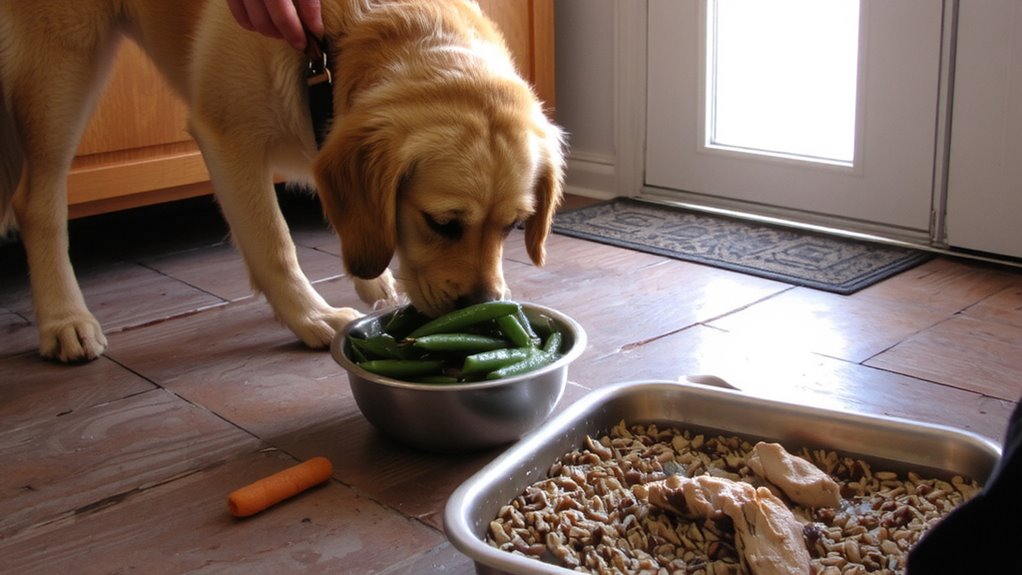
While switching your dog’s food too quickly might seem like a fast track to weight loss, it can severely disrupt their digestive system. Sudden changes in diet commonly trigger digestive upset, including diarrhea, vomiting, and gas. A dog’s gastrointestinal tract requires time to adjust to new ingredients and nutrient profiles. You should shift over 7–10 days, starting with 25% new food mixed into 75% old food. Gradually increase the proportion of new food every two to three days. This slow introduction supports microbial balance in the gut, minimizes stool inconsistency, and maintains nutrient absorption efficiency. Failure to follow this protocol risks compromising your dog’s health and halting weight-loss progress. Controlled, incremental blending guarantees physiological adaptation. Always monitor stool quality and appetite. Abrupt switches ignore digestive physiology-patience improves compliance and outcomes.
Pick a Palatable Weight-Loss Food for Picky Dogs
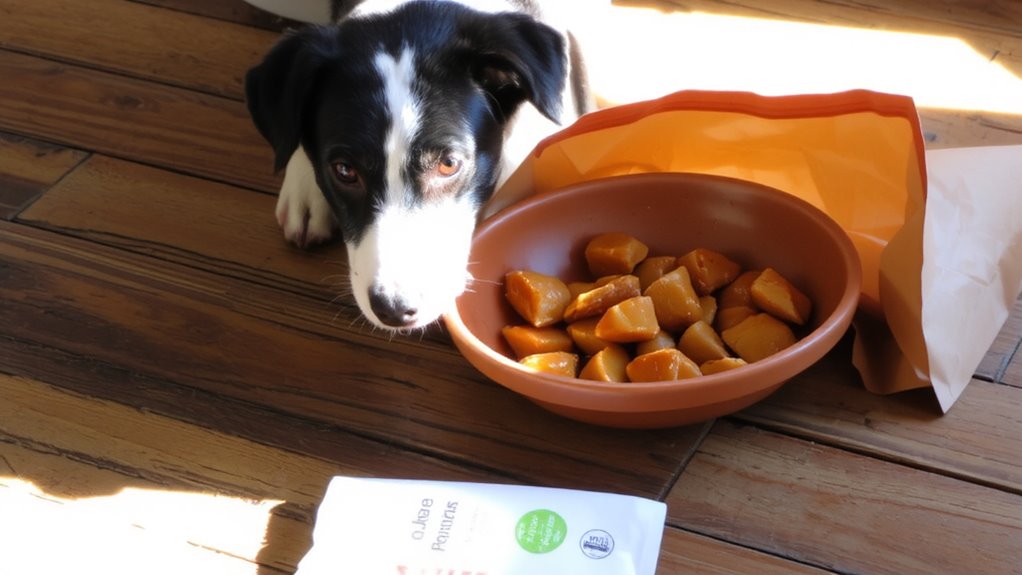
Choosing the right weight-loss food for a picky dog means balancing palatability with precise nutritional control. You need a formula that supports caloric restriction without sacrificing taste. Prioritize brands with clean ingredient sourcing-opt for named animal proteins like deboned chicken or lamb as the first ingredient. Flavor enhancement matters: look for natural liver digest or broth infusions that increase palatability without adding calories. Consider moisture content; wet foods often offer stronger aroma and taste appeal. Always confirm the diet meets AAFCO nutrient profiles for adult maintenance or weight management. For small breeds like Pomeranians, selecting a formula tailored to their size can enhance acceptance and nutrient balance, such as those found in the best dog food for Pomeranians.
Blend Foods Slowly to Prevent Refusal
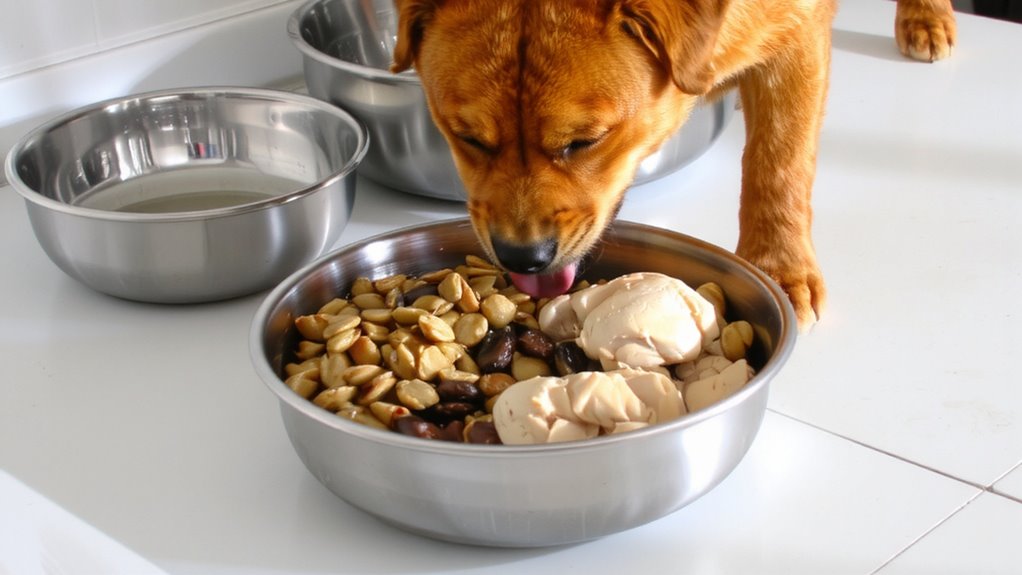
Since abruptly changing your dog’s food can lead to refusal-even with palatable weight-loss formulas-you’ll want to switch using a gradual blending method. Start by mixing 25% new food with 75% current food for two to three days. Gradually increase the new food ratio every few days until your dog eats 100% of the new diet within 7 to 10 days. This slow change helps your dog adjust to changes in food texture and taste. Sudden shifts in food texture can trigger digestive upset or meal refusal. Maintain a consistent feeding schedule to reinforce predictability and acceptance. Feed meals at the same times daily, ideally twice a day, to support metabolic regulation. Monitor intake closely during the switch. Adjust blending speed if your dog shows hesitation. A structured change reduces resistance and increases long-term compliance with the weight-loss plan.
Use Food Puzzles to Boost Meal Interest
Food puzzles transform mealtime into an engaging challenge, turning simple eating into active problem-solving. These devices provide food enrichment by requiring your dog to manipulate compartments, slides, or balls to release kibble. Food puzzles increase mental stimulation, which reduces boredom-related pickiness. Choose puzzles with adjustable difficulty-begin with simple slide-feeders (e.g., 2-compartment, low resistance) before advancing to three-tiered models requiring multi-step actions. Most puzzles hold ½ to 1 cup of food, suitable for single meals. Use portion-controlled kibble from your weight-loss plan to avoid calorie excess. Rotate puzzle types weekly to sustain interest. Studies show dogs using food puzzles exhibit 30% greater food engagement versus bowl feeding. They also show improved focus and reduced anxiety. The combination of physical interaction and cognitive demand mimics foraging, aligning with natural canine behaviors. This structured engagement supports dietary adherence without increasing caloric intake. For effective results, consider using top-rated dog training toys that double as food puzzles.
Treat Smart Without Extra Calories
How do you reward your dog without undermining weight-loss progress? Treat smart with strict portion control and low calorie alternatives. Standard commercial treats often contain 25–50 calories per piece-equivalent to several tablespoons of kibble-easily disrupting a calorie deficit. Instead, use cut vegetables like carrots or green beans, averaging 3–7 calories per ¼ cup. Freeze-dried liver can be sliced thinly; a ¼-inch cube provides flavor satisfaction at under 10 calories. Limit treats to 10% of your dog’s daily caloric intake to maintain energy balance. For a 20-pound dog needing 300 kcal/day, that’s no more than 30 treat calories. Dispense treats in exact portions using a measuring spoon or digital scale. Replace high-calorie rewards with non-food reinforcement-play, petting, or verbal praise-enhancing compliance without caloric cost.
Track Weight and Energy Weekly
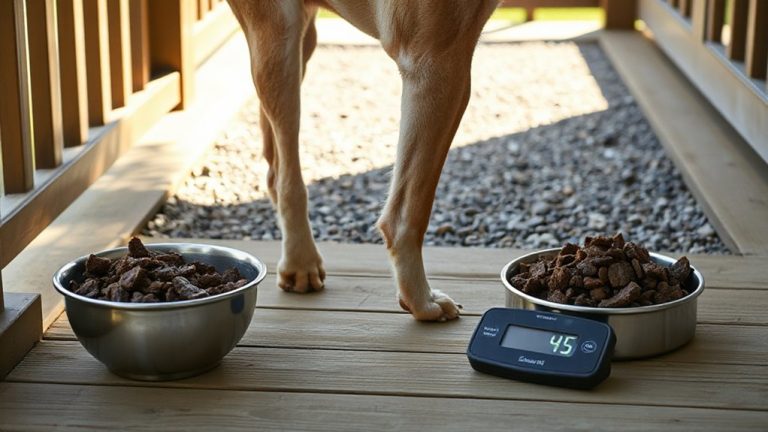
Regularly tracking your dog’s weight and energy levels helps guarantee the diet plan works as intended. Weight monitoring secures fat loss without muscle depletion, while energy tracking detects metabolic shifts early. Use a digital scale accurate to 0.1 lb and log results weekly. Evaluate activity duration, play intensity, and resting behavior consistently. Sudden drops in energy may signal calorie deficits; increases suggest effective shift.
| Week | Weight (lbs) | Energy Level (1–5) |
|---|---|---|
| 1 | 45.2 | 4 |
| 2 | 44.8 | 4 |
| 3 | 44.3 | 3.5 |
| 4 | 43.9 | 3.5 |
| 5 | 43.6 | 4 |
Maintain this table weekly. Accurate weight monitoring prevents underfeeding. Energy tracking correlates diet to function.
On a final note
You must shift your dog’s diet gradually to avoid digestive upset. Replace 25% of the current food with the new weight-loss formula every two to three days. Choose a food with real meat as the first ingredient and at least 18% protein for adult dogs. Use portion-controlled food puzzles to slow eating and increase satiety. Monitor body condition score weekly; adjust portions by 10% if weight loss exceeds 1–2% of body weight per week.