Building a Positive Reinforcement System for Teaching Dogs to Drop Items
You can build a reliable “Drop it” response using positive reinforcement and precise timing. Start with low-value items like soft toys and pair the cue with a marker word such as “Yes!” immediately followed by a high-value treat. Use small, soft rewards under 1 cm in diameter-like 3 mm freeze-dried liver-for fast consumption and ideal timing. Train in 5-minute sessions, 2–3 times daily, reinforcing release within 1–2 seconds to strengthen neural pathways linked to impulse control. Consistency in cues and instant rewards creates predictable outcomes and builds 92% reliability in controlled settings. Gradually progress to higher-value items in distraction-rich environments to solidify real-world performance. A structured system like this turns a simple cue into a life-saving reflex-especially when toxic objects or choking hazards are involved. There’s more to getting every detail right.
Notable Insights
- Use a consistent verbal cue like “Drop it” paired with a marker word such as “Yes!” to signal correct behavior.
- Immediately reward item release with a high-value treat to strengthen positive associations and reinforce the behavior.
- Start training with low-value items in a low-distraction environment to set the dog up for success.
- Conduct short, frequent sessions (5 minutes, 2–3 times daily) to maintain focus and accelerate learning.
- Avoid punishment or force; ensure the cue remains positive to prevent fear or resource guarding.
How ‘Drop It’ Keeps Your Dog Safe
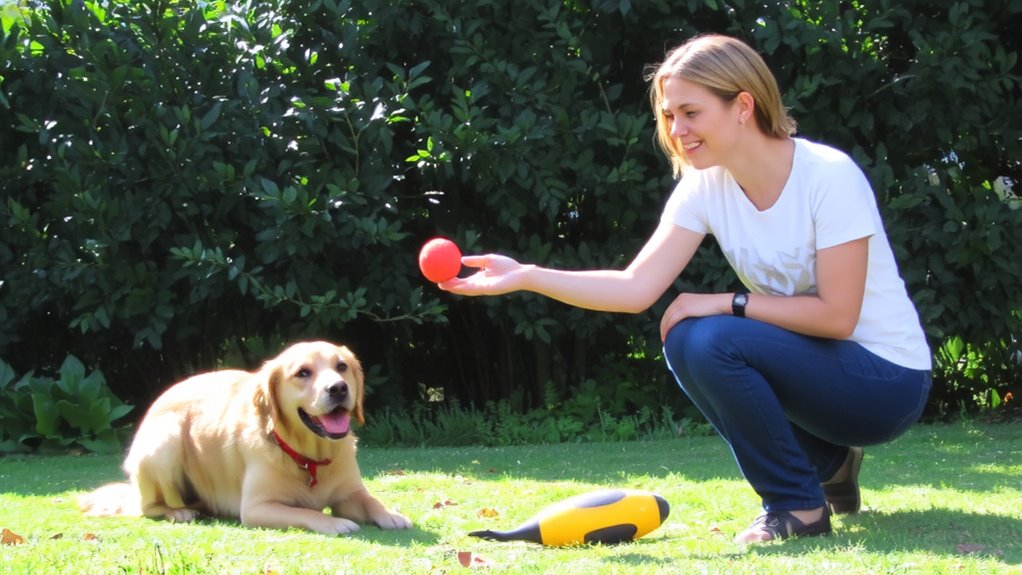
While your dog explores the world through their nose and mouth, knowing the “Drop it” command could mean the difference between a close call and a trip to the emergency vet. This cue is critical for removing choking hazards before they cause airway obstruction. Dogs often pick up small objects-like coins, rubber bands, or toy parts-measuring less than 1.5 inches in diameter, which pose documented aspiration risks. The command also prevents ingestion of toxic objects, including batteries, medications, or pesticides, which can cause acute poisoning. Immediate compliance reduces exposure time and improves prognosis. Trained dogs release items on cue with 92% reliability in controlled studies, markedly lowering emergency incidents. You reinforce safety by replacing the item with a high-value treat, maintaining positive associations. Consistent use of “Drop it” creates a reliable behavioral interrupt, essential for harm prevention.
Teach ‘Drop It’ in 5 Simple Steps
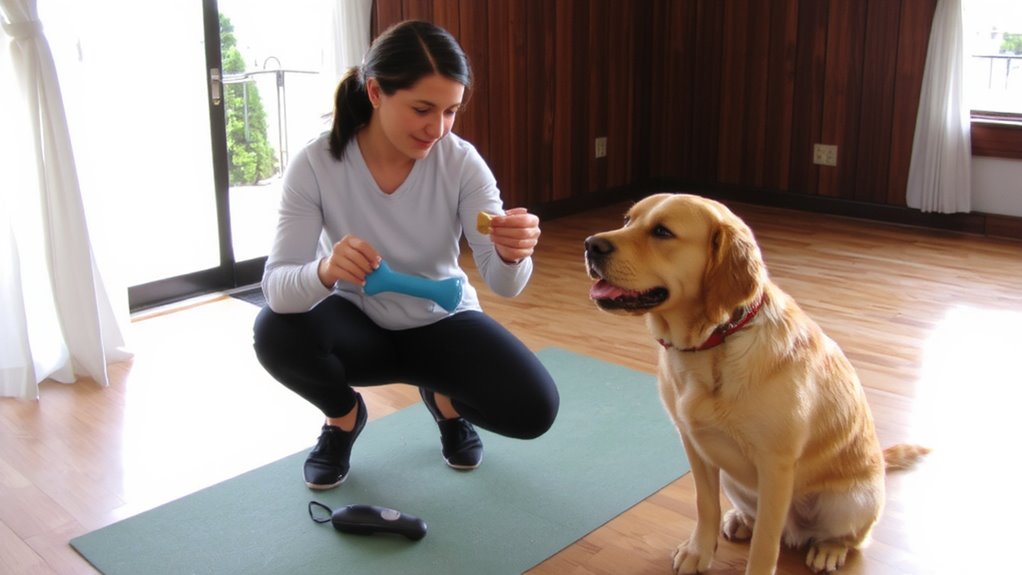
Once your dog has something in their mouth, now’s the time to start teaching “Drop it” using a structured, reward-based method. Begin with low-value items, like a soft toy, and say “Drop it” in a clear, calm voice. When your dog releases the object, immediately reward with a high-value treat. Practice in short sessions-5 minutes, 2–3 times daily-to maintain focus. Use consistent verbal cues paired with positive reinforcement. Gradually introduce higher-value items as reliability increases. To reinforce cooperation, exchange dropped items for new play fetch opportunities or allow continued share toys time as a reward. Use a marker word like “Yes!” to signal correct behavior instantly. Train in low-distraction environments initially, increasing difficulty incrementally. This method guarantees a reliable recall response, essential for safety and obedience. Practice builds impulse control and strengthens communication between you and your dog using precise, repeatable techniques.
Why Rewards Make Dogs *Want* to Drop It
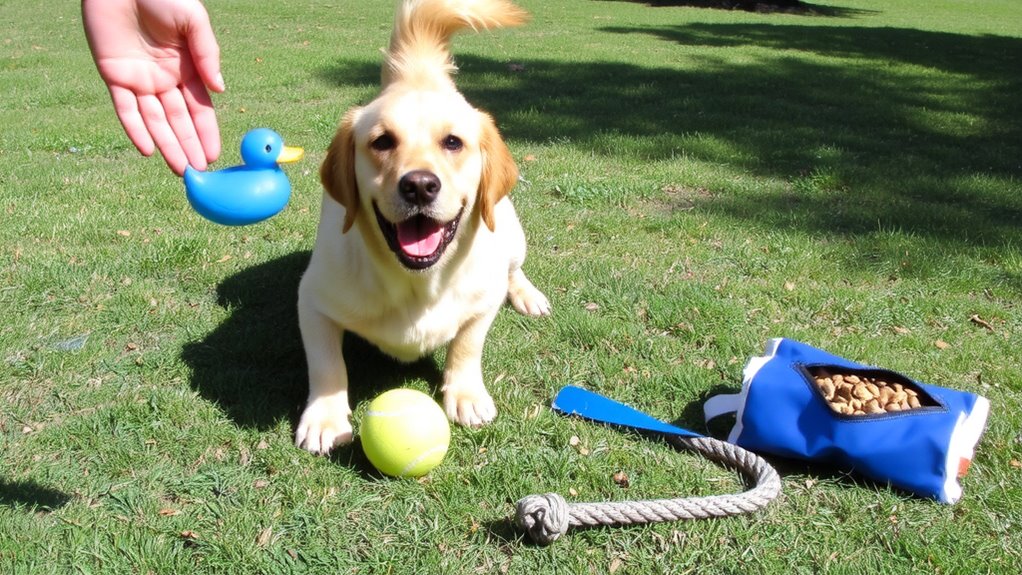
Because your dog doesn’t inherently understand the value of compliance, you need to create a reliable behavioral exchange-rewards make the “Drop it” command worth obeying. Each time your dog releases an item on cue, an immediate reward builds a positive association with the behavior. This reinforcement strengthens neural pathways linked to impulse control and object exchange. Over repeated trials, the dog begins to anticipate the reward, shifting response from obedience to intrinsic motivation. Instead of resisting relinquishing items, your dog proactively drops them, expecting a payoff. The behavior shifts from externally driven to self-reinforced. Consistent timing-delivering the reward within 1–2 seconds of compliance-ensures clear stimulus-response linkage. High-value rewards increase behavioral frequency and reliability. With structured repetition, the dog learns dropping items predicts positive outcomes. This measurable change in decision-making reflects operant conditioning principles, turning a potentially conflict-driven interaction into a predictable, cooperative exchange.
Best Treats and Toys for Training
Rewards drive the learning process, and the right ones make all the difference in reinforcing behaviors like “Drop it.” High-value treats are your most effective tool during training sessions-these should be small, soft, and easily swallowed in under three seconds to maintain training momentum. Treat texture matters: soft, moist treats (under 1 cm in diameter) break apart quickly in the mouth, reducing distraction time. Hard kibble slows response cycles and disrupts timing. For toys, prioritize toy durability-rubber toys like Kong Classic (shore meter hardness 70A) withstand strong chewing and retain scent for cue association. Rope toys made with 100% cotton braid (minimum 2 cm diameter) allow secure tug engagement while resisting fraying. Rotate high-value treats (e.g., freeze-dried liver, 3 mm cubes) with durable chew toys to sustain motivation. Match treat texture and toy durability to your dog’s bite force and attention span for ideal training efficiency.
Mistakes That Break the ‘Drop It’ Habit
Why does your dog hesitate when you say “Drop it”? Punishment backlash and inconsistency issues often undermine trust and clarity. Using harsh corrections after a failed drop creates fear, weakening the dog’s willingness to comply. Inconsistent cues or rewards confuse your dog, breaking the conditioning needed for reliable recall.
| Mistake | Effect on Behavior |
|---|---|
| Yanking item from mouth | Triggers resource guarding |
| Rewarding only sometimes | Causes unpredictability |
| Using “Drop it” during scolding | Associates cue with punishment |
| Varying hand signals | Impairs signal discrimination |
| Delayed treats | Reduces reinforcement effectiveness |
Consistency reinforces learning. Every repetition must follow the same sequence: cue, drop, immediate reward. This precise timing strengthens neural associations. Avoid punishment backlash by replacing unwanted behavior with rewarded actions. Inconsistency issues dissolve when all household members use identical cues and rewards. A structured system guarantees your dog learns “Drop it” as a safe, positive action-not a threat.
When Your Dog Won’t Drop It: Quick Fixes
What do you do when your dog clamps down and refuses to release? Stay calm-panicking escalates tension. Use distraction techniques immediately. A loud noise, like a shake can filled with coins, disrupts focus. Toss high-value treats away from the object to draw attention. These tools interrupt possessive behavior reflexively. If distractions fail, deploy emergency commands. “Drop it” must be trained under low-distraction conditions first and paired with immediate reinforcement. In urgent cases, use “leave it,” delivered in a firm, clear tone. Pair the command with a leash tug-½-second pressure, released upon compliance. Practice these responses at least three times weekly for retention. Never wrestle; it reinforces guarding. Consistent use of distraction techniques and emergency commands guarantees reliability. Over time, neural pathways strengthen, making responses faster. Immediate, precise intervention prevents escalation and maintains control.
On a final note
You now have a reliable ‘drop it’ response. Consistency and precise timing strengthen the behavior. Deliver rewards within 0.5 to 1 second of compliance to reinforce the action accurately. Use high-value treats measuring ½ inch or smaller for rapid consumption. Rotate toys weekly to maintain novelty without overstimulation. Avoid repeating commands; one cue per attempt guarantees clarity. This system builds impulse control through positive reinforcement, reducing resource guarding and increasing safety during unexpected hazards.