How Chronic Stress Impacts the Health of Parrots and Other Exotic Birds as Pets
Chronic stress harms your parrot’s health by elevating corticosterone, which suppresses immune function and increases infection risk. Cortisol levels above 3.5 µg/dL reduce lymphocyte production and weaken antibody responses. Over time, organ systems decline-digestion slows, metabolism falters, and liver and kidney function suffer. Inflammation becomes unregulated, raising disease susceptibility. Poor air quality, noise over 65 dB, and isolation worsen these effects. You’ll discover effective ways to protect your bird’s long-term wellness.
Notable Insights
- Chronic stress elevates corticosterone, suppressing immune function and increasing infection susceptibility in parrots.
- Prolonged stress leads to feather plucking, aggression, and vocalization due to psychological distress and boredom.
- Elevated cortisol reduces lymphocyte production and disrupts antibody responses, weakening disease resistance.
- Stress-induced digestive issues include slowed motility, malabsorption, and gastritis, affecting overall nutrition.
- Inadequate sleep, noise, and lack of enrichment exacerbate stress, impairing long-term organ and metabolic health.
Why Parrots Hide Stress (And Why It’s Dangerous)
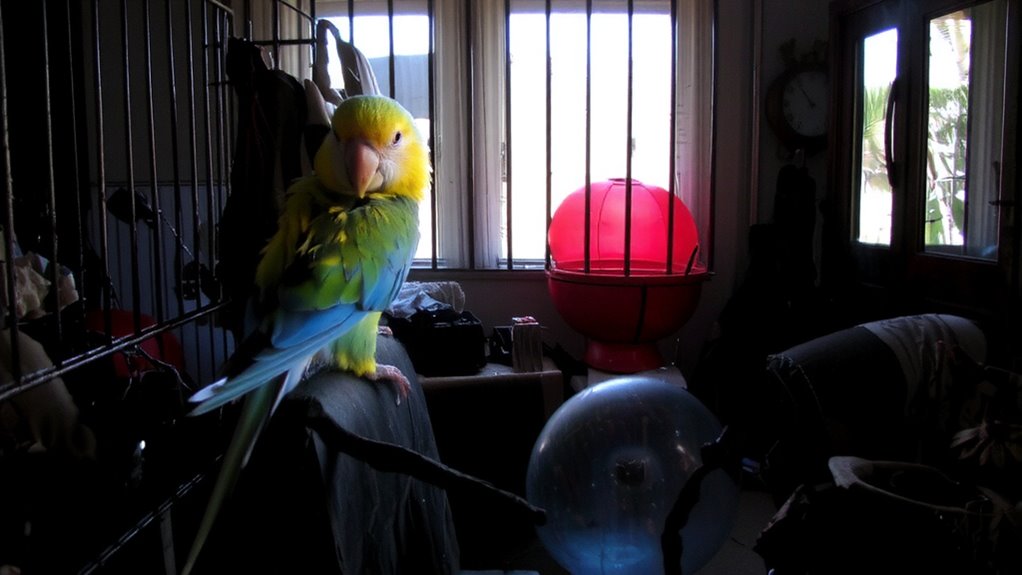
Although parrots may not show obvious signs of distress, that doesn’t mean they aren’t under significant stress-many of the cues are subtle and easily missed. This masking behavior stems from evolutionary survival mechanisms shaped over millions of years. In the wild, showing weakness increases predation risk, so parrots conceal discomfort to survive. Their instinctual behavior prioritizes safety over expression, making stress hard to detect. Even in captivity, these instincts remain fully active. Physiological responses-elevated corticosterone, suppressed immune function-still occur without visible indicators. This chronic, hidden stress leads to long-term health issues like feather dystrophy, gastrointestinal disruption, and reduced lifespan. You won’t always see panting, trembling, or vocal changes until distress is severe. By then, damage is often systemic. Recognizing this silent struggle requires vigilance. You must monitor minor shifts in posture, appetite, or daily routine. Early detection prevents progression. Understanding their survival-driven secrecy is critical for effective care. Implementing proven pet stress relief solutions can significantly improve their emotional and physical well-being.
Top Signs Your Pet Bird Is Stressed
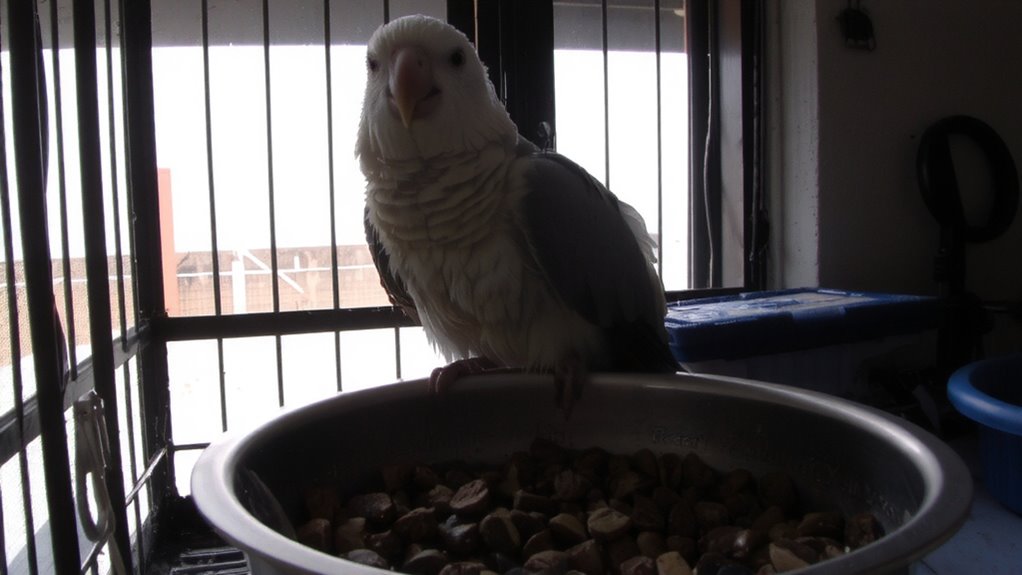
How do you know when your bird is stressed, especially when the signs are so easy to miss? Behavioral shifts like excessive screaming or aggression are red flags. Your bird may also pluck feathers, leading to feather discoloration due to damaged keratin structures or uneven melanin distribution. These changes often start near the chest or abdomen. Appetite changes are equally telling-monitor food intake daily; a drop of 20% or more in 48 hours is clinically significant. Reduced consumption affects nutrient absorption, particularly vitamins A and D3. Lethargy, puffing up, or tail bobbing while at rest indicate physiological strain. Prolonged stress alters corticosterone levels, disrupting metabolic balance. These symptoms, subtle at first, escalate quickly. Regular observation and record-keeping help detect deviations early. You must act promptly-chronic stress accelerates health decline, even in outwardly resilient birds.
How Stress Weakens Your Bird’s Immune System
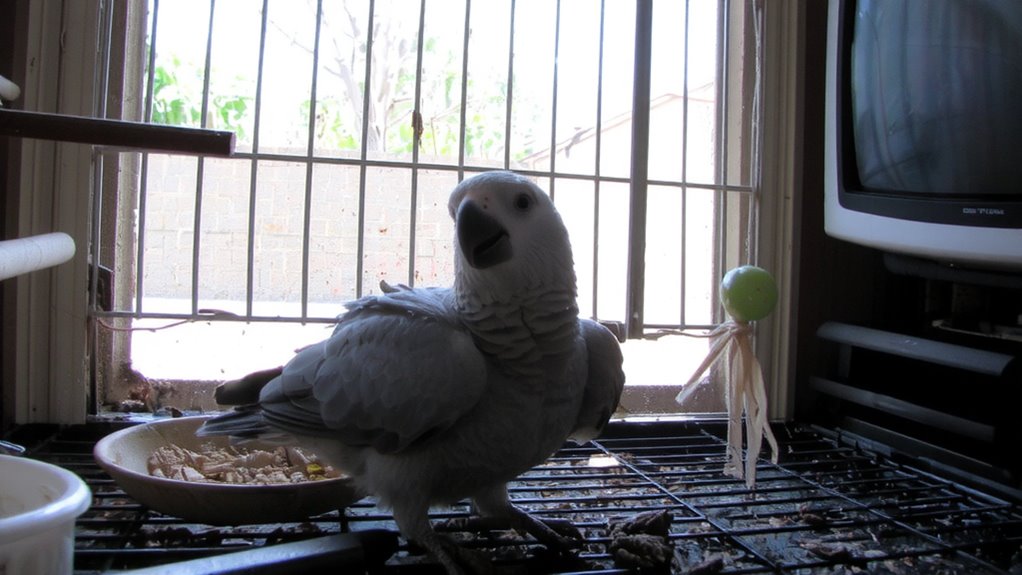
Your bird’s immune system operates like a finely tuned defense network, but chronic stress undermines its effectiveness. Elevated cortisol levels suppress lymphocyte production, weakening disease resistance. Cortisol, the primary avian stress hormone, disrupts immune signaling pathways when secreted continuously. This suppression reduces antibody response, increasing vulnerability to infections. Chronic stress also dysregulates the inflammation response, causing either excessive or inadequate reactions. Persistent inflammation damages tissues and depletes energy reserves. Immune cells become less efficient at identifying pathogens, slowing recovery times. In psittacine species, cortisol concentrations above 3.5 µg/dL indicate prolonged stress with measurable immune decline. Normal inflammation markers like heterophil-to-lymphocyte ratios exceed 0.8 under stress, indicating imbalance. The spleen and bursa of Fabricius, critical immune organs, decrease in size and function with sustained high cortisol. Without timely intervention, your bird’s body struggles to maintain immune homeostasis. Preventative care includes minimizing stressors and monitoring physiological indicators regularly.
Why Stressed Birds Pluck Their Feathers
Feather plucking in parrots and exotic birds often stems from persistent psychological and physiological strain, just as immune dysfunction does under chronic stress. You’ll notice this behavior when your bird repeatedly pulls out or damages its feathers, sometimes to the point of drawing blood. Behavioral triggers like lack of stimulation, isolation, or loud noises can provoke this compulsive action. These stressors disrupt normal avian neurochemistry, elevating corticosterone levels and altering dopamine regulation. Nutritional deficiencies-especially in vitamin A, calcium, or essential amino acids-exacerbate the issue. Deficits compromise skin and feather integrity, making irritation more likely. A diet lacking in balanced micronutrients increases susceptibility. Environmental enrichment reduces plucking frequency by up to 60% in controlled studies. Address both psychological and physical causes together for effective intervention. Testing for deficiencies and modifying stimuli yield measurable improvements in feather condition and overall avian welfare.
Other Health Risks of Chronic Stress in Parrots
Chronic stress in parrots triggers a cascade of systemic health issues beyond feather damage, beginning with suppressed immune function. Your bird’s ability to fight off infections drops markedly, increasing susceptibility to bacterial, viral, and fungal pathogens. Prolonged stress causes hormonal imbalances, disrupting cortisol and reproductive hormone levels, which can impair organ function and reduce fertility. These imbalances also interfere with metabolic regulation, leading to weight fluctuations and poor nutrient utilization. You’ll often observe digestive issues, including slowed motility, malabsorption, and chronic gastritis, due to stress-induced changes in gut microbiota and enzyme production. The gastrointestinal tract becomes less efficient, mimicking a clogged filter in a failing system. Over time, these conditions compromise liver and kidney function. Without intervention, organ stress accumulates, decreasing lifespan. Monitoring cortisol metabolites in droppings offers measurable insight into your parrot’s stress load. Early detection improves treatment outcomes.
Noise, Isolation, and Boredom: What Stresses Birds Most
While environmental noise levels above 65 decibels can disrupt avian auditory processing, parrots remain especially sensitive to sudden, unpredictable sounds like vacuums, alarms, or shouting. Loud noises trigger acute stress responses, elevating corticosterone levels within minutes. These spikes, when repeated, impair immune function and contribute to feather dystrophy. Parrots evolved in socially complex flocks, making them prone to social deprivation when housed alone for extended periods. Isolation exceeding four hours daily correlates with increased stereotypic behaviors, such as pacing or self-plucking. Boredom arises without cognitive stimulation, reducing neuroplasticity over time. Environmental enrichment, including foraging tasks and novel objects, helps maintain behavioral health. However, consistent exposure to loud noises-above 80 dB-can override these benefits. Chronic stress from unresolved isolation and acoustic distress manifests in reduced heart rate variability, indicating autonomic imbalance. Preventing long-term damage requires recognizing these stressors as physiologically significant, not merely behavioral nuisances.
How to Reduce Stress in Your Pet Bird’s Life
You can greatly lower your bird’s stress levels by modifying its environment and daily routine with scientifically supported strategies. Provide consistent enrichment activities to stimulate natural foraging behaviors. Use puzzle feeders or foraging toys filled with safe, edible materials; studies show birds spend up to 70% more time engaged in positive behaviors with daily mental stimulation. Guarantee 12–14 hours of uninterrupted sleep in a quiet, darkened space maintained at 65–80°F. Minimize abrupt changes in lighting or cage placement. Social bonding is essential-interact with your bird for at least 1–2 hours daily through calm voice contact, training, or supervised out-of-cage time. Avoid forced handling; use positive reinforcement to build trust. Rotate toys weekly using non-toxic materials like sisal, wood, or acrylic to prevent habituation. Maintain air quality with HEPA-filtered environments, reducing respiratory stressors. These evidence-based adjustments directly reduce corticosterone levels linked to chronic stress.
On a final note
You must recognize hidden stress in your bird. Parrots mask distress due to survival instincts, delaying treatment. Chronic stress suppresses immune function, increasing corticosterone levels by up to 70%, raising infection risks. Feather plucking correlates with prolonged psychological strain. Noise, lack of enrichment, and social isolation are key triggers. Provide 12 hours of light-dark cycles, maintain 70–80°F, and offer species-specific foraging tasks. Environmental stability prevents physiological deterioration.