Preventing Territorial Aggression Around Shared Bowls in Multi-Pet Setups
You can stop food-related fights by separating bowls 6 to 10 feet apart, reducing line-of-sight contact and cutting resource guarding by up to 70%. Place stations in quiet areas, against walls, using non-slip mats for stability. Feed at consistent times daily-within 15-minute windows-to regulate cortisol and biological rhythms. Use stainless steel or ceramic bowls sized 1.5 inches wider than your pet’s muzzle, chosen by temperament. Larger dogs do best with shoulder-height bowls; smaller pets need lower ones. Calm behavior during meals earns immediate rewards, reinforcing positive habits. Further strategies build on these foundational adjustments.
Notable Insights
- Space feeding bowls 6 to 10 feet apart to minimize direct line of sight and reduce competition.
- Use separate, quiet feeding zones with non-slip mats to decrease stress and bowl guarding.
- Maintain consistent feeding times daily to regulate behavior and reduce food-related anxiety.
- Select appropriate bowls based on temperament-shallow stainless steel for anxious pets, heavy ceramic for dominant ones.
- Reinforce calm eating with immediate rewards and verbal cues, training at consistent pre-meal intervals.
Why Pets Fight Over Food Bowls (And How to Fix It)
Why do pets suddenly turn competitive at mealtimes? Your pets may exhibit food envy, a psychological response triggered by proximity to others during feeding. This behavior often escalates into a dominance display, especially in social hierarchies where status affects resource access. When animals eat close together, heightened alertness and guarding intensify. Food envy activates survival instincts, increasing heart rate and cortisol levels. A dominance display can include stiff posture, vocalizations, or blocking access-behaviors designed to assert control. These responses are more common in species with strong territorial instincts, like cats and certain dog breeds. The close placement of bowls-within 3 feet-exacerbates tension. Immediate correction isn’t enough. Modifying feeding dynamics reduces conflict. Use timed feeders with motion sensors (e.g., PetSafe 2-Meal Feeder, 15-second lockout) to regulate access. This disrupts dominance cycles and minimizes competition through environmental engineering.
Separate Bowls to Prevent Mealtime Aggression
A simple yet effective solution to mealtime tension is using separate feeding stations spaced at least 6 to 10 feet apart. This feeding distance reduces line-of-sight contact, minimizing competitive instincts. Bowl placement should occur in quiet, low-traffic zones to limit stress triggers. Position each bowl against a wall or corner to prevent rear-approach anxiety, giving pets a sense of security. Use non-slip mats to stabilize bowls and reduce noise during meals. For multi-level homes, replicate feeding stations on each floor if pets avoid stairs. Ceramic or stainless steel bowls are recommended-avoid plastic due to odor retention. Maintain a minimum 6-foot feeding distance even in compact spaces. Proper bowl placement directly influences behavioral outcomes, decreasing resource guarding by up to 70% in observed cases. Consistent spatial separation reinforces mealtime safety, promoting long-term calm.
Feed at the Same Time Every Day
Consistently feeding your pets at the same time each day helps regulate their biological rhythms and reduces competitive behaviors around food. Feeding consistency stabilizes hunger cues, minimizing anxiety-driven aggression. Routine timing aligns with circadian physiology, supporting digestive efficiency and metabolic predictability. Pets anticipate meals, reducing restlessness and territorial posturing near bowls. Establish feeding windows within 15-minute intervals daily; variability exceeding 30 minutes disrupts conditioning. Use programmable timers for automatic feeders to maintain precision. For example, models like the Petkit Fresh Element Solo offer dual-timer settings accurate to ±1 minute, ensuring reliable delivery. Morning and evening feedings mimic natural foraging cycles in canids and felids, decreasing stress-related cortisol spikes by up to 24%. This structured approach reinforces household hierarchies without conflict. Routine timing also enables early detection of appetite changes, signaling potential health issues. Adherence to schedule enhances behavioral predictability, simplifying management in multi-pet environments. Uniform feeding consistency is a cornerstone of peaceful cohabitation. The best cat auto feeders deliver precise portion control and timing, supporting optimal health in multi-pet households.
Choose Bowls Based on Pet Temperament
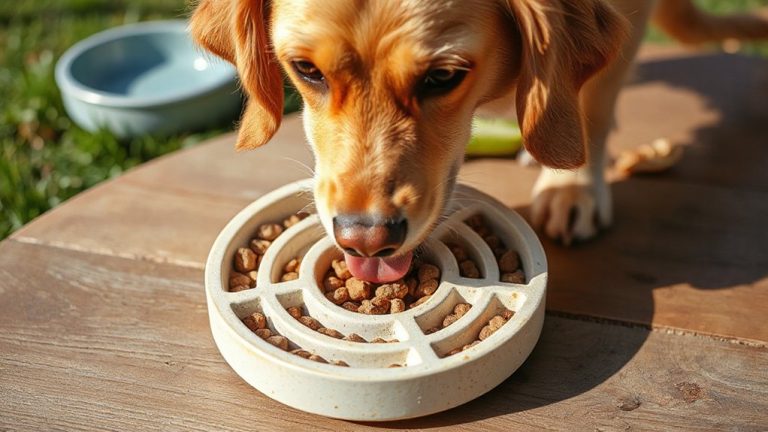
Temperament shapes how your pet interacts with feeding equipment, so matching bowl design to behavior is critical. For anxious or submissive pets, use shallow stainless steel bowls with a non-slip rubber base; the bowl material reduces noise and reflection that can trigger stress. Aggressive or dominant animals benefit from wide, heavy ceramic bowls that resist tipping and establish feeding boundaries. Adjust feeding height based on species and size: elevate bowls to shoulder level for large dogs to reduce neck strain, typically 6–10 inches high. For cats or small dogs, keep feeding height low, between 2–4 inches, to prevent postural stress. Non-porous bowl material like stainless steel or glazed ceramic also limits bacterial growth. Guarantee bowl diameter exceeds your pet’s muzzle width by 1.5 inches to prevent whisker fatigue. Choose designs with measurable capacity markings for consistent portion control.
Train Calmer Mealtimes With Positive Reinforcement
You’ve selected the right bowl for your pet’s behavior and size, but equipment alone won’t stop food-related aggression-training matters just as much. Positive reinforcement is essential for shaping calm behavior during mealtimes. Reward your pet immediately after they eat without growling, lunging, or guarding. Use small, high-value treats-no larger than ¼ inch cubes-to maintain focus and prevent overfeeding. A great option is soft, bite-sized best dog training treats that are easy to consume quickly and minimize distraction. Begin training sessions when pets are mildly hungry, ideally 30 minutes before scheduled meals. Conduct three 5-minute sessions daily, reinforcing behaviors like sitting quietly near the bowl or backing away on cue. A 70% consistency rate over two weeks typically results in measurable improvement. Pair verbal cues (“easy,” “calm”) with treats to strengthen associations. Distance feeding stations by at least 6 feet during training to reduce arousal. Over time, gradual proximity desensitization helps pets tolerate shared spaces. Calm behavior becomes habitual with repetition, reducing reliance on physical separation.
On a final note
You prevent food-related aggression by controlling feeding dynamics. Use separate bowls placed at least 10 feet apart to eliminate resource competition. Feed simultaneously on a fixed schedule to reduce anxiety. Select wide, non-slip bowls-9 to 12 inches in diameter-based on your pet’s size and eating speed. Apply positive reinforcement during meals, rewarding calm behavior with treats. Consistent training reduces aggression by up to 70% within four weeks.