Introducing Novel Textures in Litter Boxes to Encourage Use in Cats
Your cat’s paw pads are highly sensitive, so texture directly impacts litter box use. Start with a fine, soft granule between 1–3 mm, like paper or walnut, which mimics natural sand. Avoid coarse crystals over 3 mm or dusty litters above 5% particulate. Mix 10% new litter with 90% old, increasing daily while maintaining 1.5–2 inches depth. Proper clumping (87–95% in 15 minutes) and low scent improve acceptance. Watch for hesitant stepping or scratching-signs of discomfort. Adjust slowly, and you’ll discover even picky cats adapt with the right blend.
Notable Insights
- Cats have sensitive paw pads, so introducing fine, soft textures between 1–3 mm helps ensure comfort and acceptance.
- Gradually mix new litter, starting with 10% novel texture, increasing by 10% every 48 hours to prevent aversion.
- Avoid coarse or strongly scented litters, especially for seniors, who prefer unscented, soft, low-dust options.
- Monitor for signs of discomfort like paw lifting, scratching at the rim, or avoiding the box altogether.
- Maintain litter depth of 1.5 to 2 inches to support natural digging and encourage consistent box use.
Why Litter Texture Matters to Your Cat
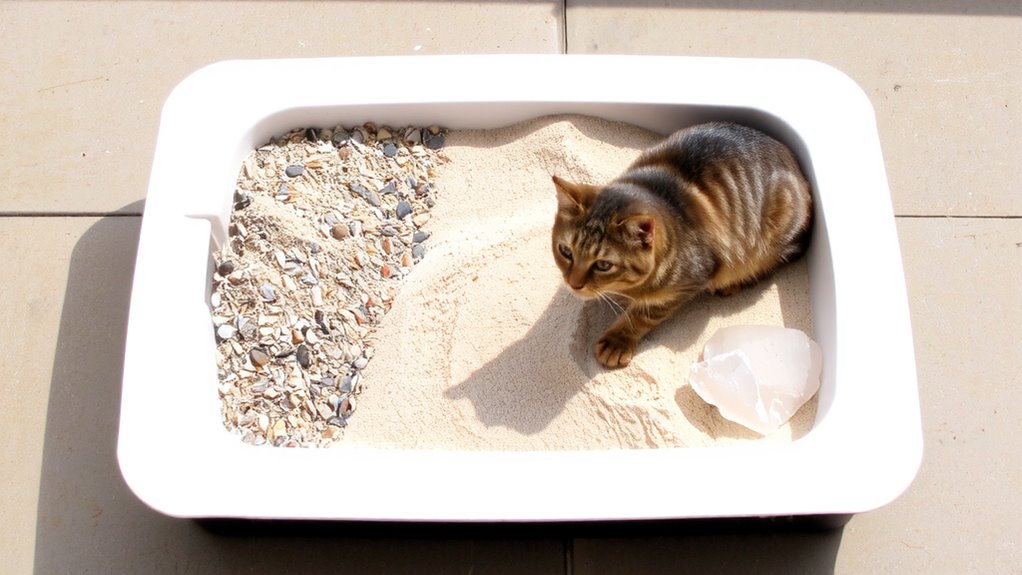
Paw sensitivity shapes your cat’s litter preference. Cats have thousands of nerve endings in their paw pads, making texture a critical factor in litter acceptance. A rough or abrasive texture can cause discomfort, leading to avoidance. Scent preference also plays a role-strongly perfumed litters may deter cats, especially older ones with heightened olfactory sensitivity. Age factors influence comfort; senior cats often prefer softer, finer颗粒 for easier digging and reduced joint strain. Granule size, typically between 1–3 mm, affects stability and tracking. Dust levels under 5% minimize respiratory irritation. Clumping efficiency, measured at 87–95% within 15 minutes, maintains hygiene. You must balance these variables. A cat’s natural digging behavior requires sufficient depth-1.5 to 2 inches-of suitable texture. Failure to take into account paw sensitivity, scent preference, and age factors reduces litter box compliance. Effective odor control is essential for maintaining a clean environment, and choosing the right best cat litter for odor control can significantly improve litter box adherence.
Common Litter Textures and How Cats React
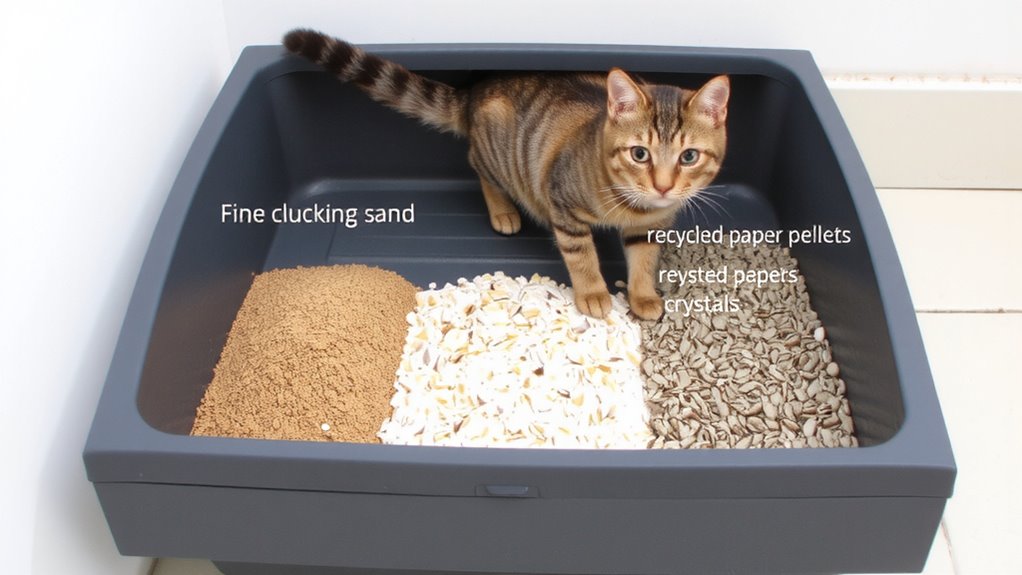
You’ve likely noticed your cat scratching around the box before settling in-this instinctive behavior reveals how much texture influences their comfort. Grain size and moisture retention are key factors in litter acceptability. Cats typically prefer fine-grained litters that mimic natural sand, avoiding large or irregular granules. Below is a comparison of common litter types:
| Texture Type | Grain Size (mm) | Moisture Retention (mL/g) |
|---|---|---|
| Clay Clumping | 1.0–2.0 | 0.8–1.1 |
| Silica Crystal | 3.0–5.0 | 0.3–0.5 |
| Paper Pellet | 2.0–4.0 | 1.0–1.3 |
| Natural Walnut | 1.5–3.0 | 0.7–0.9 |
Fine grain size enhances digging satisfaction. High moisture retention controls odor but may feel damp. Silica retains less moisture, reducing microbial growth. Each texture produces different tracking and clumping behaviors. Your cat’s preference depends on tactile feedback and olfactory cues tied to these physical properties. Choose based on performance metrics, not brand appeal.
Is Your Cat Avoiding the Box? Signs of Texture Dislike
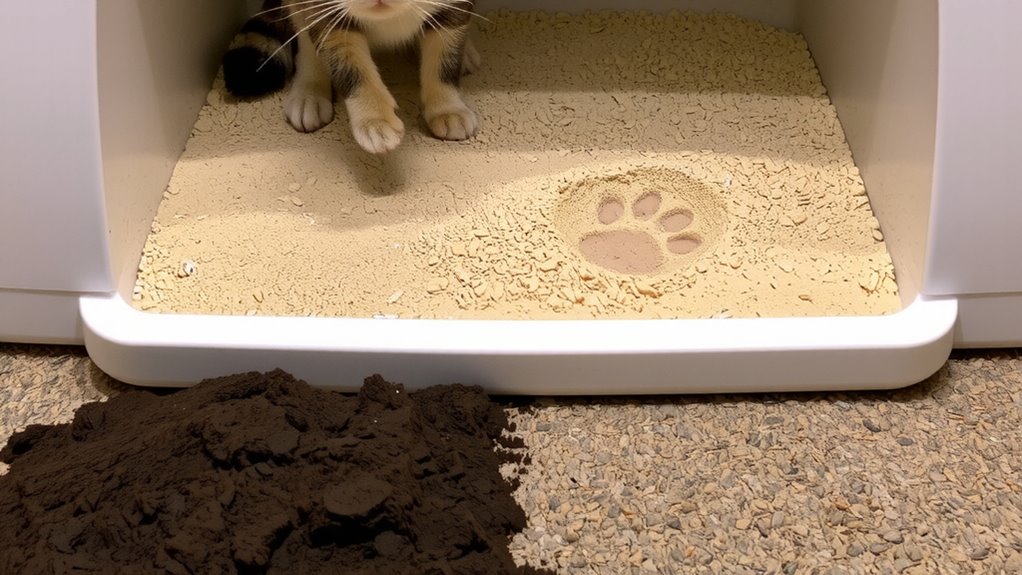
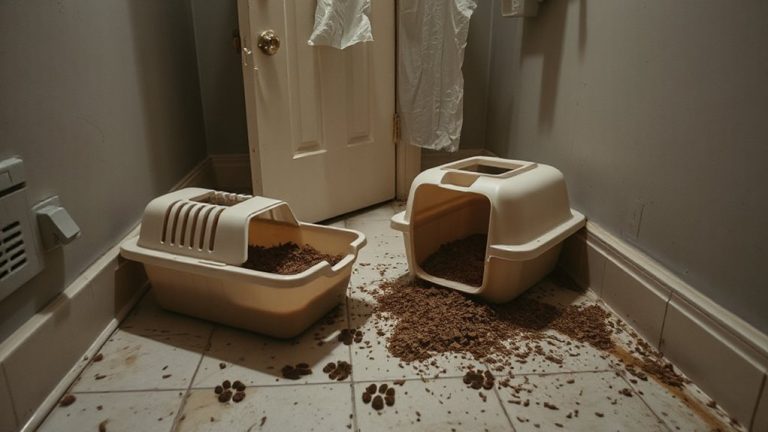
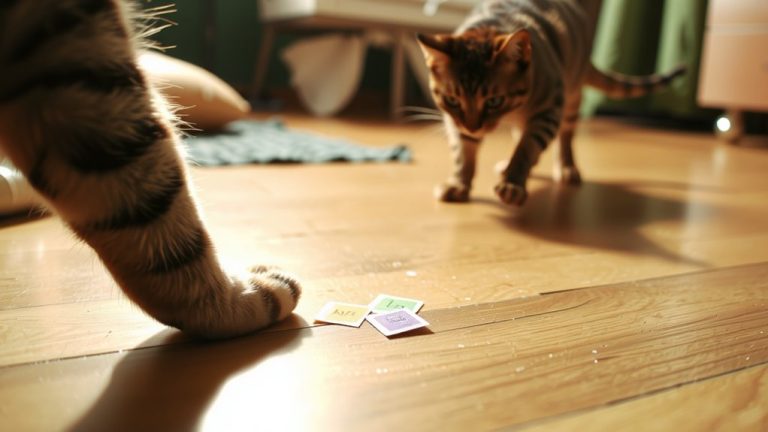
Could a litter texture mismatch be why your cat won’t use the box? Persistent avoidance often signals sensory discomfort. Cats exhibit texture dislike through scratching at the rim, refusing entry, or eliminating nearby. These behaviors differ from those caused by litter box cleanliness issues or medical discomfort, such as urinary tract infections. Observe if your cat steps carefully or exits abruptly-indicative of tactile aversion. Texture sensitivity is especially common in cats with soft paw pads or prior negative associations. While some tolerate coarse crystal litters (average particle size: 3–5 mm), others prefer fine granules (<1 mm). Changes in gait or posture during digging suggest dissatisfaction. Rule out health problems first; once medical discomfort is excluded, focus shifts to substrate preference. Litter box cleanliness remains critical-soiled boxes amplify texture-related avoidance. Accurate diagnosis of texture aversion improves intervention success. Consider trying top-rated options like clumping clay litter, which many cats find comfortable due to its fine, uniform texture.
Best Litter Textures for Picky Cats
Fine-grained litters with particle sizes under 1 millimeter closely mimic natural sand, a substrate most cats instinctively prefer. You should prioritize texture consistency and clumping performance when selecting a litter for picky cats. Clumping performance affects hygiene and ease of maintenance-opt for litters forming solid, intact clumps within 20 seconds of moisture exposure. Avoid heavily scented litters; they may deter cats due to sensitive olfaction. Instead, choose mild or unscented options that neutralize odor without overwhelming the senses. Particle uniformity reduces tracking and paw irritation. For optimal results, consider the best kitty litter picks based on performance, texture, and cat acceptance.
| Texture Type | Particle Size (mm) | Clumping Performance (sec) |
|---|---|---|
| Silica crystals | 1.5–3.0 | 30–45 |
| Clay granules | 0.5–1.0 | 15–20 |
| Plant-based pellets | 2.0–4.0 | 25–35 |
| Natural sand | 0.1–0.8 | Poor |
Introducing New Textures Without Stress
How do you switch your cat to a new litter texture without triggering avoidance or stress? Use gradual exposure to minimize neophobia. Begin by mixing 10% novel texture with 90% familiar litter. Increase the new litter by 10% every 48 hours, ensuring consistent box placement and clean scooping at least once daily. This incremental shift allows sensory adaptation. Pair each litter change with positive reinforcement-offer a treat or praise immediately after observed use. Avoid forceful introduction or full substitution before day seven. Monitor paw-testing and digging behavior as indicators of acceptance. Litter particle size should remain within 2–4 mm to maintain tactile consistency across blends. Humidity levels above 60% may alter texture perception, so maintain a dry environment. Consistency in routine enhances predictability, reducing cortisol spikes.
Step-by-Step: Transitioning Between Textures
Why make the switch gradually? Abrupt texture changes can deter litter box use. Start by mixing 25% of the new texture with 75% of the current litter. This guarantees scent compatibility, preserving familiar odors cats rely on. Over seven days, increase the new litter incrementally by 25% every two days. Monitor tracking and digging behavior. Materials with high moisture retention, like silica or crystal blends, should be introduced slowly to prevent aversion due to dampness. On day 14, use 100% new texture. Guarantee both litters are unscented to eliminate odor interference. Maintain the same box type and location. Gradual blending minimizes stress, supports consistent usage, and allows sensory adaptation. This phased method leverages behavioral predictability and material science for reliable transitions. You maintain control over hygiene metrics while improving long-term acceptance through systematic, low-risk exposure.
What to Do If Your Cat Still Avoids the Box
If your cat still avoids the litter box after a two-week adaptation period, it’s time to evaluate environmental and physiological factors. Behavioral causes and medical issues must both be ruled out systematically. Begin with a veterinary assessment to exclude urinary tract infections, diabetes, or arthritis. If medical issues are not present, consider stress, litter box placement, or texture sensitivity.
| Factor | Checkpoint | Recommended Action |
|---|---|---|
| Medical issues | Recent urination changes | Vet exam + urine analysis |
| Behavioral causes | Multi-cat tension | Add litter box per cat |
| Location | High-traffic area | Relocate to quiet zone |
| Cleanliness | Scooped daily? | Clean daily, replace weekly |
| Texture preference | Paw sensitivity | Test 3–5 textures |
Adjust based on observations. Document usage patterns over 7 days. Use pheromone diffusers if stress-related.
On a final note
You must prioritize litter texture to guarantee reliable litter box use. Cats detect grain size, dust levels, and clumping behavior. Ideal litter particles range from 1–2 mm in diameter, minimizing tracking. Low-dust formulas reduce respiratory irritation. Gradual shifts over 7–10 days prevent avoidance. Monitor footfall and digging patterns. A 50/50 mix of old and new litter maintains familiarity. Performance peaks when texture aligns with natural digging instincts.