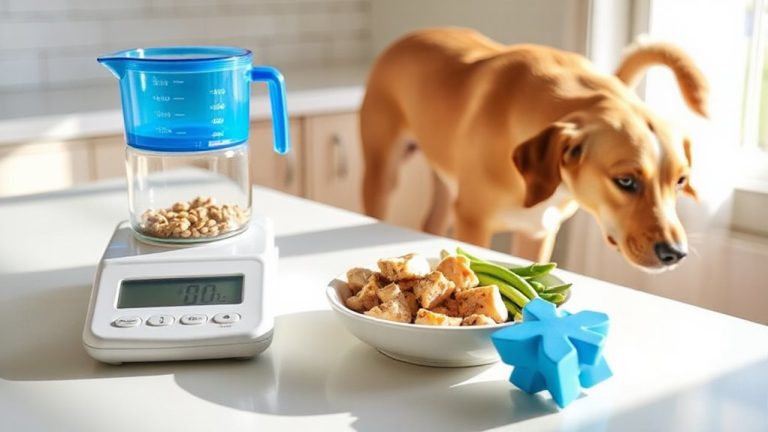
Step-by-Step Guide to Transitioning Your Senior Dog to a Weight-Loss Diet Safely
Start by evaluating your senior dog’s body condition using the 9-point scale; aim for a score of 4–5, where ribs are easily felt and a waist is visible from above. Confirm health stability with a vet, ruling out hypothyroidism or arthritis. Choose a clinically tested weight-loss diet with ≤2,500 kcal/kg and at least 18% protein. Include high fiber-8% minimum, with beet pulp or psyllium-to promote fullness. Feed 60–70% of the Resting Energy Requirement, split into two daily meals. Measure portions precisely with an 8-oz cup. Shift over 7–10 days: begin with 25% new food, increasing by 25% every 2–3 days. Monitor biweekly weight trends, adjusting calories by 5–10% if needed. A consistent routine supports metabolic regulation. Further refinements to timing, ingredients, and progress tracking follow.
Notable Insights
- Assess your senior dog’s weight using the 9-point body condition scale, aiming for a score of 4–5.
- Choose a clinically tested weight-loss diet with high-quality protein, ≤2,500 kcal/kg, and at least 8% crude fiber.
- Feed 60–70% of the Resting Energy Requirement, divided into two daily meals, adjusting portions every 2–4 weeks.
- Transition to the new food gradually over 7–10 days, starting with 25% new food and increasing incrementally.
- Monitor weight biweekly, target 1–2% weekly loss, and consult your vet if issues arise or adjustments are needed.
Assess Your Senior Dog’s Weight and Health
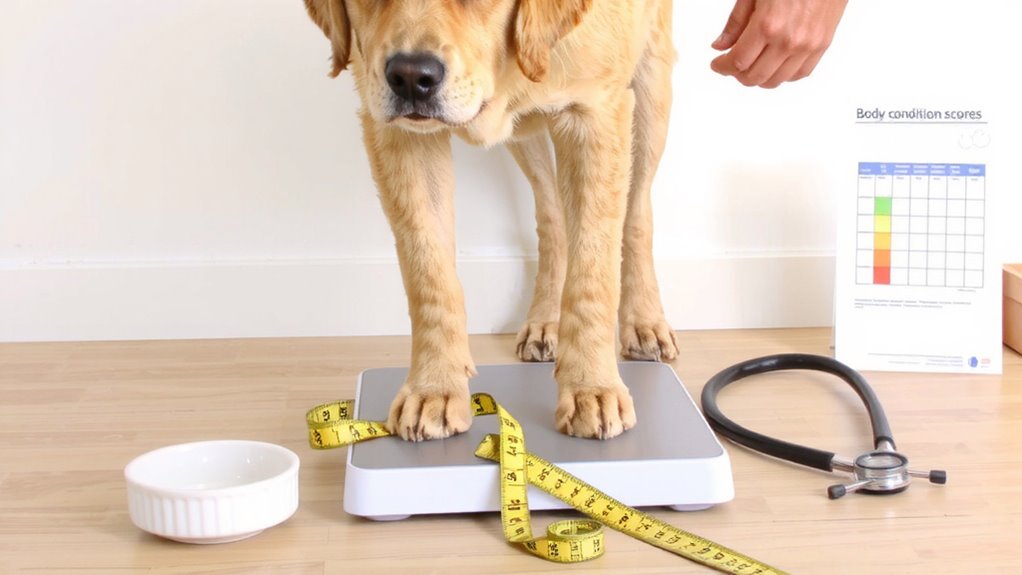
How can you tell if your senior dog truly needs to lose weight? Start by evaluating your dog’s body condition using the 9-point scale, where 4–5 is ideal. If you can’t feel the ribs without pressing through excess fat, or the waist is absent when viewed from above, your dog may be overweight. A sagging abdomen or broad chest appearance also signals excess weight. Don’t rely on appearance alone-seek a veterinary consultation to rule out underlying conditions like hypothyroidism or arthritis. Blood work and physical exams help confirm if weight loss is necessary. Body condition scoring, combined with a professional medical assessment, guarantees accurate diagnosis. Weight-related health risks include joint stress, diabetes, and reduced lifespan. Only after confirming excess weight should you proceed. Your vet will help set a safe weight-loss target and timeline. Accurate assessment is critical-misjudgment can lead to unnecessary dietary changes or missed health concerns. Adding a vet-approved weight management supplement may support your dog’s metabolic health during the transition.
Choose the Best Weight-Loss Food for Older Dogs
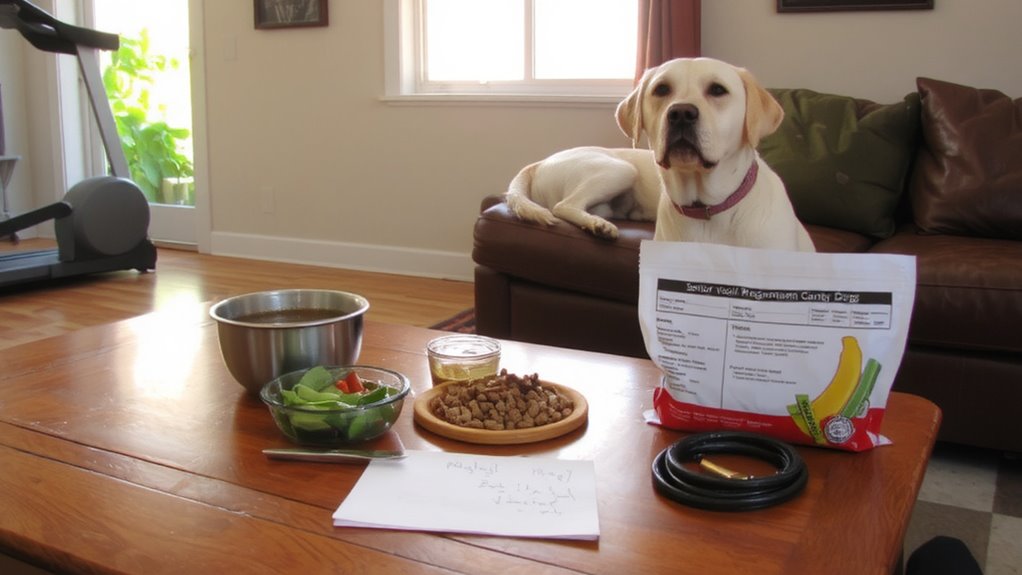
You’ve confirmed your senior dog carries excess weight and received a clear plan from your vet-now it’s time to select the right food to support safe, effective weight loss. Choose a clinically formulated, low calorie diet with a minimum of 18% protein and no more than 2,500 kcal per kilogram metabolizable energy. Prioritize high fiber content-look for at least 8% crude fiber-to promote satiety and support digestive health. Soluble fibers like beet pulp or psyllium help slow gastric emptying, reducing hunger between meals. Most therapeutic weight-loss diets contain 15–30% less fat than adult maintenance formulas, dropping calorie density without sacrificing nutrient absorption. Select foods labeled for “weight management” or “lean body conditioning” that meet AAFCO guidelines. Avoid generic “light” formulas without clinical backing. Make certain the first ingredient is a high-quality protein source, not fillers.
Set the Right Portion for Steady Weight Loss
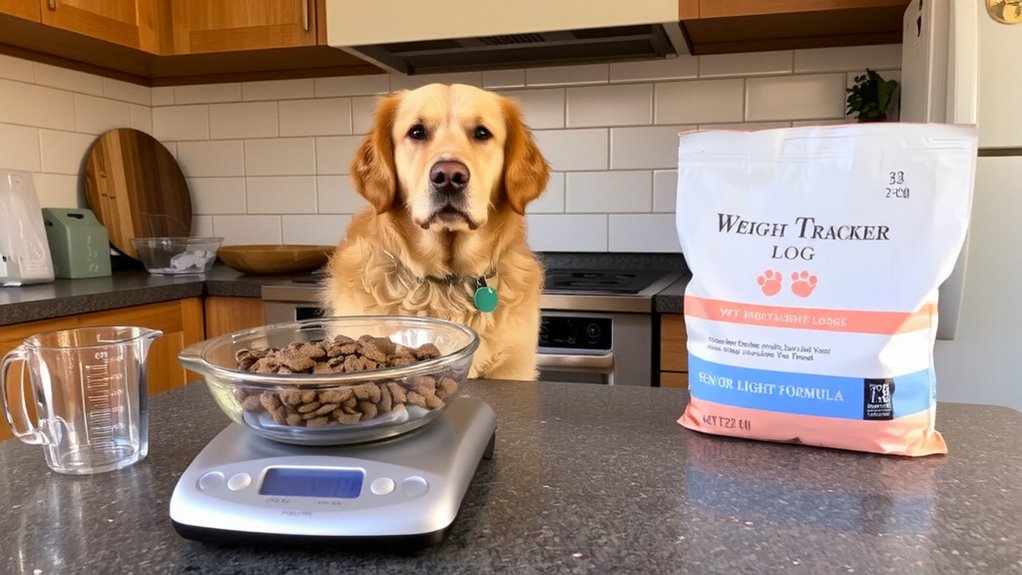
While selecting the right low-calorie, high-fiber food is essential, getting the portion wrong can stall progress or lead to excessive weight loss. You must balance calorie intake with your dog’s resting energy requirements (RER). For steady weight loss, feed 60–70% of RER, divided into two daily meals. Consistent meal timing supports metabolic regulation. Adjust portions every 2–4 weeks based on weight change of 1–2% per week. A diet rich in high-fiber dog food can enhance satiety and support digestive health during weight loss. Monitor treat frequency closely-treats should not exceed 10% of daily calories.
| Dog Weight (lbs) | Daily Portion (cups) | Treat Limit (kcal) |
|---|---|---|
| 20 | 1.0 | 25 |
| 40 | 1.7 | 40 |
| 60 | 2.3 | 60 |
| 80 | 2.9 | 75 |
Accurate measuring guarantees precision. Use an 8-oz measuring cup calibrated for kibble.
Switch Foods Gradually (Over 7–10 Days)
A gradual 7- to 10-day shift minimizes digestive upset and supports long-term diet adherence. Start by mixing 25% of the new weight-loss food with 75% of the current food on days one and two. Monitor stool quality and appetite closely. Days three to four: adjust to a 50:50 mix consistency to help your dog adapt to the new kibble’s texture and nutrient profile. Days five to seven: use 75% new food, 25% old. Complete the changeover by day ten if no gastrointestinal issues occur. Maintain a consistent feeding schedule, offering meals at the same times daily to regulate metabolism. Sudden changes can disrupt gut flora and lead to diarrhea or vomiting. Controlled changeovers preserve digestive efficiency. Each phase allows the microbiome to adapt. Stick to measured portions established previously.
Track Weight and Adjust Based on Results
Regular weight monitoring begins once your senior dog eats exclusively the new food. Weigh your dog biweekly using a consistent digital pet scale, recording results to detect trends. A safe weight-loss rate is 1–2% of body weight per week. If loss exceeds this, reduce calorie tracking precision by 10%. If no loss occurs after three weeks, reassess daily caloric intake and adjust portion size by 5–7%. Pair calorie tracking with activity monitoring using a wearable pet fitness tracker. Aim for 20–30 minutes of moderate exercise daily, like leash walking. Activity monitoring guarantees energy expenditure supports weight goals. Adjust food quantity if activity decreases. Recheck body condition score monthly, targeting a 4–5/9 scale. Modify the plan if muscle loss occurs. Always consult your vet before major changes. Consistency guarantees effectiveness. For added safety during outdoor exercise, consider using a Best Pet GPS Trackers to monitor your dog’s location in real time.
On a final note
You must monitor your senior dog’s weight weekly using a calibrated scale. Aim for a 1–2% body weight loss per week-exceeding this risks muscle loss. Adjust portions by 10% if target loss isn’t met after two weeks. Use a cup or gram scale for precise feeding. Continue vet checkups every three months. Success hinges on consistency, accurate measurement, and adherence to metabolic needs-not calorie restriction alone.