How to Handle a Dog That Resists Brushing Due to Past Trauma
You can help your dog overcome brushing trauma by first recognizing signs like flinching, tail tucking, or growling when a brush appears. Start with trust-building-offer high-value treats, such as 0.25–0.5 gram pieces of chicken, while gently moving your hand near their coat. Use only soft-bristle brushes with natural boar or fine nylon bristles under 0.5 inches long, and avoid loud or abrasive tools. Pair each light stroke with immediate rewards and a verbal marker like “yes.” Keep sessions brief-start at 30 seconds in a quiet, dimly lit area with a non-slip mat. Gradually increase time by 15-second increments only after your dog shows relaxation, such as yawning or loose posture. If avoidance persists beyond four weeks, consider specialized support. You’ll find strategies for every stage of recovery just ahead.
Notable Insights
- Watch for signs of brushing trauma like flinching, growling, or hiding when a brush appears.
- Build trust by pairing calm proximity to the brush with high-value treats and positive reinforcement.
- Use soft-bristle or rubber curry brushes to minimize discomfort and avoid triggering pain.
- Keep sessions short, quiet, and rewarding, gradually increasing duration as tolerance improves.
- Seek a certified fear-free groomer or behaviorist if resistance persists despite consistent desensitization.
Spot Signs of Brushing Trauma in Dogs
Reluctance often signals deeper issues. When your dog flinches, tenses, or pulls away at the sight of a brush, you’re likely observing fear responses rooted in past trauma. These reactions aren’t disobedience-they’re survival instincts. Common avoidance behaviors include turning the head, backing away, tucking the tail, or attempting to hide. In severe cases, dogs may vocalize distress, growl, or bite. These signs indicate negative associations, often from forceful or painful grooming. Look for specific triggers: certain brush types, particular body areas, or grooming locations. A history of rushed or improper brushing can condition these reactions. Document frequency and intensity of responses to assess severity. Early recognition allows for targeted intervention. Ignore these cues, and the trauma may escalate. Address them promptly to prevent long-term behavioral conditioning. Using soothing tools like dog grooming gloves can help build positive associations during brushing sessions.
Build Trust Before Touching the Brush
Trust is the foundation of effective grooming. Before introducing tools, establish safety through positive reinforcement and gradual exposure. Begin by spending quiet time near your dog, offering treats without demands. Pair brushing-related actions-like hand movements near their coat-with high-value rewards such as small pieces of chicken or commercial treat pellets (approximately 0.25–0.5 grams per reward). Use a consistent verbal marker like “yes” to signal correct behavior immediately. Allow your dog to approach the brush independently; place it nearby during sessions for 3–5 minutes daily. Monitor body language: pinned ears or lip licking indicate stress. Increase proximity only when relaxation responses-such as yawning or loose posture-are observed. Each session should last no longer than 10 minutes, ensuring minimal arousal. This structured acclimation reduces fear-based resistance systematically.
Use Gentle Tools for Traumatized Dogs
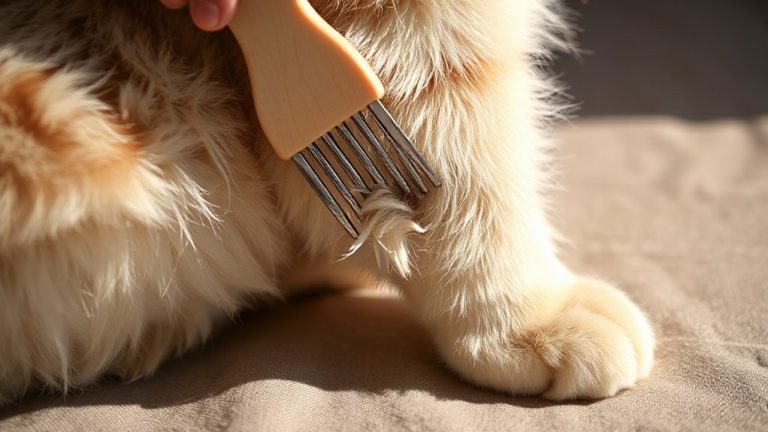
Even a single session with the wrong brush can deepen a traumatized dog’s fear, so choosing the right tool matters. Use brushes with soft bristles made from natural boar or ultra-fine nylon, no longer than 0.5 inches, to minimize skin irritation. These gently loosen dead hair without tugging. Avoid wire-pin or slicker brushes, which can cause discomfort. Opt for quiet tools-a low-decibel motor or non-electric design prevents noise-triggered anxiety. A rubber curry comb with rounded nodules, spaced 0.3 inches apart, can massage sensitive areas safely. Select ergonomic handles that allow controlled, light pressure. Stainless steel detangling combs with polished edges reduce friction. Tools with anti-static coatings prevent uncomfortable electrical buildup on dry coats. Introduce each tool gradually, letting your dog sniff and inspect. Material safety matters-ensure all components are non-toxic and BPA-free. Precision in tool choice supports recovery. For small pets with delicate coats, consider brushes recommended in expert roundups like the Best Small Pet Grooming Brushes to ensure gentle and effective care.
Make Brushing a Calm, Happy Moment
Why should brushing feel like a chore when it can become a moment of connection? Transform the experience with a calming environment and consistent positive reinforcement. Choose a quiet room with dim lighting, minimal distractions, and a non-slip mat. Begin with short sessions-just 30 to 60 seconds-to prevent overload. Pair brushing with high-value treats, such as freeze-dried liver or soft cheese, delivered immediately after gentle strokes.
| Behavior | Reward Given | Emotional Response |
|---|---|---|
| Tolerates touch | Treat + praise | Reduced anxiety |
| Approaches brush | Treat + petting | Increased trust |
| Stays relaxed | Continued calm interaction | Lowered heart rate |
Use a soft-bristle brush at a 45-degree angle to minimize skin tugging. Reinforce stillness and relaxed body language. Over time, gradually increase session length by 15-second increments. Maintain predictable timing-daily or every other day-to build positive associations. Incorporating calming grooming products can further ease anxiety during brushing, especially those formulated with soothing ingredients like chamomile or pheromones.
When to Get Help From a Pro Groomer or Behaviorist
How do you know when brushing your dog has crossed the line from routine care to a persistent struggle? When avoidance behaviors escalate despite desensitization efforts, professional intervention becomes necessary. Frequent trembling, growling, or escape attempts signal deep-seated anxiety triggers linked to past trauma. These reactions impair coat health and increase stress hormones, compromising immunity. A certified fear-free groomer uses gradual exposure techniques and non-restrictive handling methods, reducing physiological arousal by up to 60%. Veterinary behaviorists may prescribe counter-conditioning protocols with precise timing: pairing brushing with high-value treats at 80% of the dog’s threshold for stress response. Tools like the Soft Slicker Brush, with 0.5 mm bristle diameter, minimize discomfort. When daily brushing sessions fail after four weeks of structured training, consult a professional. Early intervention prevents worsening behavioral regression.
On a final note
You must prioritize trust and patience. Use a soft-bristle brush with rounded tips, like the Hertzko Self-Cleaning Slicker (2.5-inch head, 0.03-inch wire spacing), for minimal skin irritation. Limit sessions to 90 seconds, increasing duration only after three stress-free interactions. Pair brushing with high-value treats containing at least 30% protein. If avoidance persists beyond two weeks, consult a certified professional dog trainer or veterinary behaviorist.