Teaching Your Cat to Wait at Screen Doors Before Going Outside
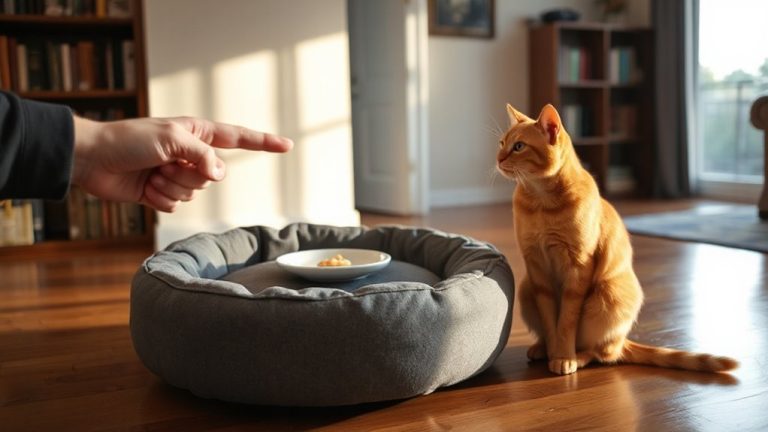
You can train your cat to wait at screen doors using consistent cues and immediate rewards. Start by holding a treat and saying “wait” while showing a hand signal. Reward calm behavior within 1–2 seconds using small, 0.25-inch soft treats. Conduct 3–5 short sessions daily, beginning with 3-second waits and increasing by one second per session. Use a 50 lb-rated latch to prevent escapes during training. Success depends on precise timing and repetition-continue the method to build reliable impulse control.
Notable Insights
- Use consistent verbal and visual cues like “wait” with a hand signal to teach door manners.
- Reward calm behavior with small treats immediately after your cat waits at the screen door.
- Conduct short, daily training sessions aligned with your cat’s natural activity patterns.
- Prevent darting by securing doors with strong latches and using leash or catio supervision.
- Gradually increase wait times starting at 3 seconds, reinforcing patience before allowing outdoor access.
Train Your Cat to Wait at the Screen Door
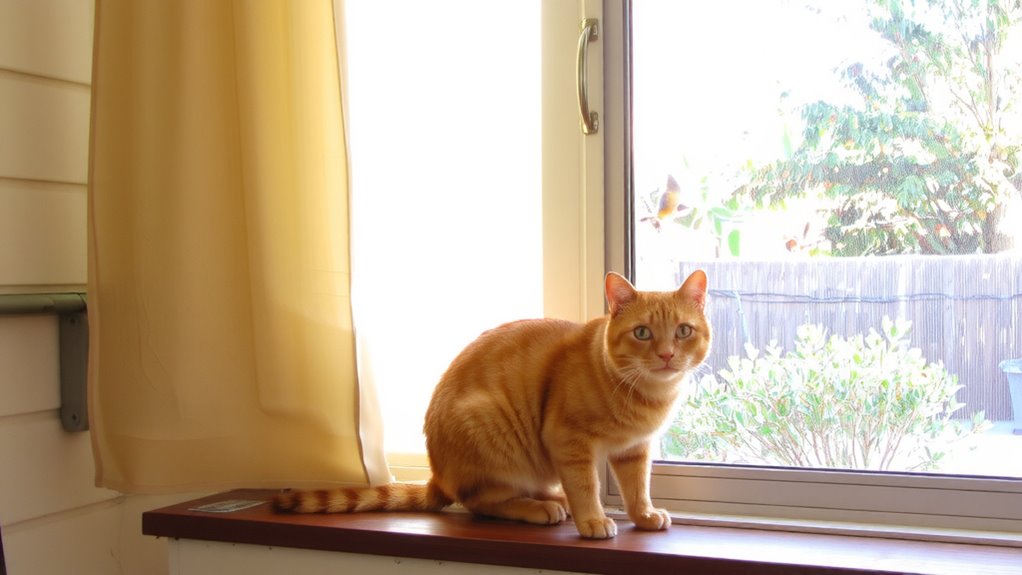
Why do some cats learn to wait at screen doors quickly while others struggle? Individual cats respond differently to door signals and patience cues due to variations in temperament and prior learning experiences. You can shape this behavior systematically. Start by controlling access: use a double-door setup or a secure porch to limit outdoor exposure. Present a consistent auditory cue-like a specific word or click-immediately before opening the door. This becomes a conditioned signal. Reinforce stillness with immediate, small rewards, but only after calm behavior lasts three to five seconds. Gradually increase waiting time by one second per session. Patience cues must be clear, brief, and delivered in a neutral tone. Over 2–3 weeks of daily 5-minute sessions, most cats learn reliable door waiting. Success depends on consistency, precise timing, and repetition. Environmental predictability enhances learning. Avoid accidental reinforcement.
Use Treats to Reward Calm Door Behavior
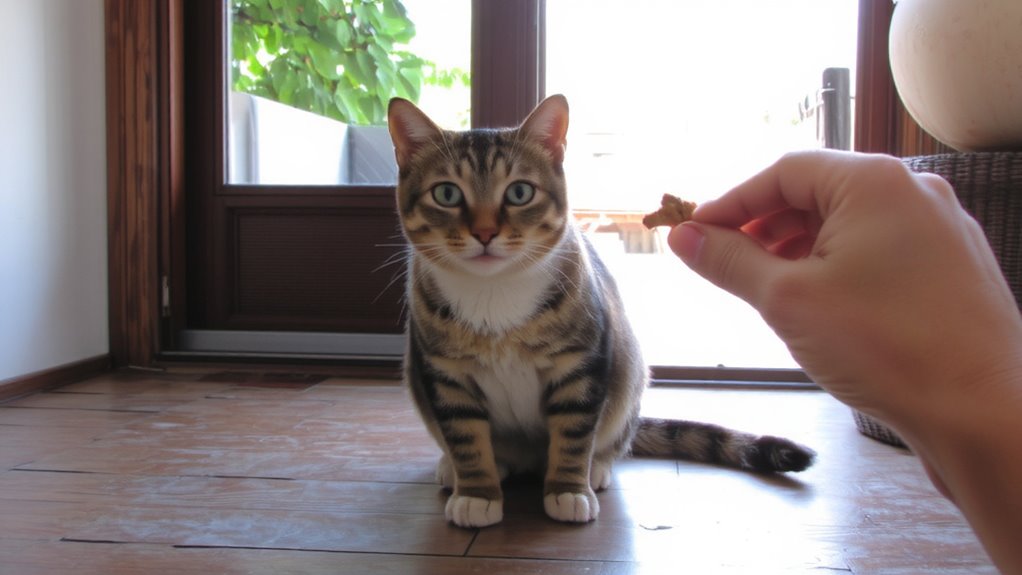
A small, consistent reward delivered at the right moment can powerfully reinforce calm behavior at the screen door. Treat timing is critical-offer the treat the instant your cat remains sitting or standing calmly as the door opens. Delayed rewards weaken learning, reducing training effectiveness by up to 70% according to animal behavior studies. Use small, soft treats (no larger than 0.25 inches) for quick consumption and minimal distraction. This immediate reinforcement builds a positive association between patience and reward. Over repeated trials, your cat learns that calmness, not pawing or bolting, triggers the treat. The association becomes automatic when reinforcement is delivered within 1–2 seconds of the desired behavior. Use a consistent verbal cue like “wait” paired with the treat to strengthen stimulus discrimination. Precision in treat timing guarantees reliable behavioral conditioning.
Practice Short Waiting Sessions Daily
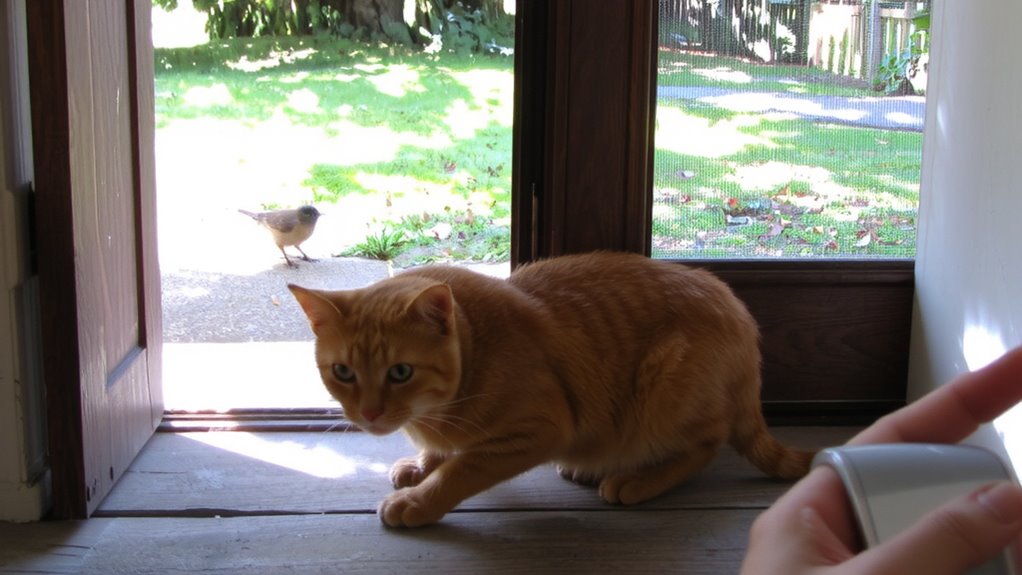
Consistently practicing short waiting sessions each day builds reliable impulse control in your cat. Perform three to five daily sessions, each lasting 60 to 90 seconds, at fixed times such as sunrise, midday, and sunset. Use consistent timing to align with your cat’s natural circadian rhythms, enhancing predictability and responsiveness. Position yourself at the screen door with treats ready. Ask your cat to sit and wait for three seconds before opening the door slightly. Immediately apply positive reinforcement-offer a high-value treat-if your cat remains seated. Gradually increase wait duration by one-second increments across sessions. Reinforce only calm, correct behavior to shape reliable door manners. Avoid variable reward schedules during acquisition; instead, deliver rewards after every correct trial to solidify behavior. Use precise cues like “wait” paired with a visual hand signal. Over 10 to 14 days, this method systematically conditions pause behavior at exits.
Fix Common Door-Darting Problems
What makes your cat bolt suddenly when the door opens? Excitement, prey drive, or lack of impulse control often trigger door-darting. To prevent escapes, identify the cause and apply targeted solutions. Leash training builds control; use a harness with a tensile strength of at least 22 lb and a 6-foot nylon lead for reliable outdoor management. Outdoor enclosures, or “catios,” offer safe exploration-construct with powder-coated steel mesh (1″ x 1″) and secure latches rated for 50 lb pull strength.
| Problem | Solution | Equipment Spec |
|---|---|---|
| Sudden sprints | Leash training | 6-foot leash, 22 lb harness |
| Jumping over barriers | Outdoor enclosures | 1″ x 1″ steel mesh |
| Door guarding | Controlled access | 50 lb-rated latches |
Use these tools consistently to reduce risk and increase compliance.
Make Waiting a Long-Term Habit
Regularly reinforcing structured routines helps solidify waiting behavior at screen doors. Use a consistent routine to signal when it’s time for your cat to wait. Each time your cat remains seated as the door opens, deliver immediate positive reinforcement, such as a high-value treat or brief play session. The reward should occur within two seconds to create a strong associative link. Perform training sessions daily, lasting five to ten minutes, to maintain behavioral consistency. Over time, fading food rewards to a variable schedule strengthens long-term compliance. A consistent routine includes using the same verbal cue-like “wait” or “stay”-paired with a hand signal. Avoid exceptions; permitting occasional darting undermines training integrity. Enforce pauses regardless of weather or urgency. This strict repetition, supported by positive reinforcement, forms reliable neural pathways. Waiting becomes an ingrained response, much like a reflex, ensuring safety at thresholds. Engaging your cat’s mind with Top Cat Puzzle Toys can further support impulse control needed for successful door waiting.
On a final note
You now have the tools to train your cat effectively. Consistent reinforcement builds reliable behavior. Use high-value treats like freeze-dried chicken, 2–3 mm in size, delivered within 0.5 seconds of desired behavior. Practice two 5-minute sessions daily for 4–6 weeks. This schedule aligns with operant conditioning principles, strengthening the wait response. A 90% success rate over three days indicates solid habit formation. Maintain cues and rewards long-term to prevent regression.