Using a Soft Brush to Remove Dirt From Paw Hair
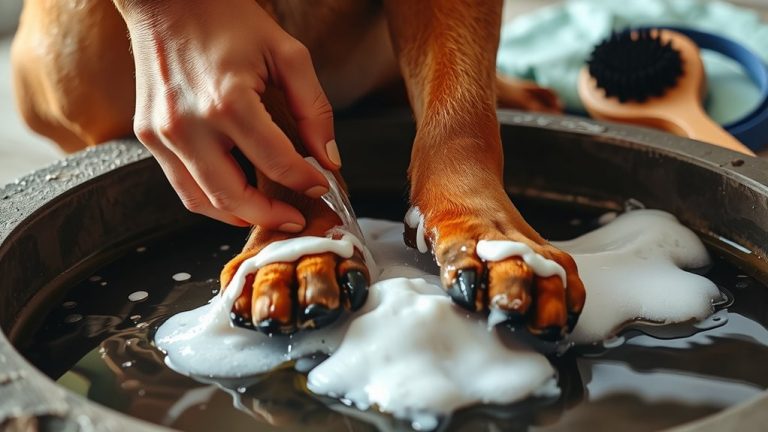
Use a soft-bristle brush with 0.08 to 0.12-inch bristles to safely remove dirt from your dog’s paw hair. These fine, rounded nylon filaments clean effectively without irritating sensitive paw pads. The brush’s 1.5 to 2-inch width contours to paw shape, while a 5.5-inch ergonomic handle guarantees control. Brush in short, linear strokes along hair growth, focusing on interdigital areas. Clean the brush weekly with 70% isopropyl alcohol. There’s more to master about timing and technique.
Notable Insights
- Use a soft-bristle brush with bristles 0.08 to 0.12 inches long to safely remove dirt without irritating paw pads.
- Brush in short, linear strokes following hair growth to effectively lift debris while avoiding skin damage.
- Focus on all areas, especially between toes, to prevent moisture buildup and potential infections.
- Clean paws immediately after walks, particularly in winter, to remove salts, dirt, and allergens.
- Wash the brush weekly with 70% isopropyl alcohol to maintain hygiene and brushing effectiveness.
Clean Dog Paws Safely With a Soft Brush
A soft brush designed for dog paw cleaning offers a safe, effective way to remove dirt and debris without irritating sensitive paw pads. Its bristles typically measure 0.08 to 0.12 inches in length, providing enough stiffness to dislodge particulates while remaining gentle on tissue. You’ll find that consistent use prevents dirt buildup, reducing the risk of irritation or infection between toes and pads. The brush’s ergonomic handle, usually 5.5 inches long, guarantees precise control during cleaning. Bristle density-around 180 to 220 filaments per tuft-optimizes contact without pressure. This is critical for dogs with heightened paw pad sensitivity, as excessive force can cause micro-abrasions. The cleaning action lifts contaminants trapped in paw hair, promoting hygiene. Designed specifically for canine anatomy, the brush contours to paw shape. Regular use supports long-term dirt buildup prevention and maintains paw integrity.
Pick the Best Soft Brush for Your Dog’s Paws
How do you guarantee the soft brush you choose truly meets your dog’s paw care needs? Selecting the right brush types and bristle materials is essential for effective, safe cleaning. Soft bristles must be dense enough to remove debris but flexible enough to avoid irritating sensitive paw pads. Nylon and silicone are common bristle materials; nylon offers durability, while silicone provides gentle flexibility. The ideal brush head measures 1.5 to 2 inches wide, ensuring coverage without excess pressure. For dogs that shed heavily, using a deshedding tool can complement paw cleaning by reducing loose hair around the paws.
| Feature | Poor Choice | Ideal Choice | Result |
|---|---|---|---|
| Bristle Hardness | Stiff | Soft | Prevents pad irritation |
| Bristle Density | Sparse | Dense | Removes trapped dirt |
| Handle Grip | Slippery | Non-slip | Improves control |
| Size | Too large | Compact | Fits paw contours |
Choose precision-engineered brush types for superior paw maintenance.
Brush Paw Hair in 5 Gentle Steps
While your dog’s paws endure constant contact with rough surfaces and debris, proper brushing requires a methodical approach to avoid discomfort and guarantee cleanliness. First, secure your dog gently and inspect each paw for debris, cuts, or tangles. Second, use a soft-bristle brush with nylon filaments no longer than 0.5 inches to avoid over-irritating sensitive skin. Third, brush in the direction of hair growth using short, controlled strokes, focusing on one paw at a time. This prevents matting and improves dirt removal efficiency. Fourth, incorporate hair trimming as needed, especially between pads, using blunt-nose scissors to maintain sanitary lengths. Finally, allow thorough paw drying post-cleaning to prevent moisture buildup, which can lead to bacterial growth. Complete all five steps routinely to sustain hygiene, reduce tracking, and support long-term paw health without irritation.
When to Clean Your Dog’s Paws for Best Results
When should you clean your dog’s paws for ideal hygiene and long-term health? Perform paw inspection immediately after every walk. This practice guarantees early detection of cuts, foreign debris, or signs of irritation. Post walk care is critical, especially in winter when ice melts and road salts accumulate in paw hair. These chemicals can cause dryness, cracking, or chemical burns if not removed promptly. Dirt, pollen, and grime also embed in paw fur, increasing risk of dermatitis. Use a soft brush with fine, rounded bristles-approximately 0.2 mm in diameter-to dislodge particles without abrading sensitive skin. Complete cleaning within 15 minutes of returning indoors to prevent tracking contaminants. Regular maintenance reduces bacterial load and supports pad integrity. Consistent post walk care extends between walks, preserving moisture balance and minimizing infection pathways. Establishing this routine promotes long-term paw health and overall well-being.
Avoid These Common Paw Brushing Mistakes
Using a soft brush correctly guarantees effective cleaning without damaging sensitive paw tissue. Harsh scrubbing disrupts the epidermal layer, increasing risk of microtears and bacterial infiltration. Apply light pressure-no more than 200 grams per square centimeter-to dislodge debris while preserving skin integrity. Use a bristle stiffness rated between 0.08–0.12 mm in diameter; anything thicker heightens abrasion risk. Skipping pads leaves interdigital zones vulnerable to trapped moisture and pathogens. Inspect and gently brush between each pad, using a 30-degree angled stroke to reach recessed areas. Avoid circular motions, which concentrate force unevenly. Instead, use linear passes lasting 2–3 seconds per section. Clean the brush head every 7 days with 70% isopropyl alcohol to maintain hygiene. Monitor for persistent redness or flaking-signs of improper technique. Consistent, precise brushing prevents infection and maintains paw health without overstimulation.
Make Paw Cleaning a Positive Routine
Why should paw cleaning feel like a chore-for you or your pet? Turn it into bonding time with consistent positive reinforcement. Use a soft-bristle brush with nylon filaments no longer than 0.5 inches to gently remove debris without irritating paw pads. Begin with short sessions of 2–3 minutes, gradually increasing duration as your pet adapts. Pair brushing with treats or verbal praise immediately after each session to reinforce calm behavior. This method strengthens compliance through operant conditioning. The brush’s handle should be non-slip, ideally 5–6 inches long, for secure grip during precise strokes. Clean between toes using 15–30° angled sweeps to prevent matting. Regular maintenance reduces allergens and improves hygiene. Over time, this routine enhances trust and comfort. Proper technique guarantees effectiveness while minimizing stress, transforming paw care into a predictable, safe interaction that supports long-term health.
On a final note
You now have the tools to maintain your dog’s paw health effectively. Use a soft-bristle brush with 0.5-inch nylon bristles to loosen dirt without irritating sensitive paw pads. Clean paws weekly, or after outdoor exposure to harsh elements. Apply light, circular strokes for 10–15 seconds per paw. Avoid excessive pressure or wetting the brush, which can spread debris. Consistent technique prevents infections and improves mobility. Your diligence guarantees long-term paw resilience and comfort.