How to Prevent Boredom in Pets on Restricted Diets Using Enrichment Tools
You can prevent boredom in pets on restricted diets using enrichment tools that comply with therapeutic feeding plans. Puzzle feeders like the Outward Hound Interactive accept kibble up to 1 inch in diameter and feature adjustable difficulty levels to prolong mealtime by 10–15 minutes. Snuffle mats made of fleece or silicone increase foraging time by 70% and fit prescription kibble securely. DIY options-such as BPA-free bottles with 1 cm slits or knotted cotton ropes under 30 cm-offer safe, chewable alternatives. Use only dietary-compliant portions, not exceeding 10% of daily caloric intake. Rotating three toy types weekly maintains neural engagement, with puzzles, chewables, and interactives sized appropriately-under 3 inches for cats, over 5 inches for dogs. These tools sustain cognitive challenge without compromising health, keeping mental stimulation consistent. More strategies follow this framework.
Notable Insights
- Use puzzle feeders with adjustable openings to slow eating and provide mental stimulation using prescription kibble.
- Deploy snuffle mats to encourage natural foraging, extending feeding time and boosting scent engagement safely.
- Create DIY food-dispensing toys from safe, non-toxic materials that release approved kibble through small openings.
- Engage pets with calorie-free scent trails using veterinary-approved aromatics to stimulate olfaction without dietary risk.
- Rotate toys weekly among chew, puzzle, and interactive types to maintain novelty and sustain cognitive challenge.
Use Puzzle Feeders That Work With Prescription Diets
Puzzle feeders aren’t just for healthy pets-they’re essential tools for pets on prescription diets, too. Food puzzles slow consumption, supporting portion control and digestive health. Most models accommodate kibble up to 1 inch in diameter, making them compatible with therapeutic formulas. Treat dispensers with adjustable openings let you regulate food release, preventing frustration in novice users. Devices like the Outward Hound Interactive Puzzle or the Nina Ottosson by Outward Hound line offer multiple difficulty levels-Level 1 for beginners, Level 3 for advanced foragers. These puzzles are dishwasher-safe, constructed from BPA-free plastic or natural rubber. Use them daily for 10–15 minutes to maintain cognitive engagement without overfeeding. Calibration guarantees 80–90% of food requires problem-solving. Unlike standard bowls, food puzzles reduce gulping by 60%, aiding pets with bladder or kidney conditions. Treat dispensers extend mealtime, mimicking natural foraging. They integrate seamlessly with vet-recommended nutrition plans. A top choice for mentally stimulating play is the Best Puzzle Toys for Dogs.
Turn Meals Into Foraging Games Using Snuffle Mats
You can build on the mental engagement provided by puzzle feeders by introducing snuffle mats into your pet’s daily routine. These mats promote natural scent tracking behaviors, especially in dogs, by concealing kibble within fabric folds. Typical snuffle mats measure 12–18 inches in diameter and are made from soft fleece strips or silicone ridges, offering safe texture exploration. Studies show foraging on snuffle mats increases sniffing duration by up to 70% compared to bowl feeding. The dense material layout mimics grassland environments, encouraging focused searching. Use only prescription kibble to maintain dietary compliance. Place food deep within layers to prolong engagement, ideally achieving 5–10 minutes of active foraging. Choose mats with non-slip backing for stability. Machine-washable designs guarantee hygiene. Snuffle mats reduce mealtime speed, support cognitive function, and align with veterinary dietary protocols. They offer measurable behavioral enrichment without caloric excess.
DIY Enrichment: Safe Toy Swaps for Restricted-Diet Pets
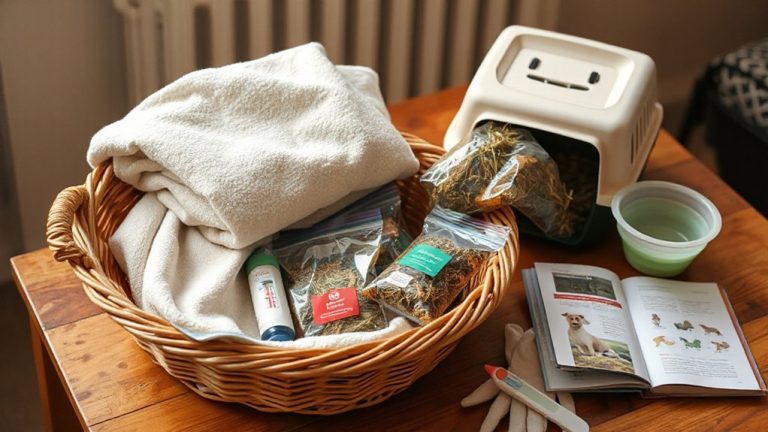
For pets on restricted diets, enrichment doesn’t require commercial solutions-simple, safe household items can replace conventional toys without compromising nutritional guidelines. Use clean, BPA-free plastic bottles with secure lids as puzzle toys; insert approved kibble or Homemade treats through a small slit, allowing mechanical dispensing during play. Guarantee openings are no wider than 1 cm to control release rate. Replace squeaky toys with knotted cotton ropes (natural fiber, under 30 cm length) for safe chewing and tugging. Introduce sensory play via textured mats made from fleece strips (15 x 15 cm) woven into non-slip rubber bases. Avoid adhesives or dyes. Freeze low-sodium broth in silicone molds (food-grade, 4 oz capacity) for long-lasting lick pads. Monitor each session. These swaps meet safety standards for ingestion risk, material toxicity, and size appropriateness, aligning with veterinary dietary protocols while stimulating natural foraging and tactile exploration behaviors.
Keep Boredom at Bay Without Breaking Dietary Rules
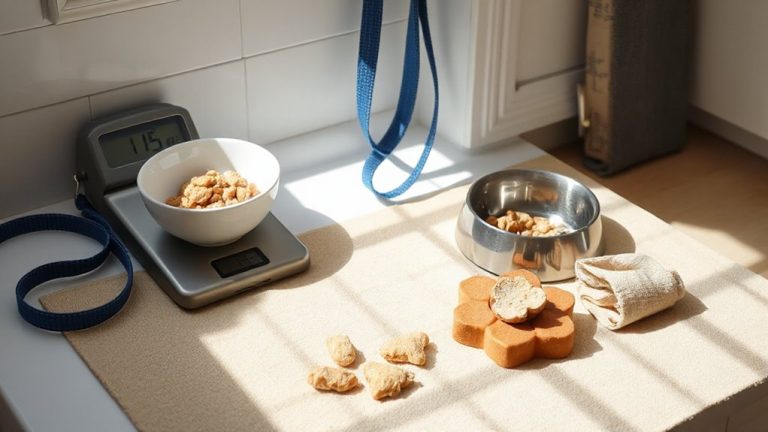
While enrichment is critical for pets on restricted diets, maintaining strict adherence to nutritional guidelines doesn’t require sacrificing mental stimulation. You can use scent trails to engage your pet’s natural foraging instincts without adding calories. Simply apply a few drops of a veterinary-approved, food-free aromatic liquid-like diluted peppermint or liver extract-along a designated path. This creates an engaging challenge that stimulates olfactory senses. Hide treats made from your pet’s approved diet inside puzzle toys or under silicone muffin cups taped to the floor. Use portion-controlled kibble-no more than 10% of daily intake-as rewards. For example, a 20 lb dog on a 500 kcal/day plan can safely spend 50 kcal during enrichment. Rotate scent trails weekly to prevent habituation. These methods provide cognitive engagement while complying with therapeutic diet protocols, ensuring safety and compliance.
Rotate Toys Weekly to Sustain Mental Stimulation
How can you keep your pet mentally sharp without compromising dietary restrictions? Rotating toys weekly sustains mental stimulation and supports long-term mental health. Introduce new textures, shapes, and functions every seven days to maintain novelty. A consistent toy variety prevents habituation, a behavioral state where animals disengage due to predictability. Use food-dispensing toys made from BPA-free polymers; dimensions should suit your pet’s size-small toys under 3 inches for cats, over 5 inches for medium dogs to prevent choking. Rotate at least three toy groups: chew, puzzle, and interactive. Each serves a distinct cognitive function. Puzzle toys, for example, increase problem-solving activity by up to 40%. Studies show weekly rotation boosts neural activity comparably to daily training sessions. This method guarantees sustained engagement without dietary deviation, aligning enrichment with medical requirements effectively. Incorporating top dog treat dispensing toys can enhance motivation and prolong engagement during puzzle sessions.
On a final note
You maintain your pet’s dietary compliance while preventing boredom through strategic enrichment. Puzzle feeders like the Outward Hound Adapt-Adjust dispense prescription kibble slowly, reducing gorging by up to 70%. Snuffle mats with 15–20 fabric flaps stimulate olfactory activity, tripling foraging time. Rotate silicone or rubber toys weekly, ensuring they’re dishwasher-safe at 165°F. DIY options, such as frozen broth cubes in a Kong, deliver mental stimulation without violating medical diet restrictions.