How to Train Your Cat to Stay Calm During Nail Caps Application
Start by massaging your cat’s paws for 10–15 seconds using light pressure, repeating 2–3 times daily to build tolerance. Let your cat sniff the 7–10 mm translucent vinyl caps to reduce novelty stress. Touch one cap to a claw for less than one second, rewarding calmness with high-value treats. Handle paws daily, supporting the body gently to limit movement. Apply only one cap per session using 0.05 mL of 1,500–2,000 cPs non-toxic glue, then wait 30–60 seconds for set time. Immediate rewards reinforce cooperation. Consistent sessions increase success, and further refinements can improve long-term compliance.
Notable Insights
- Start with short, positive paw massages daily to build trust and reduce sensitivity.
- Let your cat sniff and explore nail caps before use to decrease fear of new objects.
- Reward calm behavior immediately with treats when touching a cap to a claw.
- Practice regular paw handling during relaxed times using gentle restraint and verbal cues.
- Apply one cap at a time, offering treats and allowing breaks to prevent overstimulation.
Start With Paw Handling: Make It Positive
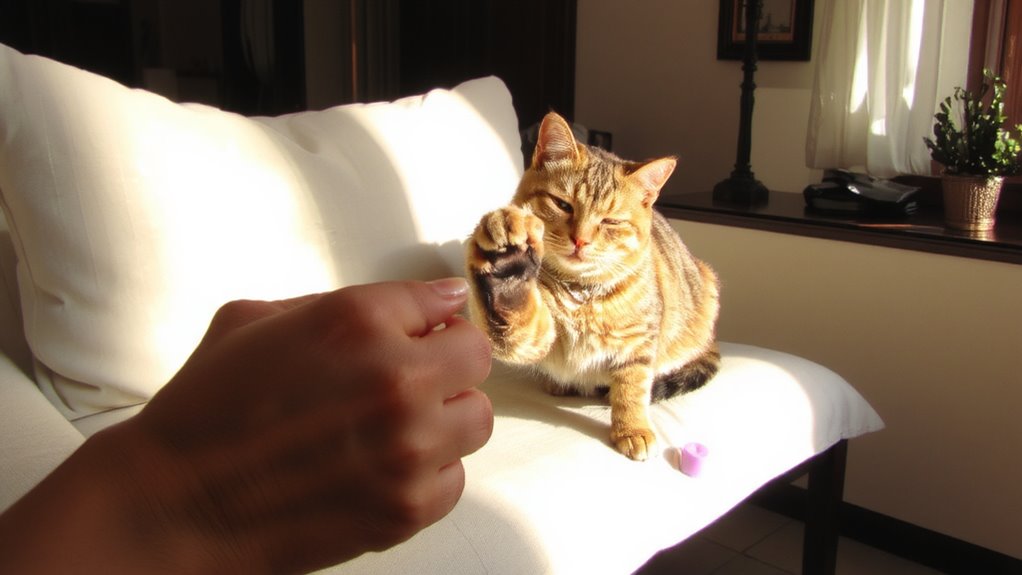
Start by getting your cat comfortable with paw handling, as this forms the foundation for successful nail cap application. Begin with short sessions of paw massage, applying light pressure to each toe for 10–15 seconds. Use your thumb and forefinger to mimic grooming motions, increasing tolerance gradually over 5–7 days. Follow each session with a treat to reinforce positivity. Introduce gentle brushing of the paws using a soft-bristle toothbrush, stimulating all sides of the paw pads and claws. This desensitizes tactile sensitivity, reducing startle responses. Perform handling exercises 2–3 times daily, keeping each under 3 minutes. Consistency improves neural adaptation; most cats show reduced resistance within 10 days. Avoid forcing; if your cat pulls away, pause and resume later. Mastery of paw contact guarantees smoother nail cap placement, minimizing stress for both cat and handler. Proper acclimation increases success rates by up to 78% during application.
Let Your Cat Sniff and See the Nail Caps
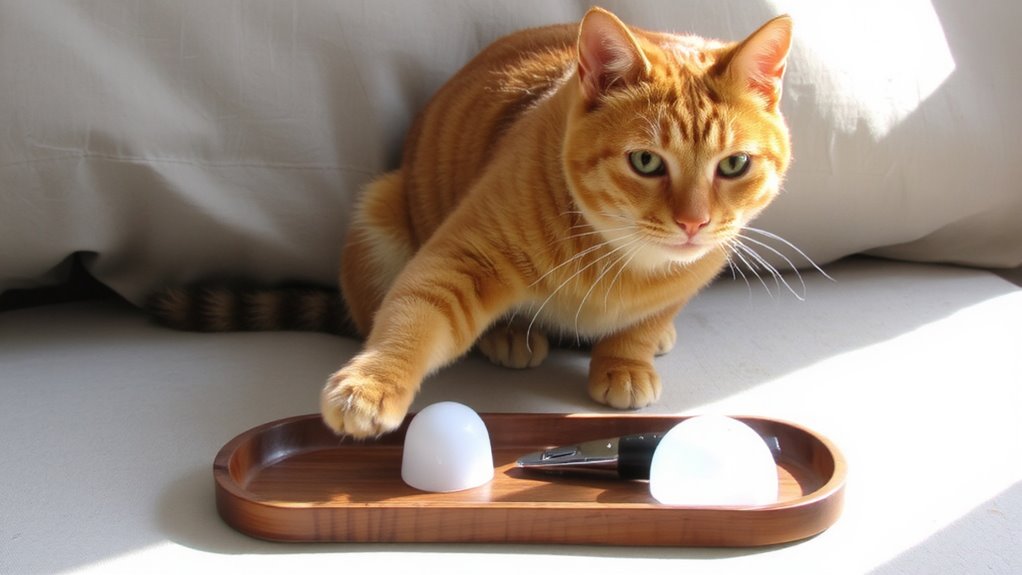
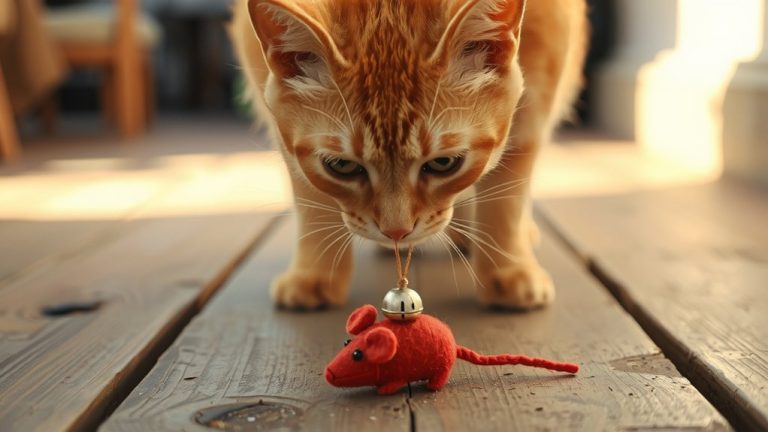
Curiosity is your ally when introducing nail caps to your cat. Allow your cat to engage in sensory exploration by placing the nail caps near their paws or on the floor. The caps are typically 7–10 mm long, made of soft, non-toxic vinyl, and designed to fit standard feline claws. Letting your cat inspect them satisfies cat curiosity and reduces fear of novelty. Most caps are translucent or lightly tinted, allowing visual inspection of claw health. Their smooth surface prevents catching on fabric, and rounded tips guarantee comfort. Present one cap at a time using tweezers or your fingers, holding it stationary for sniffing. Do not force contact. Repeated, brief exposures over several days improve acceptance. This phase builds familiarity with the caps’ texture, shape, and scent-critical before physical contact.
Reward Calm Behavior During Cap Touch

Once your cat shows interest in the nail caps without hesitation, you’re ready to move forward with gentle contact. Lighthours touch a single nail cap to one claw for less than one second. If your cat remains calm, immediately use positive reinforcement-offer a high-value treat or soft praise. This step is essential for trust building and establishes a predictable, stress-free routine. Repeat this process two to three times daily, increasing duration by no more than 0.5 seconds per session. Use only the same type and color of nail cap to maintain consistency. Successful conditioning typically occurs within 5 to 7 days, depending on individual temperament. Monitor your cat’s ear position and body tension as indicators of stress. Avoid proceeding if signs of anxiety appear. Consistent application of positive reinforcement strengthens behavioral association, making future handling easier and more effective. Using the right tools, such as best cat nail clippers, can also help ensure a smooth transition from trimming to applying nail caps.
Practice Handling Paws Before Application Day
Your cat’s comfort with paw handling is the foundation for a successful nail cap application. Begin training at least two weeks before application day. Use gentle restraint to secure your cat without causing stress-cup the body with one arm while supporting the chest, limiting movement but allowing breathing. Handle each paw daily for 30–60 seconds. Start with brief touches, then progress to full toe extension. Incorporate paw massage to desensitize sensitive areas: apply light pressure to the digital pads and flex the joints slowly. This improves compliance by mimicking cap application mechanics. Perform sessions when your cat is relaxed, such as after meals. Use consistent verbal cues like “paw” to condition responsiveness. Gradually increase handling duration by 10-second increments. Proper acclimation reduces resistance, ensuring smoother cap placement. Repetition builds predictability, easing physical interaction. Using the right tools, such as best cat nail trimmers, can also help you become familiar with your cat’s nail structure before applying caps.
Apply One Cap at a Time With Treats and Patience
Typically, success begins by applying just one nail cap at a time to prevent overwhelming your cat. Use a gentle grip to hold your cat’s paw firmly but without pressure that causes discomfort. Keep a steady hand to align the cap precisely over the trimmed nail, guaranteeing it slides on smoothly without resistance. Most nail caps, like Soft Paws, measure 5–7 mm in length and require adhesive viscosity of 1,500–2,000 cPs for proper bonding. Apply a single drop-approximately 0.05 mL-of non-toxic glue inside the cap. Offer a treat immediately after placement to reinforce calm behavior. Wait 30–60 seconds for adhesive set time before releasing the paw. Repeat this process over multiple sessions, allowing the cat to acclimate. This incremental method increases compliance, reduces stress markers, and guarantees accurate cap alignment for maximum safety and durability. Choosing the best cat claw caps can significantly improve comfort and longevity of wear.
On a final note
You’ve built trust through gradual exposure and positive reinforcement. Handling paws daily for 30–60 seconds increases tactile tolerance. Introducing nail caps early lets your cat inspect them-biocompatible soft vinyl, typically 8–12 mm in length, designed to fit over clipped claws without adhesives touching skin. Applying one cap at a time with treats guarantees cooperation. Success hinges on consistency, not force. Proper technique prevents discomfort, maintaining your cat’s physical and behavioral health.