Feeding Tips for Cats With Stomatitis and Oral Pain
Switch to soft, warmed wet food to reduce oral irritation. Feed canned food at 100–104°F to enhance comfort and stimulate appetite through aroma. Avoid dry kibble-it increases mucosal trauma. Hand-feed small portions 6–8 times daily to limit jaw strain. For severe pain, blend food to a smooth puree and strain out fibers. Use a syringe or shallow dish. Weigh your cat daily; a 5% weekly weight loss needs veterinary review. Consistent texture, temperature, and feeding routine support healing-understanding each step improves outcomes.
Notable Insights
- Feed soft or wet food to minimize chewing and reduce irritation to inflamed gums.
- Warm food to 98–104°F to enhance aroma, improve palatability, and increase comfort.
- Offer 4–6 small meals daily to maintain nutrition without overexerting oral tissues.
- Hand-feed warm, moist food to reduce jaw strain and control intake.
- Blend food into a smooth puree for cats with severe pain, feeding via syringe if needed.
Why Stomatitis Makes Eating Painful for Cats
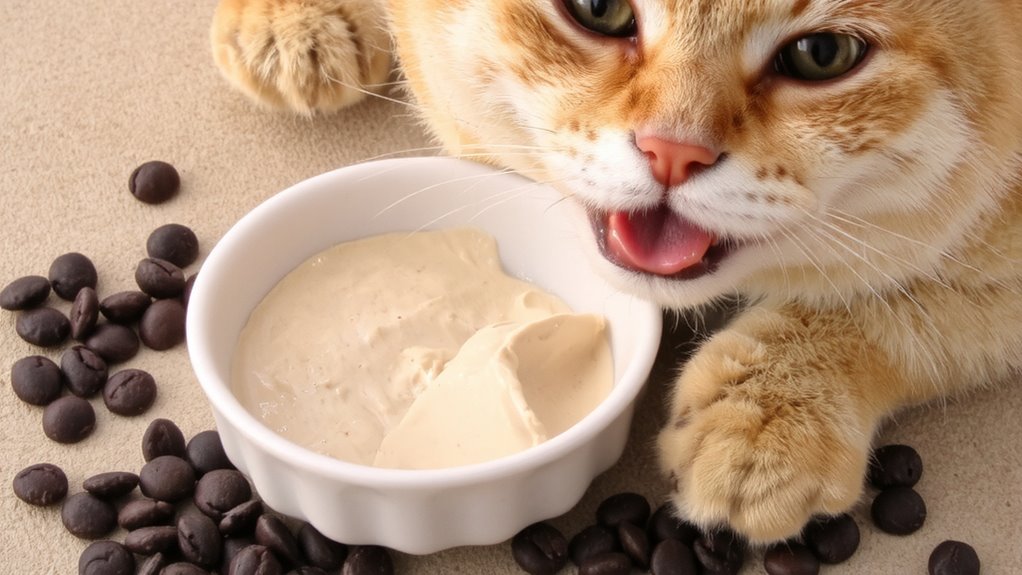
Pain. Stomatitis triggers severe oral discomfort in your cat due to widespread gum inflammation and chronic tissue irritation. This condition involves hyperimmune responses to plaque, leading to red, swollen gums that bleed easily. You’ll observe your cat hesitating to eat or dropping food mid-bite. The inflamed tissue exposes nerve endings, intensifying tooth sensitivity to temperature and pressure. Even normal chewing forces become unbearable. Histologically, lymphoplasmacytic infiltration degrades the mucosa, impairing oral function. The pH shifts in saliva further exacerbate sensitivity. Studies show_cats with stomatitis experience pain scores above 6/10 on veterinary dental scales. The inflammation often extends to the pharynx and tongue, limiting jaw mobility. Unlike localized gingivitis, stomatitis is multicentric, affecting both rostral and caudal regions. You must address this systemic inflammation to restore feeding behavior. Without intervention, weight loss and dehydration follow rapidly. Effective management begins with understanding this pain pathway.
Switch to Soft or Wet Food Now
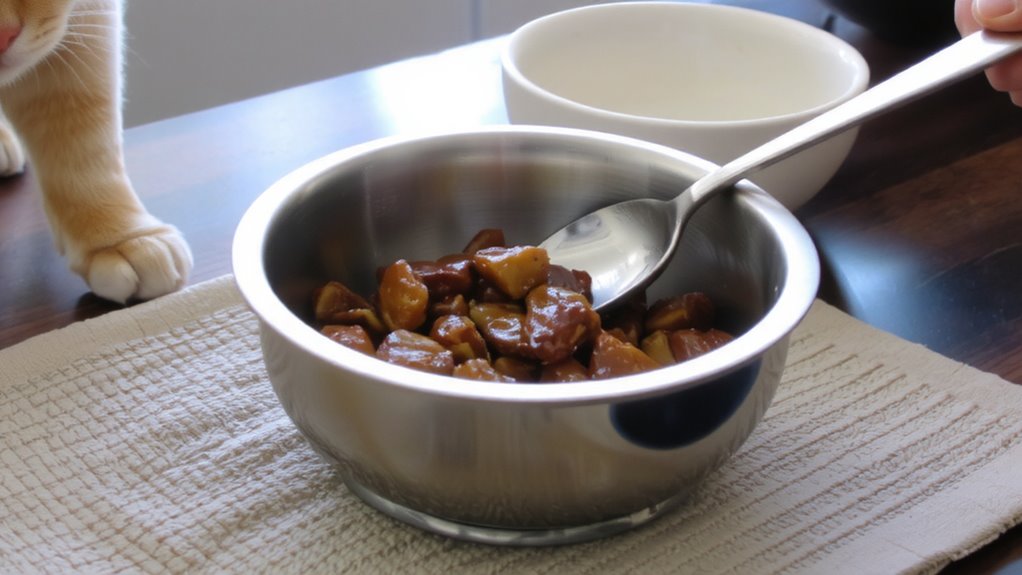
Switching to soft or wet food immediately helps reduce discomfort during eating for cats with stomatitis. The smoother food texture minimizes mechanical irritation to inflamed oral tissues. Soft foods, such as pâté or gravy-based formulas, require less chewing and distribute pressure evenly across the gums. Canned food typically has 70–80% moisture content, which aids in lubrication during swallowing. Adjust feeding frequency to 4–6 small meals daily to maintain nutrition without overloading the mouth. Small, frequent portions reduce prolonged oral activity, limiting pain exposure. Avoid dry kibble; its coarse texture increases mucosal trauma. Use shallow dishes to ease food access and prevent jaw strain. Choose veterinary-recommended, highly digestible formulas with balanced protein and low allergens. Monitor intake volume per meal-typically 1/4 to 1/3 cup for average adults-to track appetite changes. Consistent food texture and feeding frequency management support healing and improve caloric intake in stomatitis-affected cats. Consider trying one of the best wet cat food for sensitive stomachs if gastrointestinal sensitivities are also present, as these best wet cat food options are formulated for easy digestion and minimal irritation.
Warm Food to Soothe Stomatitis Pain
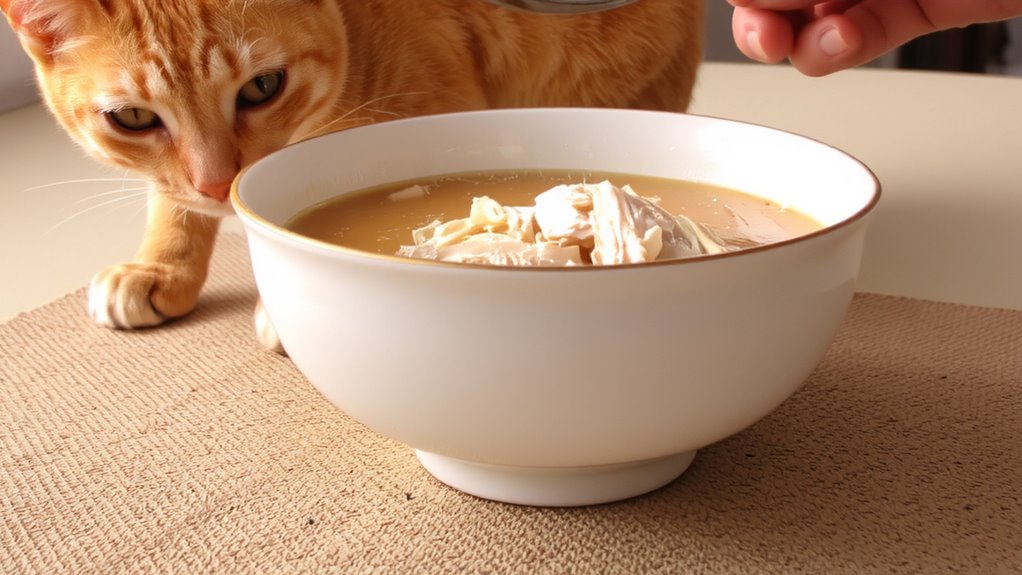
While cold or room-temperature food can aggravate inflamed oral tissues, warming your cat’s meal slightly helps ease discomfort during eating. Ideal food temperature ranges between 98°F and 104°F, closely matching a cat’s body temperature, to promote thermal comfort. Heat the food evenly in 10-second microwave intervals, stirring between to prevent hot spots. Alternatively, place sealed wet food in warm water for 5–7 minutes. Avoid exceeding 105°F, as higher temperatures can damage nutrients and oral tissues. Elevated food temperature enhances aroma dispersion, stimulating appetite via olfactory cues. This method improves palatability without altering nutrient composition. Thermal comfort reduces pain signals during ingestion, encouraging consistent intake. Use a food thermometer for accuracy when adjusting food temperature. Consistency in warmth supports long-term eating patterns. Always test a small portion on your wrist before serving. Warming is most effective with soft or wet formulations already adapted for oral sensitivity.
Hand-Feed to Reduce Jaw Stress
Because your cat’s jaw muscles and temporomandibular joints may be strained by repetitive chewing motions, hand-feeding allows precise control over bite size and reduces mechanical workload. You can minimize jaw movement by offering small, uniform portions directly into the mouth. This method supports an upright feeding posture, which encourages safer swallowing and reduces aspiration risk. Adjust meal frequency to 6–8 small feedings daily to maintain nutrition without overworking oral structures. Use soft, moist food at body temperature (100–102°F) to further limit discomfort. Hand-feeding gives you immediate feedback on acceptability and pain response. It’s not a long-term solution but serves as a short-term strategy during acute flare-ups. Monitor for signs of fatigue or resistance, which may indicate worsening pain or fatigue. Consistent handling builds cooperation.
Use Blended Diets for Severe Cases
For cats with advanced stomatitis who struggle even with hand-fed portions, blending food into a slurry consistency can further reduce oral discomfort by eliminating the need for jaw movement altogether. Blended nutrition guarantees your cat receives essential nutrients without chewing. Use a high-speed blender to puree wet food with warm water or broth until smooth-aim for a pourable, yogurt-like feeding consistency. Strain through a fine mesh sieve to remove fibers that could irritate inflamed tissue. Feed via syringe or shallow dish, depending on your cat’s preference. Maintain food temperature at 100–104°F (38–40°C) to enhance palatability. Rotate protein sources weekly to support dietary balance. Blended diets are not ideal long-term due to reduced dental stimulation but serve as a critical intervention in severe cases. Monitor ingestion volume closely to guarantee caloric adequacy.
Track Appetite and Weight Daily
Regularly tracking your cat’s appetite and weight is critical when managing stomatitis, as even small changes can signal disease progression or treatment response. Weigh your cat at the same time each day using a digital scale calibrated to the nearest 0.1 lb (0.05 kg). Record daily food intake by measuring portion size in grams to detect subtle shifts. Note feeding frequency-increased attempts with reduced consumption may indicate pain. A 5% drop in body weight over one week warrants veterinary evaluation. Use a standardized chart to log intake and weight, ensuring objective review during clinical visits. Consistent data helps differentiate between behavioral anorexia and physiological decline. Even if your cat eats small amounts frequently, total caloric intake may remain inadequate. Adjust portion size proactively based on trends, not individual meals. Monitoring provides actionable insights, guiding timely interventions and improving long-term outcomes in stomatitis management.
On a final note
You must prioritize soft, palatable diets to manage stomatitis-related pain. Switch to canned or blended food with 75–80% moisture content to ease swallowing. Warm meals to 98–104°F (37–40°C) to enhance aroma and reduce irritation. Hand-feeding minimizes jaw movement. Monitor intake daily; weigh your cat weekly using a digital scale accurate to 0.1 lb. Persistent weight loss signals need for veterinary intervention or feeding tube consideration.