Building a Consistent Routine for Teaching Dogs Impulse Control With Wait Commands
You build impulse control by training “wait” in a distraction-free space using a leash and high-value treats. Say “wait” with a forward palm signal at eye level, then step back one foot. Return immediately to reward if your dog holds position. Increase duration by 5 seconds per session, up to 30 seconds. Use a click or verbal marker at the exact moment of compliance. Release with a consistent word like “okay.” Incorrect attempts get a neutral reset-no reward, repeat the trial. Reinforce five times daily for 30–60 seconds to strengthen neural pathways linked to self-control. This routine enhances prefrontal cortex activity and synaptic connections for delayed gratification. You’ll see improved focus and reduced reactivity over time, especially in high-distraction environments. Consistency in timing, cues, and reinforcement builds the cognitive resilience needed for real-world impulse control-key details follow.
Notable Insights
- Start training in a distraction-free area using the “wait” cue and open-palm signal to build initial understanding.
- Reinforce correct behavior immediately with treats and use a consistent release word like “okay.”
- Gradually increase wait duration by 5-second increments up to 30 seconds over multiple short sessions.
- Practice daily in real-life scenarios such as mealtimes, doorways, and leash hookups to build reliability.
- Avoid inconsistent cues or premature releases to maintain clarity and strengthen impulse control.
How to Teach the Wait Command in 5 Simple Steps
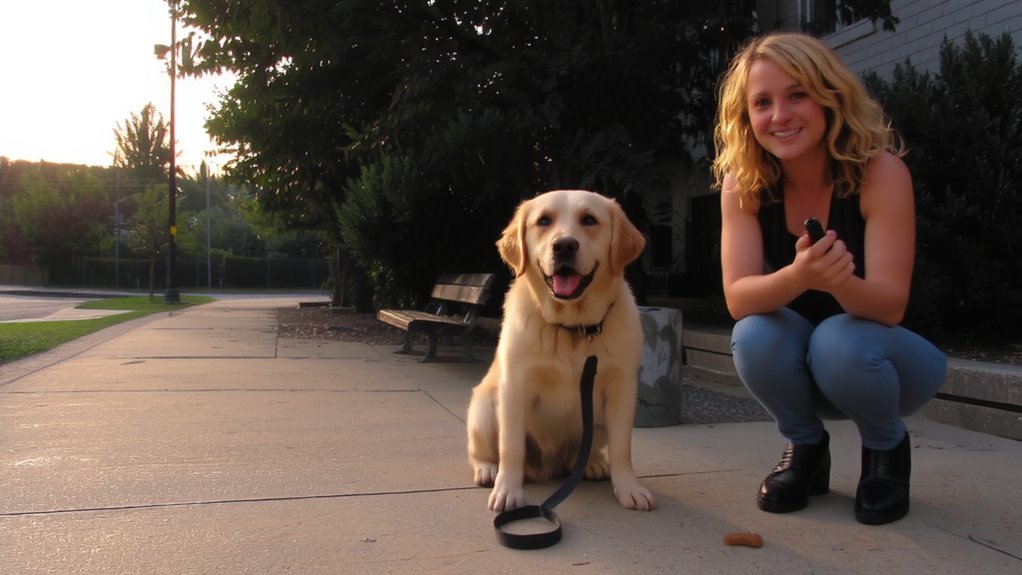
While impulse control begins with consistency, teaching your dog the “wait” command lays the foundation for reliable obedience in dynamic environments. Start in a distraction-free area with a leash attached. Say “wait” while showing a open-palm hand signal. Step back one foot. If your dog holds, immediately return and reward. This establishes timing cues-your return is the release signal. Over sessions, increase duration by 5-second increments up to 30 seconds. Then begin distance building: step back 3, 5, then 10 feet, always returning before rewarding. Use consistent verbal cues and body language. Practice 3–5 times daily for 5–7 minutes. Reinforce with high-value treats initially. Generalize across environments-yard, sidewalk, park-only after mastery indoors. Each phase requires proofing: 90% success over three sessions before advancing. Precision in timing cues guarantees clarity, while systematic distance building develops impulse endurance.
Common Wait Command Mistakes (And How to Fix Them)
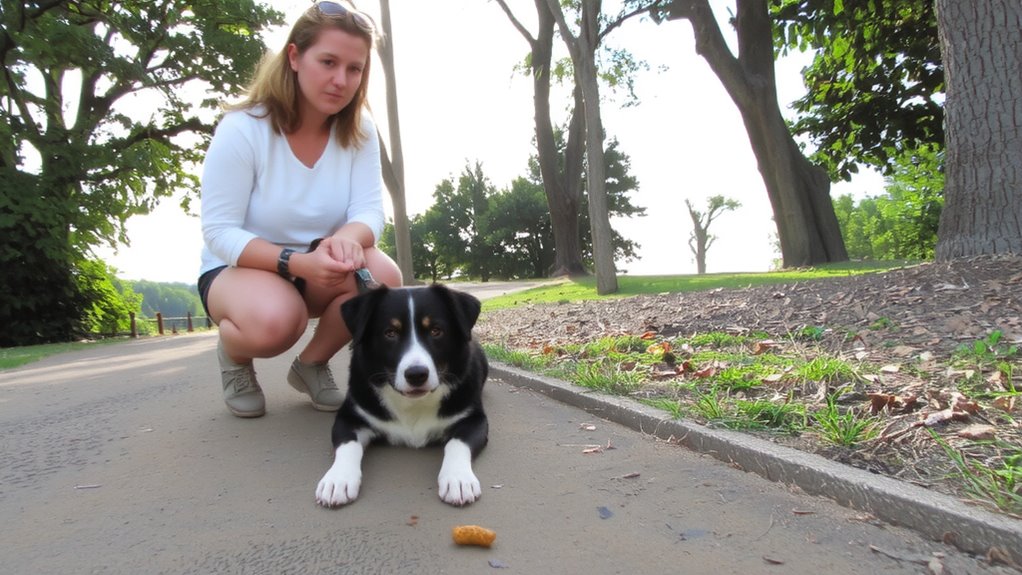
You’ve built a foundation with timed releases and structured progression, but even well-trained waits can falter if common errors go uncorrected. Inconsistent timing erodes reliability by confusing your dog about when compliance is required. The nervous system associates behavior with consequence within a 1–2 second window; delayed rewards weaken learning. Always mark the exact moment of correct behavior with a verbal cue or click before delivering reinforcement. Premature release teaches your dog to break the wait early. Use a consistent release word like “okay” only after full compliance. Avoid body shifts or eye contact that signal impending release. Train with measured durations-start at 3 seconds, increase by 2-second increments. Reinforce position stability. Correct errors immediately with a neutral reset: no reward, repeat the trial. Precision in execution guarantees performance consistency.
When to Use Wait in Real-Life Situations
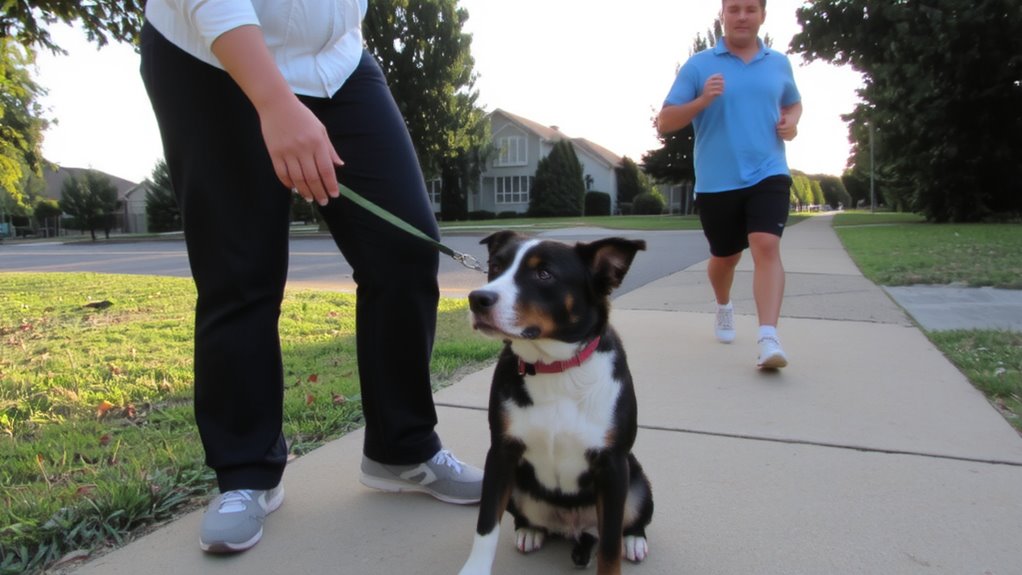
Where should you apply the wait command outside of training sessions? Use it to enforce car door safety by having your dog wait until the vehicle is fully parked and you give a release cue. This prevents bolting into traffic or unsafe environments. The wait command also establishes mealtime manners-require your dog to wait while you place the food bowl down, reducing food aggression and reinforcing calm behavior. Apply the command at doorways to prevent rushing. Wait durations should be short (5–10 seconds) but consistent, with a clear release word like “okay.” Use a neutral tone to maintain authority. This structured impulse control transfers directly to real-world safety and obedience. You’ll see measurable improvements in focus and compliance across environments. Implementing wait in these contexts reinforces leadership and guarantees predictable responses. It’s not just training-it’s functional behavior modification.
Make Wait Part of Your Daily Routine
Frequently, integrating the wait command into daily activities strengthens impulse control and builds reliable responsiveness. Daily integration guarantees your dog encounters the command in varied contexts, increasing adaptability. Use wait before meals, leash hookups, door exits, and street crossings. Each instance reinforces discipline under real-world stimuli. Consistent practice is critical-perform at least five short sessions daily, each lasting 30 to 60 seconds, to solidify neural pathways. Use a clear verbal cue like “wait” followed by a hand signal-palm forward at dog’s eye level. Hold the position for 3–5 seconds initially, gradually extending duration to 30 seconds. Reinforce correct behavior immediately with a high-value treat or release cue. Avoid repeating the command; if your dog breaks, gently reset. Over time, your dog learns precision through repetition. Daily integration, paired with consistent practice, transforms wait from a learned response to an automatic behavior in structured settings.
Why Wait Builds Better Impulse Control in Dogs
Build the foundation of impulse control by understanding how the “wait” command shapes your dog’s neural and behavioral responses. Each time you say “wait,” you trigger active inhibition in your dog’s prefrontal cortex, reinforcing neural development tied to decision-making. This pause strengthens synaptic connections involved in delayed gratification. Repeated practice enhances emotional regulation, reducing reactivity to distractions like food, other dogs, or doorways. Functional MRI studies show increased gray matter density in brain regions linked to self-control after consistent wait training. The behavior requires sustained attention, measured in durations from 3 to 60 seconds, scalable with training intensity. Proper timing-releasing with a cue like “okay”-reinforces predictability, improving behavioral consistency. Unlike “stay,” which emphasizes static positioning, “wait” prepares dogs for dynamic shifts. You’re not just teaching patience; you’re building cognitive resilience. This skill directly translates to real-world scenarios, from curbing leash pulling to preventing bolting through doors.
On a final note
You now have a reliable method for teaching wait. Consistent timing and precise cues build neural pathways that support self-regulation. Use a 1–2 second delay initially, increasing by 500 milliseconds per session. Reinforce correct behavior with immediate treats-ideally within 0.5 seconds. Real-world applications, like doorways or feeding, solidify learning. Wait isn’t just obedience-it’s cognitive training, enhancing focus and reducing reactivity through structured impulse control.