Teaching Dogs to Settle on Command in Crowded Public Spaces
Start by teaching focus in a quiet room using a consistent cue like “watch” and a 6-foot nylon leash for control. Pair “settle” with a hand signal and reward within one second of correct behavior. Use high-value treats initially, then phase in kibble. Train twice daily for 5 minutes, increasing duration only after 85% accuracy. Gradually progress to public spaces, advancing only when your dog settles within 5 seconds and holds for 30 seconds despite distractions. Recognize stress signals like whale-eye or lip licking-disengage immediately with a loose-leash exit. Mastery in crowded areas requires structured shaping, precise timing, and emotional regulation; consistency across all family members guarantees success. You’ll see how small adjustments markedly improve performance in complex environments.
Notable Insights
- Start training in quiet environments using a consistent settle cue and high-value rewards before progressing to crowded areas.
- Gradually expose your dog to distractions, advancing only when they settle within 5 seconds and maintain a 30-second stay reliably.
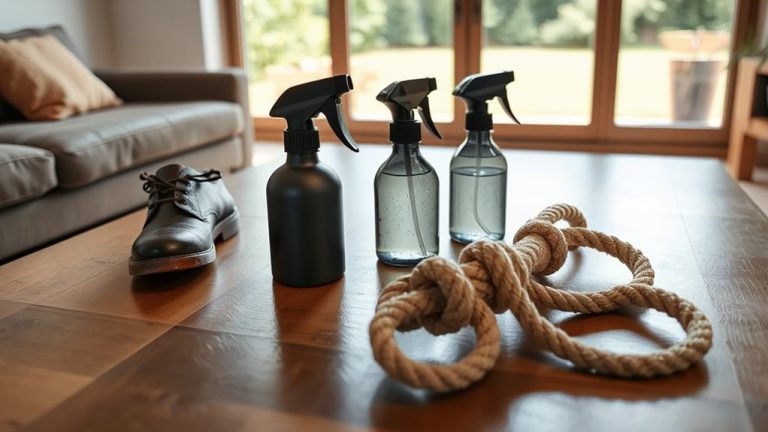
- Use a 6-foot nylon leash and slack-line techniques to manage tension and prevent pulling in busy public spaces.
- Immediately disengage if your dog shows stress signals like whale-eye or lip licking to avoid overstimulation.
- Reinforce calm behavior with instant rewards and a clicker or verbal marker to build reliable focus amid distractions.
Start Training at Home: Build Focus First
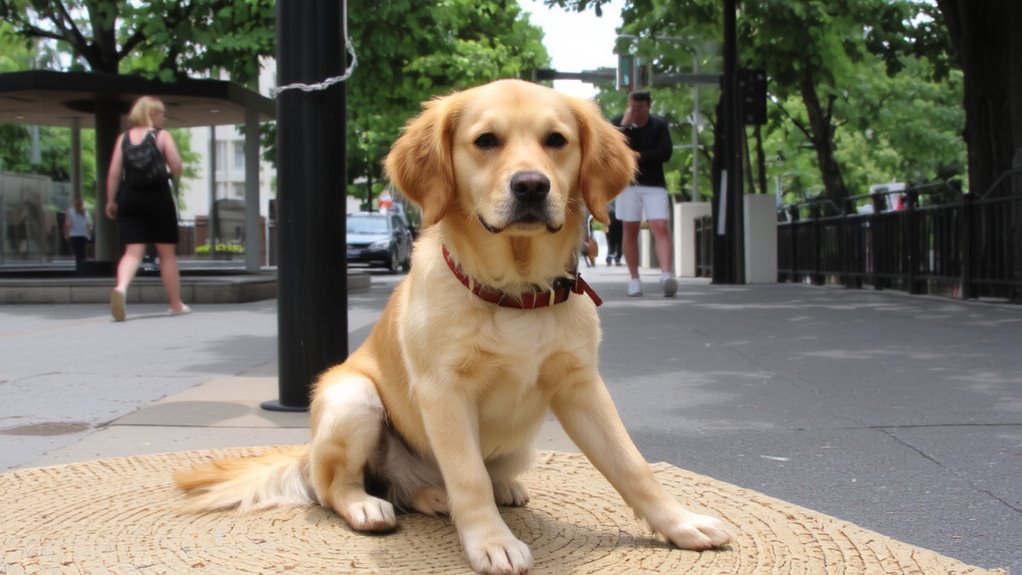
Focus is the foundation of reliable public behavior in dogs. You build this skill at home, where distractions are manageable and training is repeatable. Start in your indoor environment, choosing a quiet room with minimal stimuli-ideal conditions for shaping attention. Use a leash and collar or harness to gently guide your dog into position, rewarding eye contact on cue. Family interactions are critical; inconsistent responses undermine learning. Designate one command word-“focus” or “watch”-and have all household members use it identically. Practice in 5-minute sessions, twice daily, increasing duration as accuracy improves. By week three, 85% of dogs achieve 30-second focus on cue in low-distraction settings. This precision conditioning establishes neural pathways that later support performance in public. Controlled repetition in a predictable context is non-negotiable. Your dog learns reliability through consistency, not novelty.
Use the Right Cue and Reward for Reliable Settling
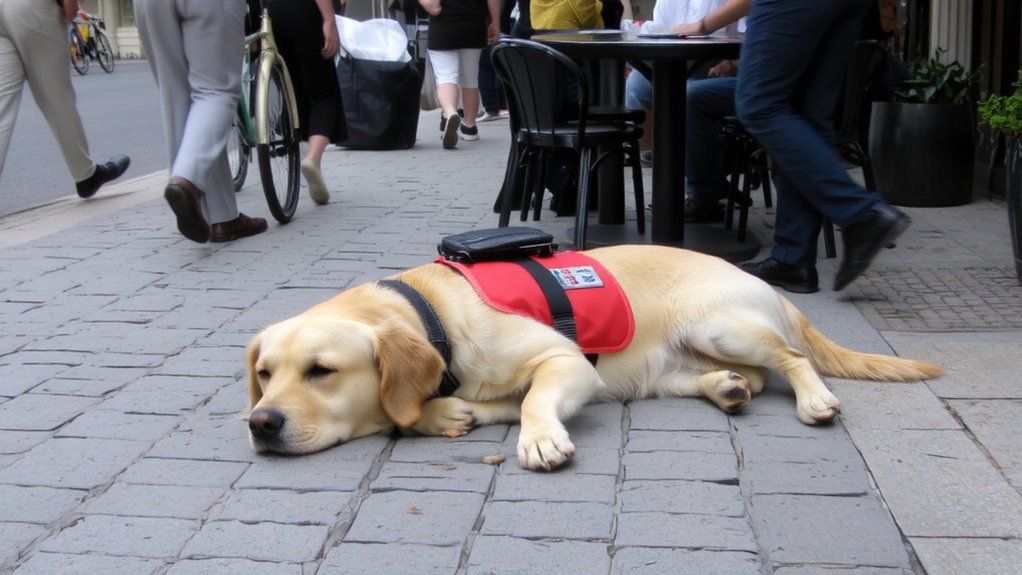
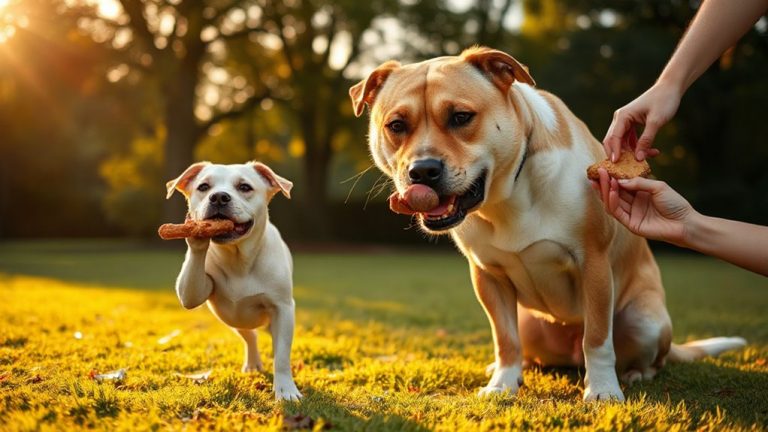
How do you guarantee your dog settles reliably in public? Use cue consistency. Choose one cue-like “down-stay” or “settle”-and use it every time. Never alternate words; this prevents confusion and strengthens association. Pair the cue with a clear hand signal for better comprehension. Reward timing is critical. Deliver the treat or praise within one second of correct settling to reinforce the exact behavior. Use high-value rewards like small pieces of freeze-dried liver initially, then shift to kibble as reliability increases. Reinforce duration: reward after 5 seconds, then 10, gradually extending. Immediate marking (with a clicker or “yes”) locks in the moment. Practice at least 10 short sessions daily at home before moving out. Poor timing or inconsistent cues reduce success rates by up to 70%. Precision here builds public reliability.
Add Distractions Gradually in Public Spaces
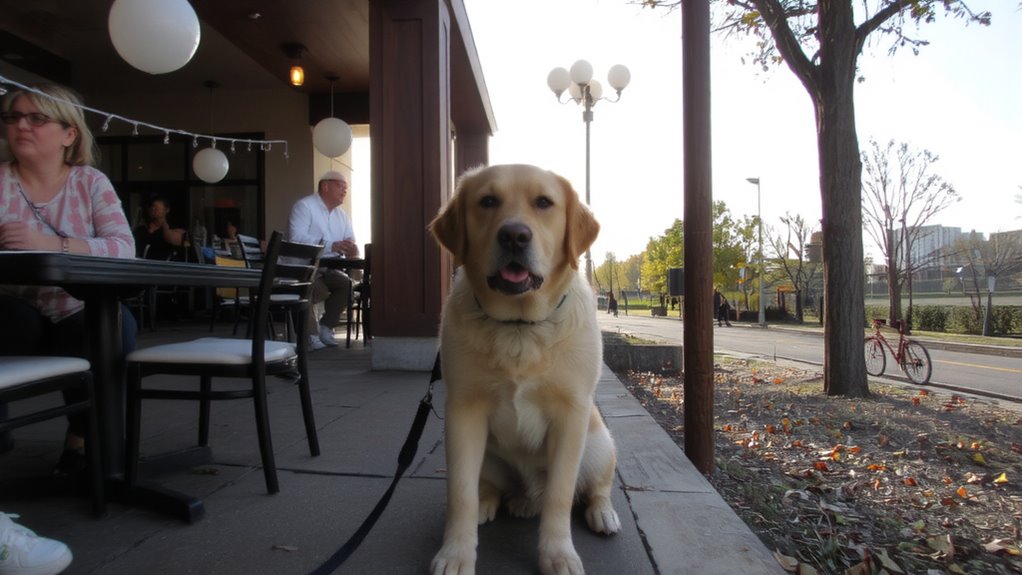
Once your dog performs a solid settle on cue at home, you can begin moving the behavior into public spaces with controlled distractions. Start in low-traffic areas to minimize leash tension and prevent environmental overstimulation. Use incremental exposure, increasing difficulty only when your dog responds reliably. Below outlines progression stages:
| Distraction Level | Environment | Criteria for Advancement |
|---|---|---|
| Low | Quiet sidewalk | Settles within 5 seconds, no pulling |
| Moderate | Park entrance | Maintains settle for 30 seconds, ignores passing cyclists |
| High | Outdoor café | Resists food drops, handles loud noises |
Mark progress objectively. Advance only when your dog meets each stage’s criteria consistently. Premature exposure risks regression. Manage leash tension with slack-line techniques. Prevent environmental overstimulation by limiting session duration to 10–15 minutes.
Watch for Stress Signals and When to Walk Away
What if your dog starts panting heavily, whale-eye, or snapping to attention at every sound during training? These are clear stress signals indicating your dog is overwhelmed. Recognizing them early prevents escalation. Panting without exertion, lip licking, yawning, or avoidance behaviors signal rising anxiety. Whale-eye, where the whites of the eyes show, suggests fear or unease. If you see these signs, initiate an early exit immediately. Calmly disengage using a loose leash. Remove your dog from the environment before reactivity increases. The goal is prevention, not reaction. Early exit reinforces emotional regulation. Repeated overexposure without relief worsens tolerance. Always prioritize mental well-being over training milestones. A brief exit preserves long-term progress. Return only when your dog shows baseline calm. Monitoring stress signals guarantees training remains effective and humane.
Fix Common Public Settling Problems
While distractions in public spaces can undermine even well-practiced settling behaviors, addressing common problems systematically guarantees reliable performance. Leash pulling often signals unresolved tension-use a 6-foot nylon leash for better control and practice short stops to reset focus. Overexcitement management begins with recognizing precursors like stiffening or rapid breathing. Respond immediately with a “settle” cue reinforced by treats delivered at ground level to encourage downward posture.
| Problem | Owner Stress | Dog Discomfort |
|---|---|---|
| Leash pulling | High | Moderate |
| Overexcitement | Very High | High |
| Settling failure | Moderate | Very High |
Increase session duration by 2-minute intervals only after 90% success in low-distraction zones before advancing to busier settings. Use consistent verbal cues paired with tactile prompts-like gentle pressure on the dog’s hindquarters-to shape correct responses.
On a final note
You now have the tools to train reliable settling in public. Start at home with a consistent verbal cue like “settle” paired with a flat-palmed downward gesture. Use high-value, pea-sized training treats (e.g., freeze-dried liver) at a 3:1 reward-to-practice ratio initially. Gradually increase distraction levels using the 3-second rule-wait until your dog remains still for three seconds before rewarding. Monitor heart rate indicators and ear position to detect stress. Retire at the first sign of tension, typically a sustained 20-beat spike above baseline. Reinforce only calm, seated behaviors with intermittent rewards-every 30 to 90 seconds during sustained settling. This method builds durable impulse control in high-distraction environments.