Checking Your Pet’s Anal Area During Routine Grooming
You should check your pet’s anal area during routine grooming to catch early signs of impaction or infection. Healthy anal glands are small, soft, and sit at the 4 and 8 o’clock positions around the anus. They typically release a brown, fishy fluid when your pet defecates. Swelling, firmness, or thick, discolored discharge signals trouble. Small breeds and pets on low-fiber diets are at higher risk. Monitoring monthly helps prevent abscesses. You’ll learn how to respond if problems arise.
Notable Insights
- Inspect your pet’s anal area monthly during grooming to detect swelling, redness, or irritation early.
- Gently press at the 4 and 8 o’clock positions to check for impacted or painful anal glands.
- Healthy anal glands are small, soft, and express thin brownish fluid with a fishy odor.
- Look for signs like scooting, foul smell, or oily stains, which indicate gland problems.
- Use gloves and lubricant for safe expression, and consult a vet if glands appear abnormal.
Why You Should Check Your Pet’s Anal Glands
Your pet’s health depends on regular monitoring of the anal glands, small sacs located at approximately the 4 and 8 o’clock positions around the anus. These glands naturally express during defecation, but impaction can occur if secretion accumulates. Diet impact plays a critical role-insufficient fiber reduces stool bulk, decreasing natural compression. High-fiber diets or additives like pumpkin support firm stools, aiding expression. Grooming frequency also affects gland health; infrequent care delays early detection of swelling or infection. Dogs with chronic issues may need manual expression every 3–6 weeks. Small breeds are predisposed due to anatomy. Untreated impaction leads to abscesses or rupture, requiring surgical intervention. Monitoring between professional grooming sessions guarantees timely response. Anal sacs measure about 1–2 cm in diameter when healthy. Early signs include scooting or excessive licking. Regular checks complement grooming frequency and dietary management, preventing complications effectively and maintaining overall wellness.
How to Safely Inspect Your Pet’s Anal Glands
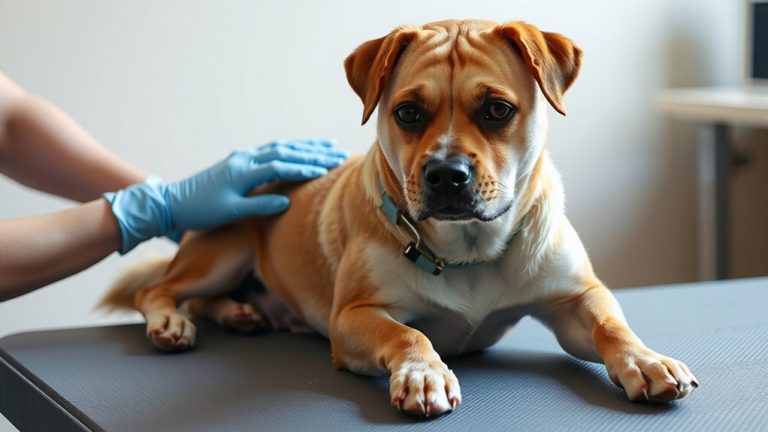
Checking the anal glands starts with proper positioning and awareness of anatomical landmarks. Place your pet on a non-slip surface, rear end accessible. The anal glands sit at the 4 and 8 o’clock positions relative to the anus. Use a gloved hand and lubricant to gently part the fur. Apply light pressure near the glands with your thumb and forefinger. You’re checking for anal swelling-any enlargement suggests impaction or infection. Observe secretion color during expression; normal fluid is pale yellow to brown. Dark, bloody, or greenish secretions signal issues. Use minimal force to avoid tissue damage. If resistance is felt, stop immediately. Inspect glands once monthly during routine grooming. Regular monitoring supports early detection of dysfunction. Proper technique prevents complications and maintains anal sac health. Consistent inspection is key for long-term pet wellness.
Normal vs. Abnormal Anal Gland Appearance
Anal gland health hinges on recognizing subtle visual and tactile differences between normal and problematic conditions. Healthy anal sacs feel small, soft, and slightly movable under the skin at the 4 and 8 o’clock positions around the anus. When expressed, normal secretion is thin, brown to amber, and has a fishy odor-this is your pet’s natural secretion color. The fluid should drain easily without resistance. Abnormal anal sacs may appear swollen, firm, or painful to touch. Discharge that’s thick, pasty, gray, green, or bloody indicates inflammation or infection. Secretion color changes signal issues: black specks suggest dried material; pus means infection. Do not ignore hardness or asymmetry. Early detection of abnormal structure or secretion color improves treatment outcomes. Regular inspection helps maintain anal sac function and prevents complications. Know what’s normal so you can spot changes quickly.
Common Signs of Anal Gland Problems
You might not think about it often, but changes in your pet’s behavior can point to underlying anal gland issues. Scooting behavior-when your pet drags its anal area across the floor-is a classic sign of discomfort. It often indicates impacted or inflamed glands pressing on sensitive tissue. Anal leakage may also occur, leaving oily stains or foul-smelling residue on surfaces where your pet sits. This discharge comes from overfilled glands that spontaneously express. You might detect a strong, musky odor near the tail base. Swelling, redness, or tenderness during grooming are additional physical indicators. Chronic cases can lead to abscesses, but early recognition helps prevent complications. Glands located at 4 and 8 o’clock around the anus normally secrete fluid during defecation. When blockage occurs, secretion builds up, causing irritation. Regular checks during grooming let you spot problems early.
When to See a Veterinarian
Persistent scooting, foul odor, or visible swelling near the anus means it’s time to get your pet to a veterinarian. These signs often indicate an anal sac issue, such as impaction, infection, or abscess. The anal sacs, located at 4 and 8 o’clock around the anus, produce a dark, foul-smelling fluid normally expressed during defecation. When blocked, fluid accumulates, increasing pressure and discomfort. Left untreated, this can lead to rupture or systemic infection. A veterinary consultation is essential for proper diagnosis and treatment. Your vet may manually express the sacs, flush them if infected, or prescribe antibiotics or anti-inflammatories. In chronic cases, surgical options may be discussed. Early intervention prevents complications and reduces the need for invasive procedures. Regular monitoring and professional evaluation guarantee your pet’s anal sac health and overall well-being.
How to Keep Your Pet Calm During Checks
Regularly checking your pet’s anal area requires a calm and cooperative animal, so preparing mentally and physically beforehand is crucial. Begin with positive reinforcement to build trust and reduce anxiety. Offer small, high-value treats-such as freeze-dried liver or soft training morsels-immediately after each successful handling session. Perform checks in a quiet, familiar space with minimal distractions. Use gentle handling techniques: support the base of the tail with one hand, lifting slightly upward at a 30-degree angle to expose the perianal region without force. Conduct exams for no more than 30 seconds initially, gradually increasing duration over multiple sessions. Speak in a low, consistent tone. Avoid sudden movements. Consistency strengthens compliance. Monitor heart rate; a calm dog typically rests at 60–100 bpm, cats at 120–140 bpm. Calm vitals indicate effective stress reduction. For pets with persistent anxiety, consider using a calming aid such as an anxiety jacket designed to provide gentle, constant pressure.
On a final note
You should check your pet’s anal area regularly during grooming. This helps detect issues early. Normal glands are small, symmetrical, and not swollen. They secrete a thin, brownish fluid. Impacted glands become enlarged and firm. Infection causes thick, yellow or bloody discharge. Abscesses may rupture, leaking pus. Chronic issues lead to scooting or excessive licking. If you notice swelling, pain, or discharge, see your veterinarian. They may express the glands or prescribe treatment. Proper hygiene supports anal health. Regular inspection prevents complications.