How to Clean Your Pet’s Face After Exposure to Smoke or Dust
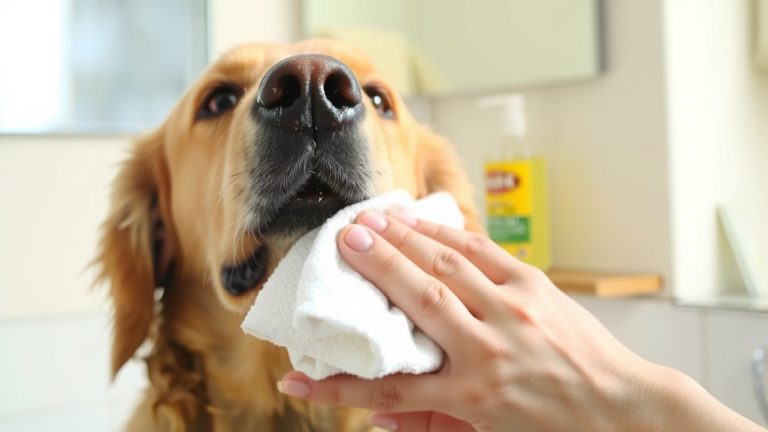
Wipe your pet’s face immediately after smoke or dust exposure using a soft, lint-free cloth moistened with sterile saline or lukewarm distilled water. Gently clean around the eyes, nose, and mouth with light pressure-no scrubbing. Part long fur to remove embedded particles. Avoid alcohol, vinegar, and commercial wipes. Use only ophthalmic-grade saline labeled isotonic. Continue to monitor for unresolved irritation.
Notable Insights
- Use a soft, lint-free cloth moistened with sterile saline or lukewarm distilled water to gently wipe your pet’s face.
- Focus on cleaning around the eyes, nose, and mouth, avoiding harsh scrubbing to prevent skin irritation.
- Part long fur carefully to remove embedded smoke residue and particulate matter from the skin beneath.
- Watch for signs of facial redness, excessive tearing, or eye discharge, which indicate irritation from exposure.
- Seek immediate veterinary care if your pet shows respiratory distress, eye cloudiness, or worsening symptoms after cleaning.
How Smoke and Dust Irritate Your Pet’s Face
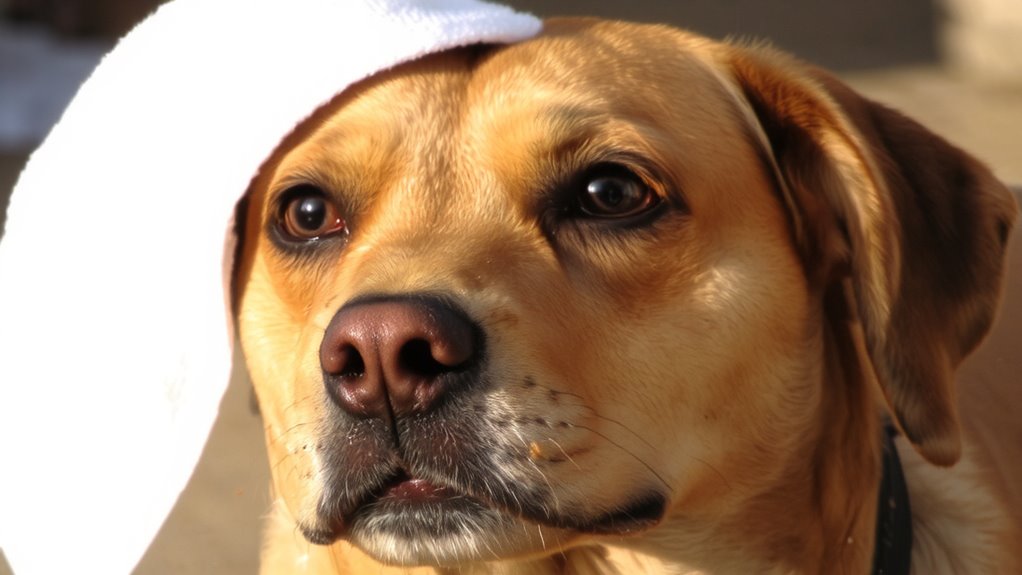
Smoke and dust aren’t just irritants for humans-they can seriously bother your pet’s face too. These airborne particles carry allergens and inflammatory agents that disrupt your pet’s facial tissues. Fine particulate matter, especially PM2.5, penetrates surface layers, triggering capillary dilation and leading to facial redness. Affected areas include the periocular region, muzzle, and eyelids. Simultaneously, conjunctival irritation stimulates lacrimal glands, producing excessive eye discharge-often serous or mucopurulent. The discharge may accumulate at the medial canthus, predisposing to bacterial overgrowth. Corneal sensitivity increases, prompting blinking or squinting. You’ll notice reddened skin within 30 minutes of significant exposure, with discharge volume rising proportionally to particulate concentration. Pets with flat faces, like Pugs or Persians, are at higher risk due to reduced air turbulence in nasal passages. Irritation severity depends on exposure duration, particle size, and individual sensitivity. Immediate post-exposure assessment is essential.
Supplies to Clean Your Pet’s Face Safely
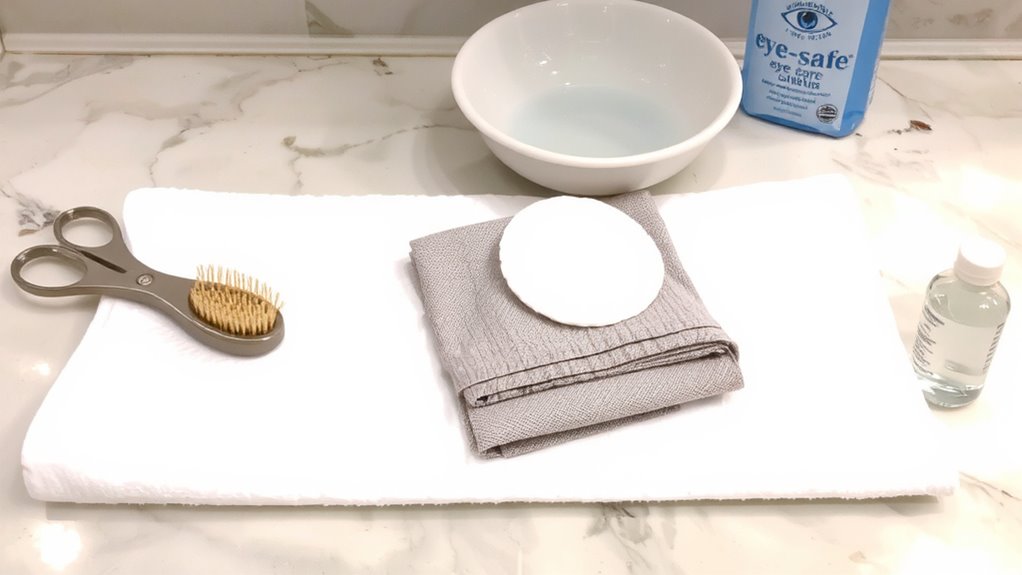
A clean face starts with the right tools. You’ll need soft, lint-free cloths or gauze pads for effective debris removal. Choosing towels matters-opt for microfiber or cotton fabrics that won’t scratch delicate facial skin. Avoid terrycloth, as loose fibers can irritate or leave residue. Use only lukewarm, distilled water-its neutral pH and lack of minerals reduce irritation risk. Completely bypass commercial soaps, shampoos, or wipes, even those labeled “natural.” These disrupt the skin’s acid mantle, increasing permeability to pollutants. Avoiding soaps prevents allergens and preserves your pet’s natural protective barrier. Sterile saline solution (0.9% sodium chloride) is safe for eyes and nostrils when labeled ophthalmic or nasal isotonic. Guarantee packaging is sealed and unexpired. Never use alcohol, hydrogen peroxide, or vinegar-these damage epithelial cells. Keep supplies ready in a clean, dry container.
How to Wipe Your Pet’s Face After Exposure
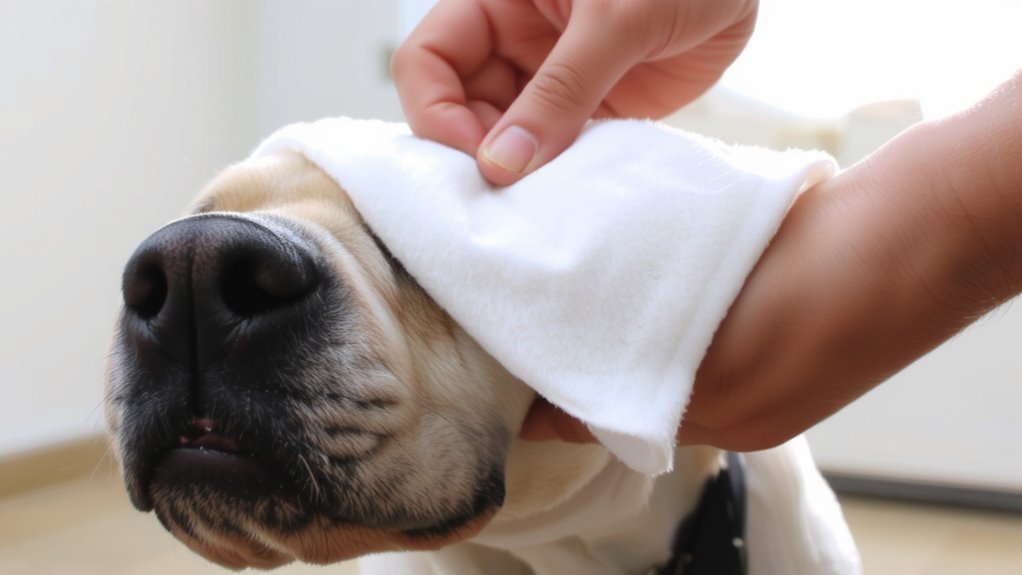
Why wait until symptoms appear after your pet encounters irritants? Start face wiping immediately to minimize exposure. Use a soft, lint-free cloth or veterinary-grade wipe moistened with sterile saline solution. Gently wipe the facial fur and skin, focusing on areas around the eyes, nose, and mouth. Apply light pressure-no scrubbing-to avoid micro-abrasions. For long-haired pets, part the fur to reach the skin beneath, ensuring thorough removal of particulate matter. Face wiping isn’t just about cleanliness; it supports pet comfort by reducing irritation from ash or dust residues. Use hypoallergenic, fragrance-free products to prevent chemical sensitization. Perform the process in a calm environment to reduce stress. Complete wiping within minutes of exposure for maximum efficacy. This proactive step limits inhalation or ingestion of contaminants during grooming. Consistency enhances respiratory and ocular health. For convenience and effectiveness, consider using pre-moistened dog paw wipes designed for pets with sensitive skin.
Signs of Irritation to Watch For
How quickly can you spot the early warning signs your pet’s face is irritated? Facial redness is a primary indicator of inflammation, often appearing within minutes of exposure to smoke or dust. Check for erythema around the eyes, muzzle, and ears-areas with thinner skin and higher vascular density. Excessive tearing, or epiphora, follows as the lacrimal system responds to ocular irritants. Tears may appear clear initially but can become mucoid if irritation persists beyond 30 minutes. Your pet might blink rapidly or squint, signaling discomfort. Swelling or warmth to the touch further confirms dermal reaction. Monitor changes every 15–20 minutes using side lighting to detect subtle swelling. Early recognition allows immediate decontamination. Do not wait for symptom progression. Address findings at onset to prevent secondary complications, such as corneal abrasions or bacterial colonization in compromised tissue.
When to Call the Vet After Smoke or Dust Exposure
Could your pet’s reaction to smoke or dust go beyond mild irritation? Yes, and recognizing severe symptoms early is critical. If your pet shows signs of respiratory distress-such as labored breathing, wheezing, or persistent coughing-seek veterinary care immediately. Respiratory rates above 40 breaths per minute at rest indicate a medical emergency. Similarly, eye injuries require prompt attention if you notice excessive tearing, cloudiness, or eyelid swelling. Corneal damage from particulate exposure can lead to ulcers within hours. Do not wait if symptoms worsen after cleaning. Avoid home treatment for deep eye injuries or prolonged breathing difficulty. Pets with preexisting conditions like asthma or brachycephalic syndrome are especially vulnerable. Transport your pet safely, keeping the environment calm and oxygenated. Immediate veterinary evaluation prevents complications and supports faster recovery. Timely intervention saves lives.
On a final note
Clean your pet’s face promptly after smoke or dust exposure to prevent irritation. Use a soft, lint-free cloth dampened with sterile saline solution-never alcohol or soaps. Gently wipe the periorbital and muzzle areas using upward strokes. Rinse cloth frequently. Make certain no residue remains. Monitor for redness, squinting, or discharge. If symptoms persist beyond 24 hours, consult a veterinarian.