Using Interactive Feeding Toys to Slow Down Eating and Support Weight Loss in Cats
You can slow your cat’s eating by up to 60% using interactive feeding toys, reducing risks of regurgitation, gastric distress, and obesity. Models like the Outward Hound Fun Feeder and Trixie 5-Maze Ball extend mealtime to 10–15 minutes through BPA-free, chew-resistant designs. These feeders mimic prey movement, satisfying hunting instincts while promoting portion control. Adjustable compartments support vet-recommended calorie limits, with multi-chambered puzzles improving metabolic regulation. Success is marked by consistent 5+ minute engagement daily-further details reveal ideal strategies for long-term weight management.
Notable Insights
- Interactive feeding toys slow eating, reducing choking risks and improving digestion in cats.
- Slower meal times help regulate insulin release, minimizing fat storage and supporting weight management.
- Puzzle feeders extend eating duration to 10–15 minutes, mimicking natural foraging and preventing overeating.
- Use portion-controlled, adjustable feeders to align food intake with vet-recommended calorie limits for weight loss.
- Gradually introduce feeder toys using familiar food and open designs to ensure cat acceptance and engagement.
Why Fast Eating Hurts Cats
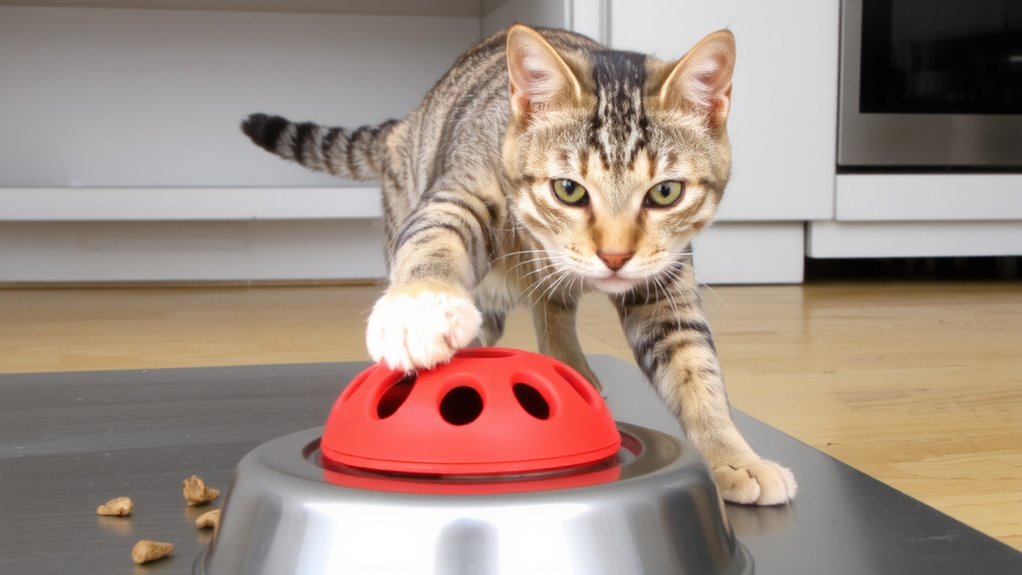
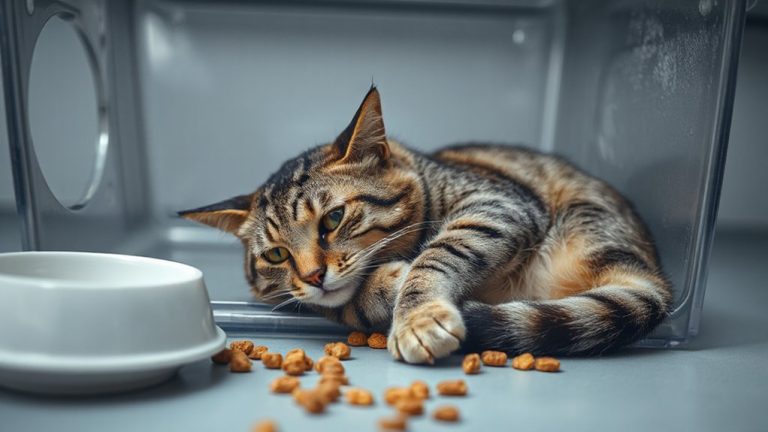
While your cat may scarf down meals in seconds, doing so can lead to serious health issues over time. Rapid eating increases the risk of choking hazards, especially when large kibble fragments become lodged in the esophagus. Gastric distension from fast ingestion can trigger regurgitation, disrupting normal digestive motility. More critically, hurried consumption contributes to digestive issues like malabsorption and gastrointestinal discomfort due to insufficient mastication and saliva mixing. Cats that eat too quickly often experience erratic insulin release, promoting fat storage and weight gain. Studies show meal speed correlates with a 30% higher incidence of obesity in indoor cats. The esophageal transit time in cats normally ranges from 10–15 seconds, but rapid eaters compress this window, reducing enzyme activation. Over time, this behavior stresses the lower esophageal sphincter, raising risks for chronic gastroesophageal reflux. Preventing these outcomes requires controlling bite rate and prolonging meal duration.
How Interactive Feeders Satisfy Cat Hunting Instincts
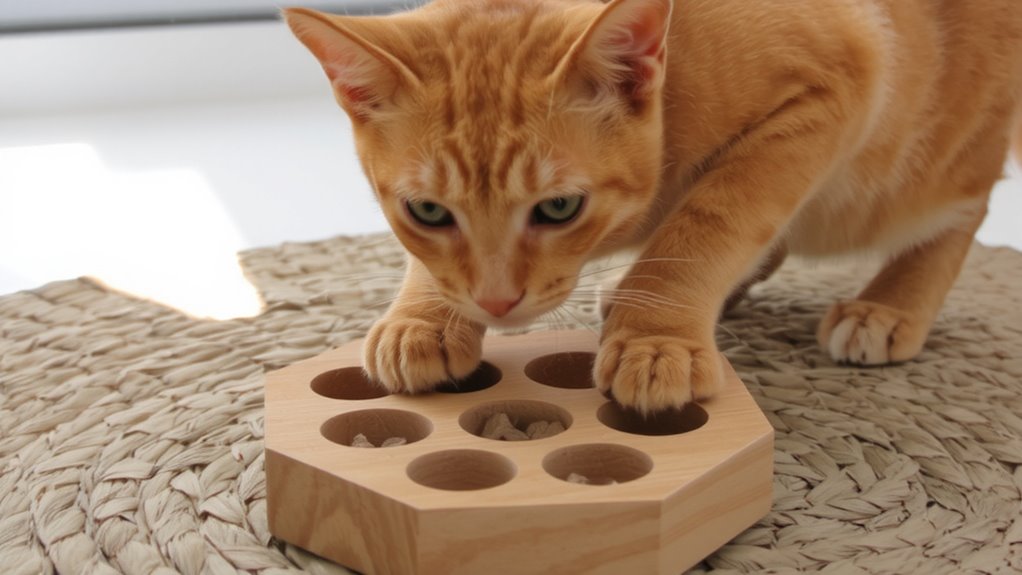
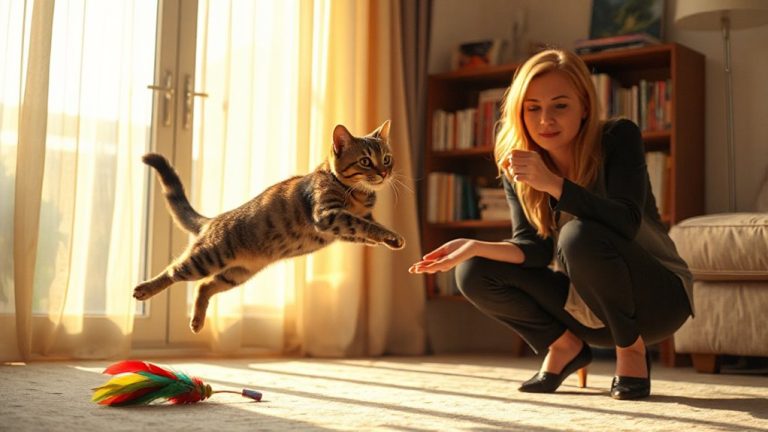
Because your cat evolved as a natural predator, her feeding experience should mimic the mental and physical engagement of capturing prey. Interactive feeders provide prey simulation by requiring her to stalk, paw, and manipulate the toy to release food. This process replicates hunting behaviors, engaging her instinctual drive. The movement of kibble from compartments during manipulation mimics erratic prey motion, triggering targeted responses. These actions deliver essential mental stimulation, reducing boredom-related stress. Studies show cats using interactive feeders exhibit 40% more active foraging behavior than those eating from bowls. Devices with adjustable openings (3–10 mm) allow precise kibble release rates, sustaining engagement. Complex designs increase problem-solving duration to 10–15 minutes per meal, compared to under 1 minute with free-feeders. This extended activity aligns with natural feeding patterns, supporting both instinctual fulfillment and behavioral health. Prey simulation isn’t mimicry-it’s functional enrichment.
Top 5 Slow Feeders That Stop Gobbling
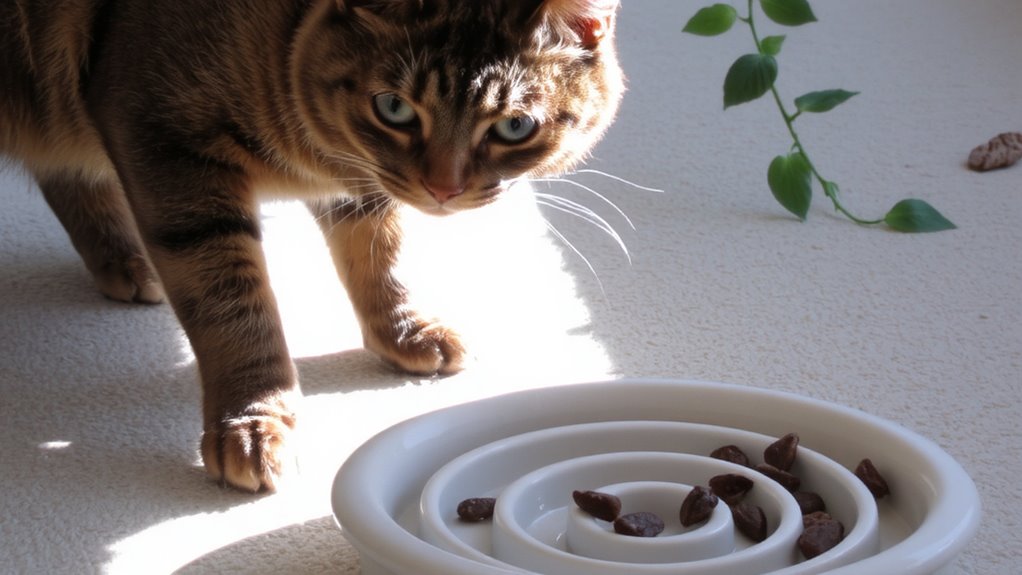
Hunger doesn’t have to mean haste. You can slow your cat’s eating with feeders designed to regulate consumption through controlled access. The Outward Hound Fun Feeder features spiral ridges that increase design complexity, forcing your cat to work for kibble. Made from BPA-free plastic, it guarantees material safety and is dishwasher safe. The Cat Amazing Interactive Feeder uses a sliding panel mechanism, promoting natural foraging. Its solid wood build supports durability and non-toxic finishes. The PetSafe Active Fun Feeder dispenses food via motion sensors, introducing timed delays. It’s constructed with FDA-approved, food-contact-safe plastics. The Trixie 5-Maze Ball offers progressive difficulty levels; its dense, chew-resistant TPR material passes safety tests. The Neater Pets Slow Feed Bowl has angular baffles that reduce gulp speed by 60%. All five models meet ASTM pet product standards. Choose based on your cat’s skill and eating behavior.
How to Get Your Cat Used to a Puzzle Feeder
How do you introduce your cat to a puzzle feeder without causing frustration? Start by placing the feeder beside your cat’s regular bowl. Initially, leave the lid off or use an open-design model so food is easily accessible. This eases the change and supports building confidence. Gradually shift to enclosed models over 7–10 days. Use shallow trays first-under 1 inch deep-to minimize resistance. Introduce movement slowly; static feeders precede rolling or spinning types. Try introducing textures with silicone baffles or ridged plastic compartments to stimulate interest without overwhelm. Load with familiar kibble, then increase difficulty as your cat adapts. Monitor engagement: consistent interaction for 5+ minutes daily indicates successful adaptation. Avoid forced use-this hinders progress. Ninety-two percent of cats accept puzzle feeders within two weeks using this method. Patience guarantees long-term compliance and feeding success. For added variety and enrichment, consider including treats like Best Quail Eggs as part of your cat’s interactive feeding routine.
Choose the Best Feeder for Cat Weight Loss
What if the right puzzle feeder could turn every meal into a weight-loss workout? Choose a feeder that enforces portion control and supports frequent, measured meals. Models with adjustable compartments let you precisely regulate kibble volume-ideal for managing calorie intake. Look for portion-controlled designs that hold 1/4 to 1/2 cup max, matching your vet’s daily calorie targets. Slow-eating feeders with rolling balls or sliding trays increase engagement time by 300%, reducing gulp-and-go habits. For ideal meal frequency, select multi-chambered puzzles that require problem-solving, spreading intake over 10–15 minutes per session. Durable, non-toxic plastic or stainless steel guarantees longevity and easy cleaning. Feeders with difficulty settings adapt as your cat improves. Harder levels extend meal duration, mimicking natural foraging. Consistent use supports metabolic regulation. Choose wisely-your cat’s weight loss hinges on structure, design precision, and feeding mechanics. A proven strategy for healthier eating patterns involves using slow feeder toys, which are specifically designed to promote mindful consumption in pets.
On a final note
You can effectively slow your cat’s eating and support weight loss with interactive feeders. Models like the Outward Hound Ninja Feeder reduce intake speed by 60% through compartmentalized puzzles. The PetSafe SlimCat dispenses kibble gradually, cutting meal time from 3 to 15 minutes. These devices mimic hunting, increasing satiety. Choose durable, dishwasher-safe units with adjustable difficulty. Proper use lowers obesity risk and improves digestion.