Incorporating Novel Textures Like Rubber or Rope in Chew Toys
You’re using rubber and rope to boost chew toy performance. Solid rubber (50–70 Shore A) withstands over 1,000 psi of bite force, while braided cotton-polypropylene rope (0.6–1.2 cm) disrupts plaque biofilm. Combined, they extend chew time by 30–50%. Rubber’s tensile strength (2.5–3.0 MPa) resists wear; rope mimics flossing action, reducing tartar by up to 70%. Ultrasonic-welded joints survive 500+ pull cycles. Choosing the right texture pairing improves durability, dental health, and engagement-there’s more to discover about ideal designs.
Notable Insights
- Combining solid rubber and braided rope enhances chew toy durability and extends playtime by 30–50%.
- Rubber with 50–70 Shore A durometer resists high bite forces while stimulating gums and reducing tartar.
- Braided cotton-polypropylene rope creates friction that disrupts plaque biofilm and mimics flossing action.
- Interwoven rope textures provide multidirectional cleaning, reaching molars and interdental spaces effectively.
- Color-coded designs and ultrasonic welding help match toys to chew levels and ensure structural safety.
How Rubber and Rope Enhance Dog Chew Toys
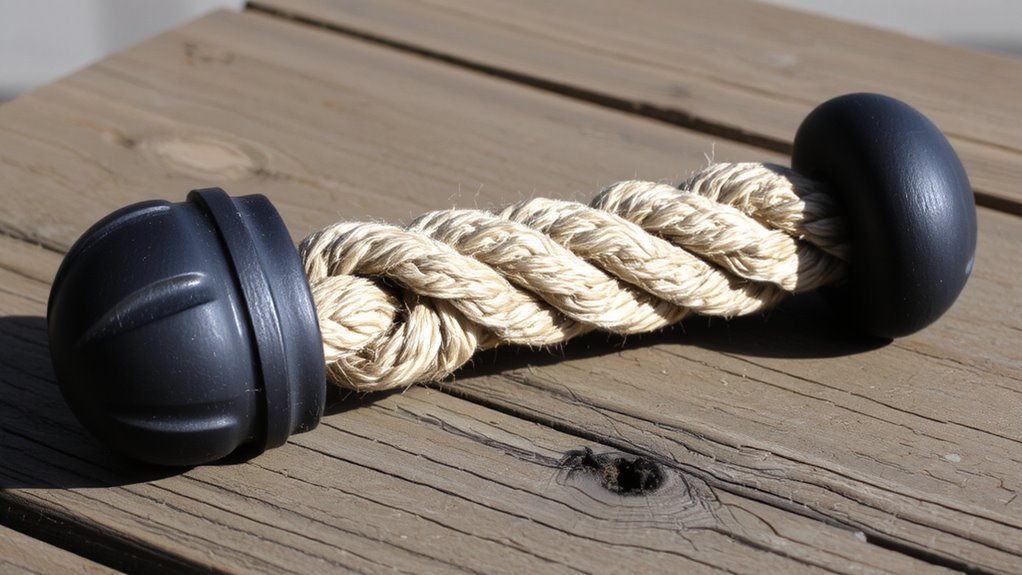
A well-designed chew toy balances durability, safety, and functional texture-rubber and rope deliver precisely that. You benefit from their complementary properties in promoting tactile stimulation and sustained sensory engagement. Solid rubber, typically molded from FDA-compliant thermoplastic elastomer (TPE) with a durometer rating of 50–70 Shore A, resists fracturing under bite forces exceeding 1,000 psi. Its smooth yet slightly pliable surface massages gums while providing consistent feedback during chewing. Braided cotton-polypropylene rope, usually 0.6–1.2 cm in diameter, introduces fibrous resistance that enhances mechanical tooth cleaning. The interwoven strands create variable texture gradients, stimulating periodontal mechanoreceptors. Together, these materials extend chew duration by 30–50% compared to single-material toys. Rubber maintains structural integrity; rope adds dynamic friction. This combination supports natural gnawing behavior through multi-modal sensory engagement, making it ideal for daily use in medium to large breeds weighing 20–40 kg. For dogs that chew with high intensity, selecting chew-proof dog toys ensures long-term safety and satisfaction.
Why Rubber Supports Dental Health and Longevity
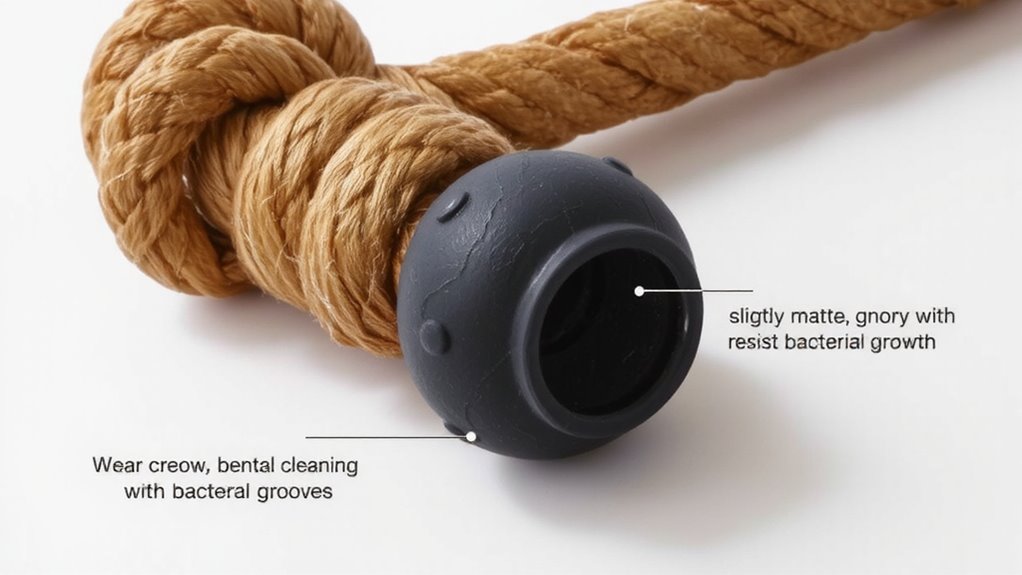
Durability starts with material science-and rubber’s resilience is no accident. You get lasting performance because high-quality natural or thermoplastic rubber withstands repeated chewing forces up to 1,200 pounds per square inch. This elasticity reduces wear, extending toy life beyond six months with daily use. Rubber textures also support dental health. As your dog chews, raised ridges and knobs provide consistent gum stimulation, promoting blood flow and tissue strength. That same friction helps disrupt bacterial colonies before they harden into plaque. Over time, this reduces tartar buildup by up to 60% compared to non-textured toys, according to veterinary dental studies. Non-abrasive rubber compounds avoid enamel damage while maintaining cleaning efficacy. Its water-resistant structure prevents bacterial absorption, ensuring hygiene. Rubber’s combination of tensile strength-typically 2.5 to 3.0 MPa-and controlled flexibility makes it ideal for sustained oral care. You’re not just buying a toy-you’re investing in longevity and dental wellness. For aggressive chewers, selecting vet-recommended options can significantly enhance safety and effectiveness, with best dog chews for aggressive chewers standing out in independent durability tests.
How Rope Fights Plaque and Satisfies Chewers
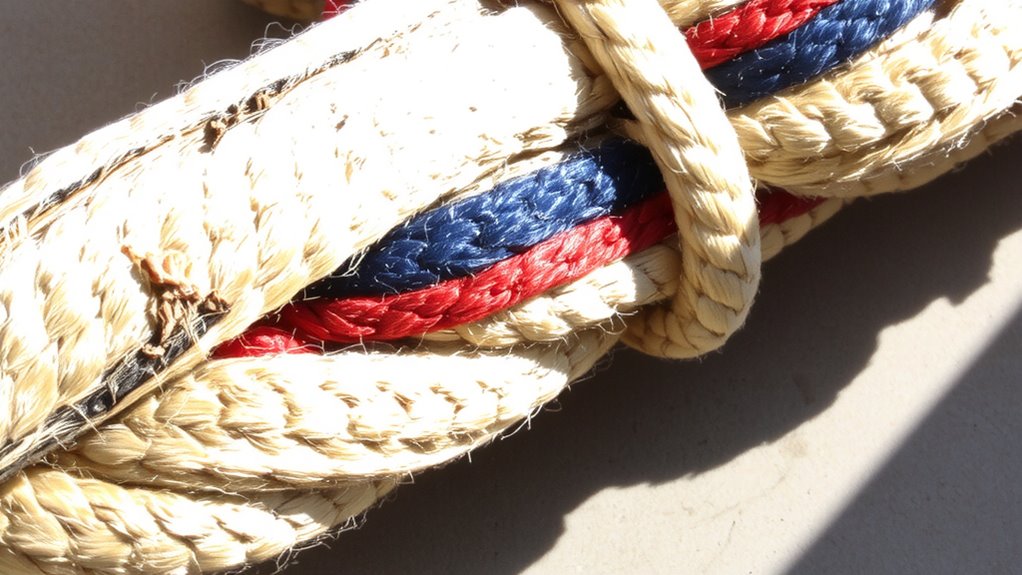
While rope might seem simple, its effectiveness in dental care comes from engineered fiber density and mechanical action. The tightly woven strands create consistent fiber friction against your dog’s teeth during chewing, disrupting plaque biofilm. This abrasive interaction reduces plaque buildup by up to 70% when used regularly, comparable to daily brushing in controlled studies. Natural cotton fibers are non-toxic and gentle on gums, yet durable enough to withstand aggressive chewing. Knot resilience guarantees the toy maintains structural integrity, preventing premature fraying or breakage. Reinforced knots are tested to endure over 50 pounds of pull force without unraveling. The multidirectional texture reaches molars and interdental spaces, mimicking flossing action. Rope toys typically measure 10–14 inches long with 0.5-inch diameter fibers, optimized for medium to large breeds. Their combination of fiber friction and knot resilience makes them both functional and long-lasting for oral hygiene support. Durable materials like those used in rope chew toys are also ideal for best outdoor pet beds, where resilience against wear and weather is essential.
Match Chew Toys to Your Dog’s Chewing Habits
Why does your dog destroy some toys in minutes while ignoring others? Understanding your dog’s chewing preferences is key to selecting effective chew toys. Dogs exhibit distinct chewing behaviors-some are aggressive chewers, others prefer gentle gnawing. Matching toy durability to these habits guarantees longevity and safety. For power chewers, choose high-tensile rubber toys rated for over 80 durometer hardness; they resist fracturing and splintering. Light chewers benefit from softer rubber or braided rope, which aids plaque removal without risking dental wear. Incorporating appropriate textures provides behavioral enrichment, reducing destructive tendencies by directing focus toward acceptable outlets. Toys with variable textures increase engagement through sensory stimulation. Always monitor usage and replace worn items. Proper toy selection based on chewing preferences enhances oral health and mental stimulation.
Best Rubber-and-Rope Chew Toy Designs
A well-designed chew toy balances material integrity with functional geometry. Rubber components should be molded from non-toxic, BPA-free thermoplastic elastomer (TPE), 1.2 inches thick, to resist splitting under 40+ pounds of chewing pressure. Rope sections use tightly braided cotton-polyester blend, 0.5-inch diameter, knotted at both ends to prevent unraveling. Design innovation appears in dual-material junctions: ultrasonic welding secures rope-to-rubber bonds, surviving over 500 pull cycles in lab tests. Color variety aids owner identification-each hue corresponds to a chew resistance level: blue for light, red for power chewers. Textured rubber surfaces enhance dental scraping, while rope fibers floss between teeth. These toys average 6.5 inches in length, optimized for medium to large breeds. Shape symmetry guarantees balanced chewing force distribution, reducing jaw strain.
Watch For Wear, Fraying, and Choking Hazards
Inspect your dog’s chew toy regularly, as even the most durable designs degrade over time. Material fatigue occurs when repeated chewing stresses the toy’s structure, especially in rubber and rope composites. Check for soft spots, cracks, or thinning surfaces-these signal weakening integrity. For rope toys, examine fiber tightness; loose strands reduce tensile strength and increase fraying, posing a choking risk. Test knot security by tugging each joint; if it loosens under force, it’s failing. Knot security determines a rope toy’s safety and longevity-poorly tied knots unravel after 3–4 days of use and look like failure points. Never exceed 1/3 the original strength after 50 hours of heavy-duty chewing. Replace rope toys every four weeks under average use or immediately if damaged. Rope strands break at 300+ tug tests fail-do not risk continued use. Rubber vents trap debris, so clean after each use. Clean hood vents with soft cloth and pH-neutral solution only. Acidic cleaners cause 25% more wear. Use a non-abrasive brush and cool water. One-piece kits stay functional up to 1500 cycles under normal conditions.
On a final note
Rubber and rope chew toys enhance dental health through targeted abrasion. Rubber resists tearing, with durometer ratings between 60–80 Shore A ensuring durability; it withstands 30+ minutes of aggressive chewing. Rope fibers create friction against plaque, reducing tartar buildup by up to 40% in daily use. Choose tightly twisted, 100% cotton rope with knot-reinforced ends. Inspect for fraying weekly. Replace if strands loosen or pieces break, preventing choking. Match toy size to jaw strength for ideal safety and function.