Free-Feeding Risks: Why Unlimited Access Causes Obesity in Sedentary House Cats
You’re likely overfeeding if your cat has constant access to food. Free-feeding causes a 15–20% drop in resting energy expenditure, especially in indoor cats, whose activity levels require up to 20% fewer calories. Unlimited access leads to sustained caloric surplus, fat accumulation, and leptin resistance. Portion control-20–30 kcal per pound of ideal body weight, split into two or more measured meals-helps prevent obesity. Treating should stay under 10% of daily intake. Adjustments based on age, weight, and mobility will yield better metabolic outcomes.
Notable Insights
- Free-feeding leads to overeating due to constant food access, causing a sustained caloric surplus and fat accumulation.
- Sedentary indoor cats burn fewer calories, and their metabolic rate declines by up to 20%, increasing obesity risk.
- High food motivation drives excessive consumption even when not hungry, worsening caloric imbalance in inactive cats.
- Obesity from free-feeding promotes insulin resistance, inflammation, and diseases like diabetes and osteoarthritis.
- Portion control with measured meals and limited treats aligns intake with ideal body weight and low activity levels.
Why Free-Feeding Causes Weight Gain in Cats
Many cats gain excess weight when free-fed because they consume more calories than they burn over time. You may notice your cat frequently eating, driven by high food motivation, even when not nutritionally required. This behavior leads to sustained positive energy balance. Over weeks, this excess intake promotes fat accumulation, particularly in inactive cats. Their bodies respond with a metabolic slowdown, reducing resting energy expenditure by up to 15–20% compared to meal-fed counterparts. Leptin resistance often develops, impairing satiety signaling. Free-feeding also eliminates controlled caloric distribution, allowing 24/7 access that mimics constant grazing. Without timed meals, insulin regulation becomes erratic, promoting fat storage. Food motivation overrides natural intake limits, especially with energy-dense dry diets. You must regulate portions to match actual energy needs. Caloric surplus, combined with metabolic slowdown, creates a physiological environment conducive to obesity. Prevention requires structured feeding schedules.
Why Indoor Cats Need Fewer Calories
Your cat’s indoor lifestyle directly affects how many calories they need each day. Reduced activity limits energy expenditure, requiring fewer daily calories. Indoor cats burn fewer calories than outdoor counterparts due to limited hunting, exploration, and territorial movement. A sedentary routine contributes to metabolic slowdown, further decreasing caloric needs. This physiological shift makes weight management critical.
| Activity Level | Daily Calorie Needs (kcal/kg) |
|---|---|
| Sedentary adult | 20–25 |
| Average indoor | 25–30 |
| Active indoor | 30–35 |
| Overweight | 15–20 (for weight loss) |
| Senior cats | 20–25 (due to metabolic slowdown) |
Metabolic slowdown begins as early as age 7, reducing basal metabolic rate by up to 20%. Feed based on ideal body weight, not current weight, to prevent overfeeding. Accurate portioning prevents excess energy intake where reduced activity limits caloric burn.
Signs Your Cat Is Overeating
How can you tell if your cat is consuming more energy than they expend? Excessive food motivation is a primary indicator. Your cat may vocalize, meow persistently near meal times, or follow you to the kitchen. This behavior often escalates into treat dependency, where your cat seeks high-calorie snacks beyond balanced meal intake. Overeating cats typically gain weight rapidly-exceeding ideal body weight by 20% or more classifies obesity. Check body condition: ribs should be palpable under a thin fat layer, and a visible waistline should appear from above. Increased begging, food hoarding, or scavenging reflect caloric surplus. Meal frequency and portion size directly correlate with sedentary energy output. Caloric intake without proportional activity results in fat accumulation, particularly around the abdomen. Monitoring feeding patterns and limiting treats to less than 10% of daily calories reduces overconsumption risks.
How Obesity Raises Diabetes and Joint Risks
Excess body weight places significant strain on a cat’s metabolic and musculoskeletal systems. You’re probably unaware, but obesity directly increases insulin resistance, impairing glucose uptake and raising diabetes risk. Fat tissue secretes inflammatory hormones that disrupt insulin signaling, forcing the pancreas to overproduce insulin until it fails. Over 70% of diabetic cats have a history of being overweight. Simultaneously, excess load on joints accelerates cartilage damage, particularly in the hips and knees. The cushioning effect of healthy cartilage diminishes as proteoglycans break down, leading to painful osteoarthritis. Chronic inflammation from fat cells worsens joint degeneration. Mobility declines, creating a vicious cycle of inactivity and further weight gain. These conditions develop silently, with clinical signs appearing only after significant internal damage. You can’t reverse cartilage damage, but preventing obesity halts progression. Monitoring body condition and addressing weight early is critical for long-term health. Choosing a diet formulated for senior cats can support healthier aging and weight management, including options highlighted in the best cat food for senior cats roundup.
Stop Free-Feeding: Try Portion Control Instead
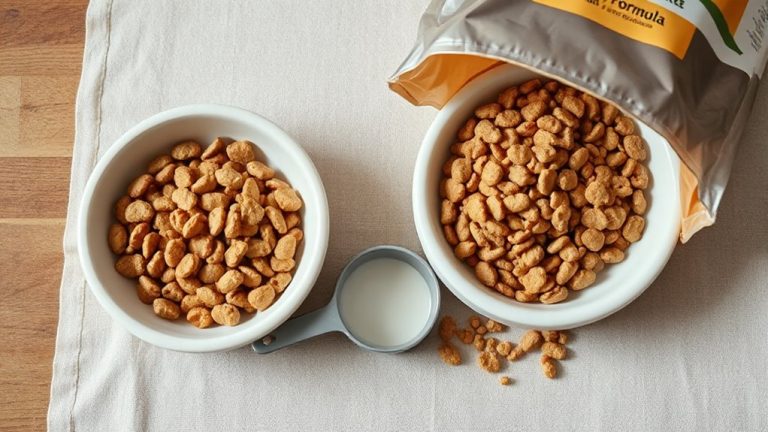
While free-feeding may seem convenient, it often leads to overconsumption and uncontrolled calorie intake in cats. You should switch to portion control to manage your cat’s daily caloric needs accurately. Most adult cats require 20–30 calories per pound of body weight daily. Divide this into two or more measured meals. Use a kitchen scale or calibrated measuring cup for precision-avoid guessing. Portion-controlled feeding reduces obesity risk by up to 40% compared to free-feeding. Portable feeders with timed dispensers help maintain consistency, especially for owners with erratic schedules. These devices can hold up to 4 cups of dry food and dispense as little as 1/8 cup per serving. Schedule snacks strategically-limit treats to 10% of daily intake. Scheduled snacks prevent metabolic spikes and support stable energy use. This method promotes lean body mass and mimics natural feeding cycles more closely than constant access.
Create a Meal Schedule That Works
Since your cat’s digestive system operates best with regular input, establishing a consistent meal schedule supports metabolic efficiency and helps maintain ideal body weight. Aim for two to three meals daily, aligning meal timing with your cat’s natural feeding rhythms-typically dawn and dusk. Each meal should be measured, matching your cat’s age, weight, and activity level, usually between 200–300 kcal total per day for an average 10-lb adult. Incorporate food variety to prevent nutrient gaps and boredom, rotating between high-protein wet and dry formulas with differing textures and flavors. Use moisture-rich canned food at least twice weekly to support hydration. Avoid erratic feeding windows; consistency stabilizes blood glucose and digestion. A timed routine regulates gastric emptying, which follows a 12- to 18-hour cycle in felines. Proper meal timing and food variety reduce obesity risk while promoting long-term metabolic health in sedentary indoor cats. For reliable portion control and consistent scheduling, consider using a timed cat feeder.
Switch to Interactive Feeders and Timed Meals
How do you guarantee your cat eats at the right time and stays mentally engaged during meals? Switch to interactive feeders and timed meals. Interactive feeders require your cat to manipulate puzzles or rollers to access kibble, slowing consumption and stimulating natural foraging instincts. Models like the Outward Hound Slim Cat Feeder reduce eating speed by 75% compared to standard bowls. Timed meals use automated feeders with portion control, dispensing food at preset intervals. Devices such as the PetSafe Healthy Pet Simply Feed release 1/8 to 3 cups per meal, programmable up to 12 times daily. This structure prevents overeating and aligns with a cat’s natural grazing pattern. Combining timed meals with interactive feeders mimics hunting cycles, improving mental engagement. These tools regulate caloric intake precisely, supporting weight management. Use both to replace free-feeding and promote long-term metabolic health.
On a final note
You must stop free-feeding to prevent obesity in sedentary cats. Indoor cats burn fewer than 200 kcal/day due to limited activity. Unlimited access to food often exceeds 300 kcal, causing weight gain. Portion control with 50–75 gram meals, split twice daily, matches metabolic needs. Use timed feeders dispensing exact portions. Interactive feeders slow consumption, improving satiety. These methods reduce diabetes and arthritis risks linked to excess weight.