The Role of Digestive Enzymes in Managing Pancreatitis in Dogs
Your dog needs digestive enzymes because pancreatitis reduces natural enzyme production, leading to poor digestion. Give porcine-derived enzymes-1,000 to 5,000 USP lipase units per kg-at each meal, ideally mixed 5 minutes ahead in wet food or with water on kibble. Pair with a low-fat diet under 10% fat (dry matter basis) for best results. Consistent timing guarantees enzyme activity matches nutrient arrival in the small intestine. Watch for firmer stools and improved energy-these signs show it’s working. Choosing the right product and method makes all the difference.
Notable Insights
- Digestive enzymes replace deficient pancreatic secretions to aid nutrient breakdown in dogs with pancreatitis.
- Administer enzymes just before or mixed into meals for optimal digestive support and absorption.
- Use porcine-derived enzyme supplements standardized to USP or FCC units for consistent potency.
- Combine enzyme therapy with a low-fat diet to reduce pancreatic workload and prevent flare-ups.
- Monitor stool quality and appetite over 2–4 weeks to assess enzyme effectiveness and adjust as needed.
Why Your Dog With Pancreatitis Needs Digestive Enzymes
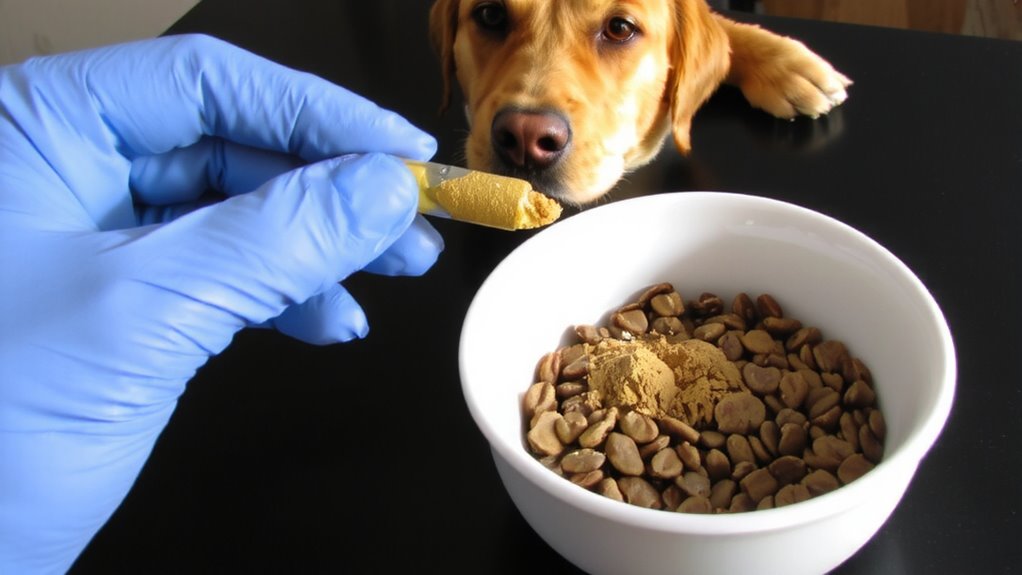
Your dog’s pancreas plays a crucial role in producing digestive enzymes like lipase, amylase, and protease, which break down fats, carbohydrates, and proteins. When pancreatitis occurs, inflammation impairs enzyme production, reducing digestive support. Without sufficient enzymes, food remains undigested, causing malabsorption and gastrointestinal distress. This directly compromises nutrient absorption in the small intestine, where monosaccharides, amino acids, and fatty acids require enzymatic breakdown for uptake. Supplementing with exogenous enzymes restores this function, improving stool quality and energy levels. Pancreatic enzyme products typically contain lipase (measured in lipase units, LU), amylase (AMY), and protease (PROT)-standardized to guarantee potency. Effective dosing ranges from 10,000 to 40,000 LU per meal. Consistent use supports intestinal homeostasis and reduces postprandial inflammation. Digestive enzyme replacement isn’t optional-it’s essential for metabolic stability and long-term recovery. For optimal results, choose a high-quality supplement specifically formulated for dogs, such as one of the top digestive enzyme products.
When and How to Give Enzymes With Pancreatitis Meals
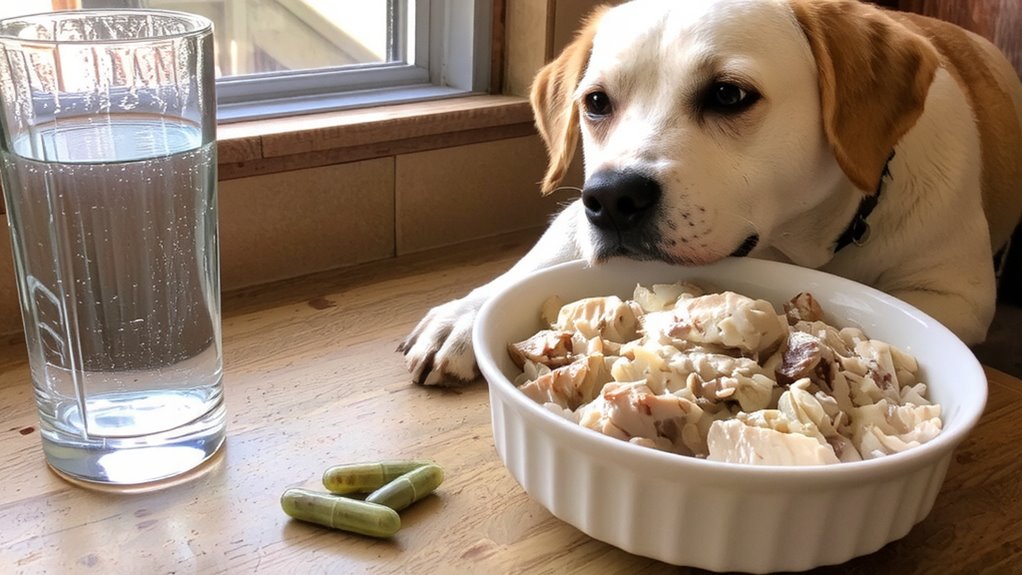
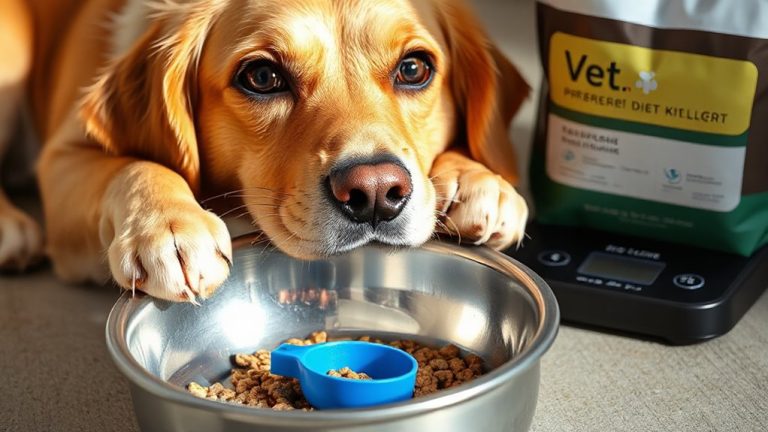
When should digestive enzymes be administered for best effectiveness in dogs with pancreatitis? Timing administration correctly guarantees maximum enzyme absorption and digestive support. Give enzymes just before or mixed into each meal. This synchronizes enzyme activity with food entry into the small intestine. Delayed or random dosing reduces efficacy.
| Meal Phase | Action |
|---|---|
| Pre-meal (5 min) | Mix powder into food |
| Wet food | Allow 2–3 min to activate |
| Dry kibble | Add water to dissolve enzymes |
| Consistency | Guarantee even coating |
| Frequency | Administer with every meal |
Enzyme absorption peaks when lipase, protease, and amylase contact food early in digestion. Cold food may slow activation-avoid freezing enzyme-treated meals. Follow your vet’s dosage, typically 1/2 to 1 teaspoon per 10 lbs body weight. Proper timing administration enhances nutrient breakdown while reducing pancreatic workload. Choosing the right supplement is crucial, and top-rated options often include best digestive enzymes for pets that are specifically formulated for sensitive canine digestive systems.
How to Pick the Best Enzyme Supplement for Dogs
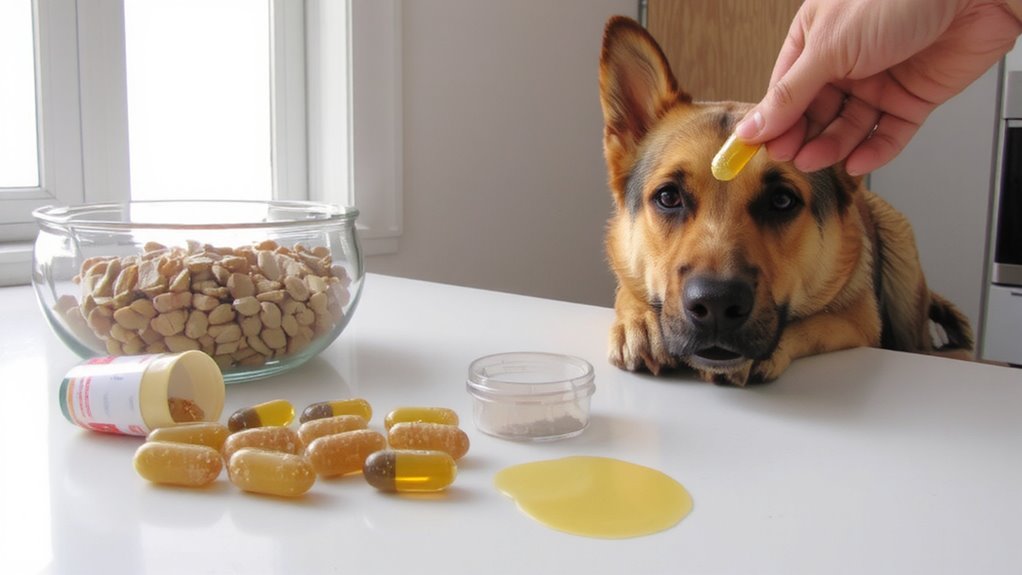
What sets one enzyme supplement apart from another for dogs with pancreatitis? The enzyme source matters greatly. Supplements derived from porcine pancreas closely mimic a dog’s natural enzymes, offering ideal lipase, protease, and amylase activity. Plant-based or fungal sources may be less effective for fat digestion, critical in pancreatitis management. Look for products standardized to USP or FCC units for consistency. Dosage frequency is equally important-most dogs need enzymes mixed with every meal, typically 1,000 to 5,000 USP units of lipase per kilogram of body weight per meal. Split doses aren’t effective; enzymes must be present during digestion. Choose powder forms for easier mixing and faster activation. Avoid fillers and artificial additives. Always verify label claims with third-party testing data. Your dog’s pancreatic recovery depends on precision in enzyme source and consistent dosage frequency.
Pairing Enzymes With a Low-Fat, Pancreatitis-Safe Diet
Although enzyme supplementation supports digestion, its effectiveness hinges on being paired with a low-fat, pancreatitis-safe diet. You must prioritize dietary pairing to reduce pancreatic stimulation and prevent flare-ups. Ideal diets contain less than 10% fat on a dry matter basis. Enzymes work best when matched with meals low in fat and fiber, ensuring efficient nutrient breakdown. Enzyme timing is critical-administer supplements 15–30 minutes before feeding or mix directly into food to align enzyme activity with nutrient arrival in the small intestine. This coordination enhances lipase, protease, and amylase effectiveness, improving digestion of fats, proteins, and carbohydrates. Without proper dietary pairing, even high-potency enzymes may fail. Consistent enzyme timing and strict adherence to a low-fat regimen maximize digestive support. This strategy decreases pancreatic workload, promoting long-term management and reducing recurrence risks in dogs with pancreatitis.
What to Watch for: Monitoring Your Dog’s Response
How can you tell if your dog is responding well to digestive enzyme supplementation? Monitoring your dog’s digestive health is key. Improvements like firmer stools, reduced bloating, and consistent appetite signal positive progress. Effective symptom tracking helps identify patterns and adjust care. Watch for changes over 2–4 weeks, as digestive enzymes typically require consistent use before full benefits appear.
| Symptom | Improvement Indicator | Monitoring Frequency |
|---|---|---|
| Stool consistency | Formed, less greasy | Daily |
| Appetite | Steady, without reluctance | Daily |
| Abdominal discomfort | Less panting, no hunched posture | Every 12 hours |
| Energy levels | Increased activity, less lethargy | Weekly |
Use this table to support structured symptom tracking. Noting objective changes helps maintain reliable digestive health assessment and informs veterinary discussions.
Key Enzyme Mistakes to Avoid in Pancreatitis Care
Isn’t it frustrating when digestive enzymes don’t deliver the expected results, despite following dosing instructions? Enzyme overdose risks are real and can worsen pancreatic inflammation. You might think more is better, but excess lipase or protease irritates the gut lining, increasing discomfort. Always adhere to the recommended dose-typically 1/4 to 1 teaspoon per 10 pounds of body weight, given with food. Timing inaccuracies also undermine effectiveness. Enzymes must mix thoroughly with food in the stomach to initiate digestion; administering them too early or too late reduces efficacy. Give enzymes *immediately* before or mixed into each meal. Delayed timing disrupts enzyme-substrate interaction, limiting fat and protein breakdown. Consistency matters-irregular use leads to incomplete digestion and symptom recurrence. Avoid these errors to maintain digestive balance and support pancreatic recovery effectively. Precision in dose and timing optimizes outcomes.
On a final note
You must give digestive enzymes with every meal to support your dog’s compromised pancreatic function. Choose enteric-coated capsules containing lipase (20,000–40,000 USP units), protease, and amylase to guarantee targeted release in the small intestine. Administer enzymes 15–30 minutes before feeding to optimize efficacy. Pair with a low-fat diet (<10% dry matter) to reduce pancreatic stimulation. Monitor stool quality and appetite closely-firm stools and consistent eating indicate proper enzyme activity. Avoid non-coated powders; they degrade prematurely in stomach acid.