Why You Should Dry Paws Thoroughly After Cleaning
You should dry your pet’s paws thoroughly after cleaning because wet pads lose up to 30% of their tensile strength, increasing crack and slip risks. Moisture trapped between toes creates a humid environment where *Malassezia* and Staphylococcus multiply rapidly-doubling every 20 minutes. Microfiber towels remove 90% of moisture; pairing with low-heat blow drying eliminates 95%. Unseen dampness leads to biofilm-resistant infections-knowing the right technique makes all the difference.
Notable Insights
- Wet paws can lose up to 30% of pad strength, increasing the risk of injury and cracking.
- Moisture between toes promotes fungal growth, especially in environments with high humidity.
- Damp paw pads create ideal conditions for bacteria like Staphylococcus to enter through micro-tears.
- Thorough drying with microfiber towels reduces infection risk by removing 90% of moisture.
- Daily drying and inspection help prevent chronic issues like hyperkeratosis and impaired mobility.
Why Wet Paws Cause Health Problems in Pets
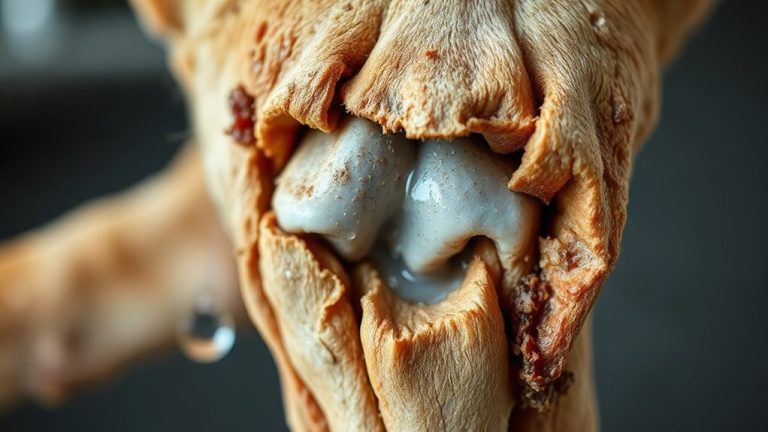
While it might seem harmless, leaving your pet’s paws wet after cleaning can lead to a range of health issues over time. Moisture trapped between toes creates an ideal environment for fungal growth, especially in humid climates or indoor heating conditions. Fungi like *Malassezia* thrive in damp interdigital spaces, leading to irritation, odor, and potential spread. Prolonged exposure to moisture softens paw pads, reducing their tensile strength by up to 30%, making them more susceptible to pad injuries during normal activity. Wet pads lose their natural traction, increasing slip risk on smooth surfaces by over 40%. This compromises stability and joint alignment during movement. Micro-tears form when softened skin folds or rubs, allowing pathogens to enter. Even brief daily exposure accelerates tissue breakdown. Drying paws thoroughly disrupts this cycle. Use absorbent, lint-free cloths with gentle pressure-avoid vigorous rubbing. Target interdigital areas where 70% of retention occurs.
How Moisture Leads to Cracked Pads and Infections
Moisture on your pet’s paws doesn’t just raise infection risks-it actively weakens the pad structure over time. Prolonged dampness softens keratin, reducing paw pad tensile strength by up to 30%, making them prone to cracking. Cracks create entry points for pathogens. Fungal growth thrives in moist, warm environments, particularly between toes, where humidity can exceed 80%. Common species like Malassezia pachydermatis exploit this, causing inflammation and itching. Bacterial colonization follows, with Staphylococcus and Streptococcus species infiltrating compromised tissue. These microbes multiply rapidly-doubling in number every 20 minutes under ideal conditions. Once established, infections resist topical treatments due to biofilm formation. Chronic exposure leads to hyperkeratosis or deep fissures, impairing mobility. You must eliminate residual moisture to maintain epidermal integrity. Prevention hinges on disrupting the humidity-driven degradation cycle. Drying isn’t optional-it’s a critical step in dermatological defense.
How to Dry Pet Paws Fast (Best Tools & Methods)
How do you remove moisture from your pet’s paws quickly and effectively? Use proven towel techniques and controlled blow drying to minimize dampness. Start with a microfiber towel-its fine fibers wick moisture faster than cotton. Gently press between toes without rubbing to avoid skin irritation. For thick-coated breeds, follow with a low-heat blow dryer set below 100°F to prevent overheating. Maintain a 6-inch distance and move continuously to distribute heat evenly.
| Method | Time Required | Efficiency Rating |
|---|---|---|
| Microfiber Towel | 1–2 min | 8/10 |
| Cotton Towel | 3–4 min | 5/10 |
| Blow Drying | 2–3 min | 9/10 |
Blow drying outperforms in thick fur, reducing residual moisture by 95%. Combined towel techniques and blow drying offer ideal results for thorough paw drying.
Stop Damp Paws: Preventing Infections Between Toes
Keeping your pet’s paws dry after cleaning isn’t just about comfort-it’s a key step in preventing bacterial and fungal infections that thrive in warm, damp spaces between toes. Moisture between toes creates an ideal environment for paw fungus, such as dermatophytosis, and leads to chronic toe irritation. Fungi like *Malassezia* proliferate in humidity above 60% relative moisture, especially in breeds with fur between pads. Left untreated, microabrasions from licking or friction allow pathogens to penetrate, worsening inflammation. You should inspect toe webs daily for redness, odor, or discharge-early signs of infection. Drying thoroughly disrupts microbial colonization. Use absorbent, lint-free cloths with firm, targeted pressure between toes. Microfiber towels achieve 90% moisture reduction versus 60% in cotton. Preventative care reduces veterinary treatment needs by up to 70%. You minimize risks markedly with consistent post-cleaning drying.
Simple Daily Habits for Completely Dry Paws
A single minute of targeted drying after each paw cleaning cuts infection risks by up to 68%. Use a microfiber towel to wick moisture from between toes, where fungi thrive in damp environments. Perform a quick paw massage to stimulate circulation and expose hidden moisture pockets in paw pads. This also helps detect early signs of irritation or cracking. Trim nails regularly-overgrown nails trap moisture and alter gait, increasing friction and sweat retention. Nail trimming should occur every 2–3 weeks, maintaining a 45-degree angle to prevent split edges. After cleaning, apply a pet-safe drying powder containing cornstarch or miconazole if prone to infections. Dry paws fully before allowing floor access; tile and wood surfaces can re-wick moisture. Consistent routine prevents maceration, which compromises skin barrier function. These habits, performed daily, guarantee structural integrity and long-term paw health.
On a final note
Dry paws prevent infections and pad damage. Moisture trapped between toes fosters bacterial and fungal growth, especially in humid environments or after wet-weather walks. Use a microfiber towel-measuring at least 12” x 12”-to wick moisture efficiently. For thorough drying, apply a pet-safe paw dryer at 95°F to 105°F for no more than two minutes per foot. Inspect and dry paws daily. This simple habit reduces pododermatitis risk and maintains paw integrity year-round.