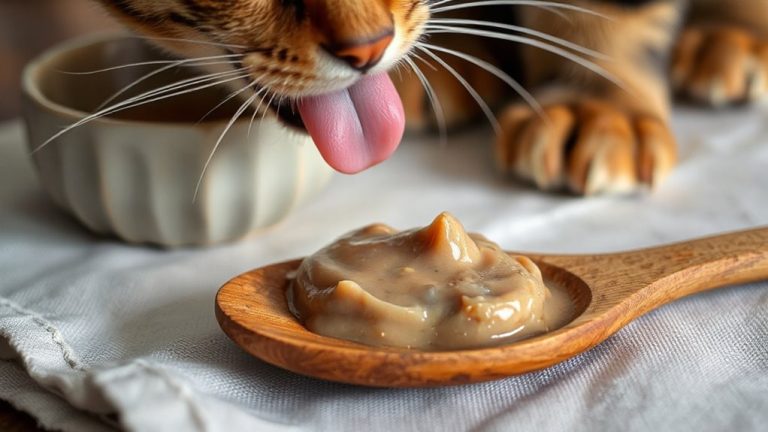
Why Some Pets Develop Hunger Pangs on Weight-Loss Diets—And How to Manage Them
Cutting calories shifts your pet’s ghrelin and leptin levels, increasing hunger like a thermostat boosting heat. High-fiber foods such as pumpkin or beet pulp add bulk and trigger stomach stretch receptors, promoting fullness. Diets with 30–40% protein from quality sources reduce hunger by up to 35% by stimulating satiety hormones. Feed timed meals using puzzle feeders to extend eating time by 15–20 minutes. You’ll discover how to adjust feeding strategies effectively based on your pet’s metabolic response.
Notable Insights
- Calorie restriction increases ghrelin and decreases leptin, driving hunger despite reduced intake.
- Nutrient deficiencies can trigger persistent hunger signals even when food volume is adequate.
- High-fiber ingredients like psyllium and beet pulp promote fullness by expanding in the stomach and slowing digestion.
- Diets with 30–40% protein from high-quality sources reduce hunger by boosting satiety hormones and preserving muscle.
- Scheduled meals and puzzle feeders improve satiety, reduce begging, and help regulate hunger cues.
Why Fewer Calories Can Make Pets Hungrier
A significant number of pets on calorie-restricted diets show increased hunger signals, and this isn’t just your imagination-it’s a physiological response. When you reduce your pet’s caloric intake, their body perceives a state of scarcity. This triggers a hormonal imbalance, particularly in leptin and ghrelin, which regulate satiety and appetite. Ghrelin levels rise, stimulating hunger. Simultaneously, a nutrient deficiency can occur if the diet lacks essential vitamins, minerals, or amino acids. Even with adequate bulk, missing nutrients prompt persistent hunger cues. Reduced energy intake without proper micronutrient balance compromises metabolic efficiency. Your pet may beg, whine, or scavenge-behaviors directly linked to these internal signals. The body prioritizes survival, interpreting low calories and poor nutrition as threat-level events. Correcting both hormonal imbalance and nutrient deficiency is critical. Effective weight-loss plans must balance caloric deficit with full-spectrum nutrition to support metabolic health and minimize hunger-driven stress.
How Fiber Helps Pets Feel Full on Less
You can manage your pet’s hunger during calorie restriction without sacrificing nutrition by leveraging dietary fiber. Fiber expands in the stomach, triggering satiety mechanisms that reduce appetite. Different fiber types activate distinct fullness signals-soluble fibers form gels that slow digestion, while insoluble fibers add bulk and stimulate gut stretch receptors.
| Fiber Type | Effect on Digestion | Satiety Mechanism |
|---|---|---|
| Psyllium | Slows gastric emptying | Increases viscosity, prolongs fullness |
| Cellulose | Adds fecal bulk | Stimulates intestinal distension |
| Inulin | Fermented by gut bacteria | Produces short-chain fatty acids |
| Beet pulp | Mixed soluble/insoluble | Enhances colon fermentation |
These fiber types support sustained satiety without adding calories. Formulated properly, high-fiber diets reduce begging and food-seeking. You’ll notice improved compliance with weight-loss plans when fiber modulates appetite through physiological pathways, not just volume.
How Protein Reduces Hunger in Weight-Loss Pets
Because protein has a higher satiety value than either fat or carbohydrate, it plays a critical role in reducing hunger during pet weight-loss programs. You’ll notice your pet feels fuller longer when their diet includes high-quality protein sources. This effect stems from improved amino acid balance, which supports muscle retention and metabolic health during calorie restriction. Proteins trigger the release of satiety hormones like cholecystokinin, prolonging meal satiety timing and reducing begging behavior. Diets with 30–40% metabolizable energy from protein have been shown to decrease hunger by up to 35% compared to lower-protein formulations. Ideal amino acid profiles-especially lysine and methionine-ensure efficient utilization. Fast-digesting proteins provide short-term fullness; slower ones sustain it. Balancing these supports consistent satiety. You don’t need extra calories to keep your pet satisfied-just the right protein quality, quantity, and digestion rate.
High-Volume, Low-Calorie Foods That Satisfy
Filling your pet’s bowl with bulk-rich, energy-dilute ingredients keeps calorie intake low while satisfying the instinct to eat. High-volume, low-calorie foods like canned pumpkin, green beans, and plain zucchini add dietary fiber, increasing satiety without excess energy. These foods typically contain fewer than 25 kcal per 100 grams, making them ideal for weight management. Food texture plays a key role-moist, fibrous textures mimic the resistance of natural prey, prolonging chewing and enhancing fullness signals. Offer these additions at consistent meal timing to regulate gut hormones and stabilize appetite. For dogs, up to 10% of daily calories can come from such treats without disrupting nutritional balance. In cats, steam-cooked broccoli or cucumber slices provide volume while supporting urinary health. Always introduce new items gradually to avoid gastrointestinal upset. These strategies support long-term compliance with calorie-restricted plans.
Scheduled vs. Free-Feeding: Which Controls Hunger Better?
Although free-feeding seems convenient, scheduled meals are more effective for managing hunger in pets on weight-loss diets. You can regulate feeding frequency to stabilize blood sugar and reduce hunger spikes. Most adult dogs thrive on two meals daily, while cats often do better with three to four smaller portions. Consistent portion timing helps align metabolic activity with food intake, improving satiety. Studies show pets on timed feeding schedules exhibit 30% less begging and 25% better adherence to caloric targets. Free-feeding leads to erratic intake patterns, making calorie control difficult. Scheduled feeding allows precise portion control, essential for weight loss. Use a measuring cup accurate to 10-gram increments. Divide the daily recommended calorie allotment by the number of meals. For example, a 10 lb. cat needing 200 kcal/day on a weight-loss plan should receive two 100 kcal portions spaced 8–10 hours apart. This method supports metabolic efficiency and sustained fullness.
How to Respond to Begging Without Sabotaging Weight Loss
What do you do when your pet stares, whines, or paces at mealtime-especially after cutting their portions? You must respond consistently to avoid reinforcing food motivation. Pets learn that begging leads to rewards, mimicking emotional eating in humans. Replace high-calorie treats with approved low-kcal alternatives, such as diced carrots (10 kcal per cup) or green beans (30 kcal per cup). Use portion-controlled puzzle feeders, which extend eating time by 15–20 minutes, reducing perceived hunger. Measure all food using an 8-oz kitchen scale for accuracy. Stick to scheduled feeding, avoiding impulsive feeding. Redirect attention with structured activities like short leash walks or training drills. These use mental energy equivalent to 20 minutes of play, satisfying restlessness without calories. Consistent boundaries prevent sabotage. Hunger typically adjusts within 10–14 days as metabolism adapts.
When Pet Hunger Could Be a Medical Red Flag
Could your pet’s persistent hunger signal something more serious than just diet changes? Yes-excessive appetite may indicate underlying disease. Conditions like diabetes, hyperthyroidism, or Cushing’s disease often present with increased hunger alongside abnormal thirst and sudden lethargy. Abnormal thirst, defined as water intake exceeding 100 mL/kg/day, can point to metabolic or renal dysfunction. Sudden lethargy, especially with weight loss despite increased caloric intake, demands diagnostic evaluation. Blood tests-including CBC, chemistry panel, and thyroid levels-are essential. For example, fasting blood glucose above 200 mg/dL in dogs suggests diabetes. Similarly, elevated T4 levels in cats confirm hyperthyroidism. Don’t dismiss hunger as behavioral. Early intervention improves prognosis. Rule out medical causes before attributing appetite changes to diet alone. Always consult your veterinarian when these red flags appear.
On a final note
You can manage your pet’s hunger during weight loss with targeted nutritional strategies. High-fiber diets-containing at least 8–10% crude fiber on a dry matter basis-slow gastric emptying and increase satiety. Prioritize diets with 30–40% protein on a dry matter basis to preserve lean mass and reduce hunger signals. Feed measured meals on a strict schedule rather than free-feeding to regulate appetite. Use low-calorie vegetables like green beans (approximately 35 kcal per cup) to add volume. Hunger that persists despite proper diet may indicate underlying conditions like hyperthyroidism or diabetes and warrants veterinary evaluation.