How to Prevent Frostbite on Dog Paws in Extreme Cold
Watch for pale, cold paws or stiffness-early signs of frostbite risk. Wear booties with 5mm rubber or TPR soles, neoprene lining, and hook-and-loop straps for secure fit. Apply a 1–2 mm layer of paw balm with shea butter before walks to block ice and salt. Limit outdoor time to 10–15 minutes below 20°F (–6°C). After exposure, inspect for ice, clean with pH-neutral wipes, and reapply ceramide balm-consistency boosts resilience by 40%. More protective steps follow.
Notable Insights
- Recognize pale, cold paws and reduced flexibility as early signs of frostbite risk.
- Use insulated, waterproof booties with rugged soles and secure fit for extreme cold protection.
- Apply paw balm with shea butter or beeswax before walks to create a protective moisture barrier.
- Limit outdoor exposure to 10–15 minutes when temperatures drop below 20°F (-6°C).
- Inspect and clean paws after outings, removing ice and salt, then reapply protective balm.
Spot Early Frostbite Signs in Dog Paws
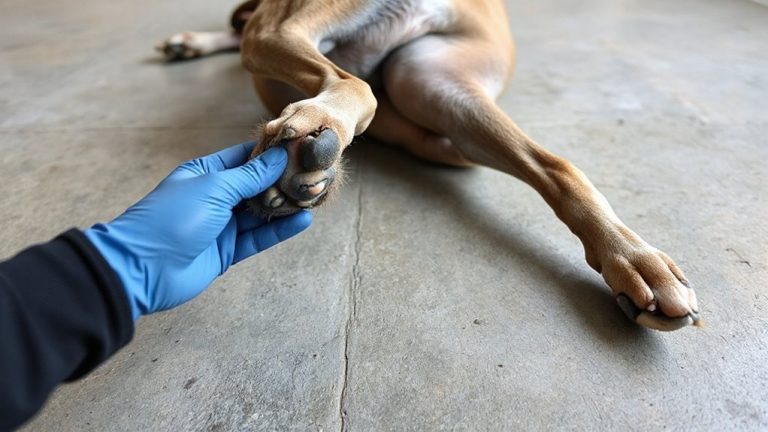
How can you tell if your dog’s paws are at risk of frostbite before serious damage occurs? Early detection is critical. Frostbite symptoms begin with pale, cold paws that feel firm or brittle to the touch. You’ll notice reduced flexibility in the skin, especially on paw pads and ear tips. As tissue temperature drops below 32°F (0°C), numbness follows, and your dog may limp or lick their paws excessively. With continued exposure, discoloration appears-blue-gray indicating ischemia, then black as necrosis develops. Check for swelling or blistering after rewarming, which signals deeper damage. Monitor dogs for behavioral changes post-exposure, such as reluctance to walk. Immediate intervention prevents progression. Recognizing frostbite symptoms in the first 10 to 30 minutes of exposure markedly improves recovery outcomes. Use gentle warming with lukewarm water (100–105°F) and consult a vet promptly.
Pick the Best Winter Booties for Your Dog
You can protect your dog’s paws from frostbite and ice damage with the right winter booties-choose models designed for thermal insulation, traction, and secure fit. Look for booties with rugged outsoles that provide reliable tread traction on slick surfaces. Rubber or non-slip TPR soles measuring at least 5mm thick offer maximum grip on snow and ice. Fit comfort is critical-booties should contour to your dog’s paw without pinching or slipping. Neoprene or fleece linings retain heat while wicking moisture. Secure adjustable hook-and-loop straps guarantee a snug, stable fit across the ankle. Measure your dog’s paw width and length before selecting a size; a 1-inch overlap is ideal. Over-tightening restricts circulation; under-tightening increases abrasion risk. Durable, seam-sealed uppers resist snowballing and prolonged moisture exposure. Properly fitted booties with high tread traction and consistent fit comfort reduce fatigue and injury during winter activity.
Use Paw Balm Before and After Walks
While booties shield your dog’s paws from harsh winter surfaces, a layer of paw balm adds invisible protection that complements physical coverage. Balm application before walks creates a hydrophobic barrier that repels moisture and reduces ice accumulation. After walks, reapplying balm supports paw hydration and restores natural lipid levels compromised by salt and cold. Use balms containing shea butter, beeswax, or cocoa butter-ingredients proven to maintain epidermal integrity at temperatures below freezing. Apply a 1–2 mm layer evenly across each paw pad, focusing on fissures and calloused areas. Avoid over-application to prevent residue tracking. Most balms absorb within 15 minutes, allowing safe indoor movement. Consistent use increases paw resilience by up to 40% in repeated cold exposure. Proper balm application is a critical, data-backed step in preventing tissue damage.
Limit Outdoor Time in Freezing Temps
When temperatures drop below freezing, prolonged exposure can rapidly lead to frostbite, especially in sensitive tissues like your dog’s paws. You must minimize outdoor time to reduce cold exposure risks. For temps below 20°F (-6°C), limit outings to 10–15 minutes, especially for small, short-haired, or elderly dogs. At 0°F (-18°C), even brief exposure becomes hazardous. Always monitor for signs of distress: shivering, lifting paws, or reluctance to walk. Choose safe surface choices like grass or packed snow instead of ice- or salt-covered pavement, which increases thermal conductivity and accelerates heat loss. Surfaces treated with deicers can also cause chemical irritation. Indoor potty alternatives or supervised backyard access reduce time outdoors. Your dog’s core body temperature must remain stable to prevent systemic effects from localized tissue damage. Plan ahead, shorten walks, and prioritize protection over routine.
Check Paws for Ice, Salt, and Cracks After Outings
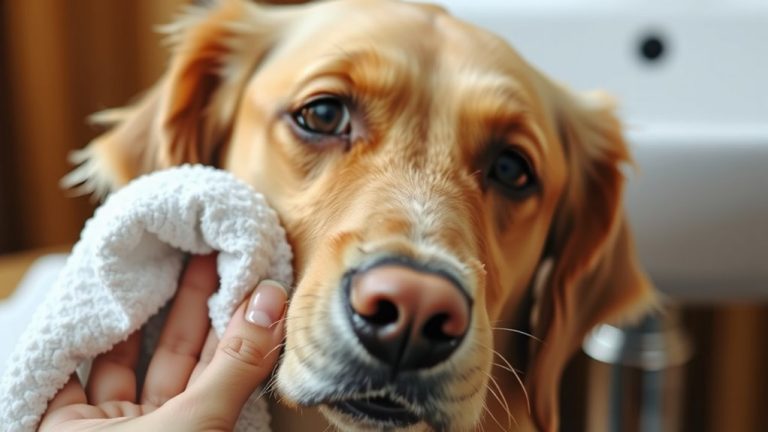
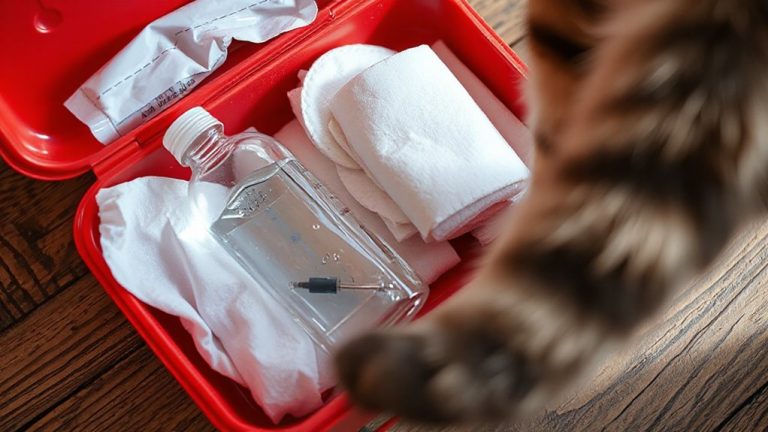
Your dog’s paw health hinges on immediate post-walk inspections, especially after exposure to winter elements. Check between the pads for ice accumulation, which can form balls and cause tissue damage or restrict circulation. Ice melts at 32°F (0°C), but trapped moisture cools the skin below ambient temperature, increasing frostbite risk. Remove ice promptly with a warm, dry cloth. Inspect for salt irritation caused by chloride-based deicers; sodium chloride and calcium chloride degrade skin lipids and disrupt the epidermal barrier. Use a paw wash with pH-neutral, veterinary-approved cleansers (pH 6.2–7.4) to remove residue. Look for microfissures or pad cracks-depths over 1.5 mm compromise protection and invite infection. Apply a ceramide-based balm to reinforce moisture retention. Consistent post-outdoor assessment reduces injury risk and maintains structural paw integrity in extreme cold. For quick and effective cleaning, consider using dog-specific paw wipes that are formulated to remove ice melt and debris without drying the skin.
On a final note
You can prevent frostbite by protecting your dog’s paws effectively. Use insulated booties with non-slip rubber soles-measuring paw width and length guarantees a proper fit. Apply petroleum-based paw balm with occlusive properties before walks to limit moisture loss. After exposure, inspect for ice buildup, salt residue, or microfractures. Limit outdoor time below –7°C (20°F). These steps reduce heat loss and chemical exposure, maintaining paw tissue integrity similar to how gloves preserve human hand function in cold environments.