How to Use Treats to Encourage Use of Cat Walkways
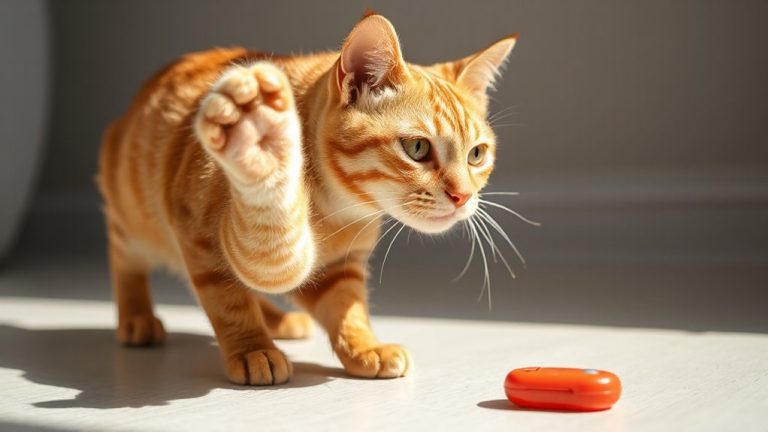
Place high-value treats like freeze-dried chicken-no larger than 0.25 inches-directly on the 10-inch-wide, non-slip walkway to instantly reward paw contact. Use strong-smelling, low-calorie treats under 5 calories, spaced 12–18 inches apart to stimulate foraging. Reward each forward step within one second using 1–2 calorie pieces. Shift to intermittent reinforcement after three successful 12-inch passes, extending intervals by 6 inches weekly. Success hinges on timing, consistency, and gradual progression-key factors shaping long-term use.
Notable Insights
- Start by placing high-value treats just inside the walkway to lure your cat onto the platform voluntarily.
- Place treats every 12 to 18 inches to encourage forward movement using scent and visibility as curiosity cues.
- Reward each small success immediately-within one second-to reinforce stepping on and moving along the walkway.
- Gradually increase the distance between treats once your cat confidently completes sections, using intermittent reinforcement.
- Maintain long-term use by switching to unpredictable treat rewards and pairing with environmental enrichment like toys or scents.
Get Your Cat on the Walkway With Treats
Motivation begins with a treat. You can leverage your cat’s natural instincts by aligning treat timing with their movement toward the walkway. Offer treats the moment paws touch the platform-this precise timing reinforces immediate association between the walkway and reward. Cat temperament plays a critical role; confident cats may step on within minutes, while shy or timid cats require slower acclimation over days. Use high-value treats like freeze-dried chicken, no larger than 0.25 inches in diameter, to avoid overfeeding. Deliver each treat directly on the walkway surface, which should be at least 10 inches wide with non-slip texture. Avoid forcing contact-success depends on voluntary engagement. Repetition across 15-minute sessions, two to three times daily, increases compliance. Adjust frequency based on observed temperament shifts. Consistency guarantees reliable walkway acceptance.
Lure Curiosity With Well-Placed Treats
A single treat placed strategically can spark your cat’s investigative instincts. Effective treat placement acts as a curiosity trigger, guiding your cat toward the walkway without direct interaction. Position treats within 6 inches of the entry point, ensuring visibility and easy access. Use strong-smelling, low-calorie treats-like dehydrated chicken pieces under 5 calories each-to maximize appeal without overfeeding. Space additional treats at 12- to 18-inch intervals along initial sections of the walkway, aligning with your cat’s natural stride length. Avoid clustering, which may overwhelm. Elevated surfaces should be introduced gradually, using treats as spatial markers. The goal is subtle encouragement: let scent and visibility serve as curiosity triggers, not forced incentives. Treat placement should feel intentional but unobtrusive, supporting exploration through environmental cues rather than pressure. This method leverages feline foraging behavior, increasing voluntary engagement with the structure.
Reward Every Step Forward
While your cat explores the walkway, reinforce each forward movement immediately with a reward. This consistent positive reinforcement strengthens desired behavior by linking action and outcome within seconds. Use small, high-value treats-about 1–2 calories each-to prevent overfeeding during sessions. Deliver the treat within one second of the behavior to clearly mark progress. Reward incremental progress: first for stepping onto the walkway, then for moving five inches forward, then ten. Each success builds confidence through structured repetition. Training sessions should last 3–5 minutes, occurring 2–3 times daily to maintain focus. This precision timing and measurable advancement maximize learning efficiency. Over time, the cat associates the walkway with safety and reward. Avoid delays in delivery-any gap greater than two seconds weakens association. Immediate feedback guarantees reliable conditioning. Continue this protocol until the cat traverses the full path without hesitation. Choosing the right best pet training rewards can significantly enhance motivation and results.
Space Out Treats as Confidence Grows
Once your cat moves along the walkway without hesitation, you’re ready to adjust the reinforcement schedule. Begin spacing out treat placement to encourage longer stretches of confident movement. Instead of rewarding each step, deliver a treat only after two to three successful segments-measured as 12-inch sections of the walkway. This intermittent reinforcement strengthens sustained behavior. Use consistent intervals to avoid confusion, increasing distance between rewards by 6 inches weekly as progress tracking confirms reliability. Monitor performance over five daily trials; if success rate exceeds 90%, extend intervals further. Accurate progress tracking guarantees timely advancement without regression. Limit sessions to 4 minutes to maintain focus, and record each trial’s outcome for data-driven adjustments. Strategic treat placement prevents dependency while reinforcing persistence. Adjustments must align with observed behavior, not timeline assumptions. This method promotes durable, self-sustained walkway use through systematic reinforcement thinning.
Reinforce Confident Walkway Behavior
Since your cat already traverses the walkway without hesitation, it’s time to shift from constant reinforcement to targeted encouragement of confident behavior. Use positive reinforcement selectively-offer treats only when your cat moves forward smoothly, without pausing or flattening ears. This specificity strengthens desired actions. Deliver rewards within two seconds of the behavior to guarantee accurate association. High-value treats, such as freeze-dried chicken (approximately 1–2 kcal per piece), maintain engagement without excess caloric intake. Provide consistent encouragement through verbal cues like “good walk” in a calm tone, delivered uniformly each time. Pair auditory signals with treats during initial reinforcement to establish clear communication. Over sessions lasting 5–7 minutes, conduct three daily trials to sustain learning without fatigue. Track progress by recording traversal speed and pauses weekly. Confidence is confirmed when your cat completes the route in under 15 seconds with upright posture.
Maintain the Walkway Routine Without Treats
After your cat consistently completes the walkway with confident, fluid movement-defined as uninterrupted travel in under 15 seconds and with ears upright-begin phasing out treat delivery while preserving behavioral reliability. Shift to intermittent reinforcement using a variable ratio schedule, delivering treats unpredictably after every 3–5 successful traversals. This maintains engagement without dependency. Pair this with environmental enrichment such as rotating toys, scent dispensers, or perches at walkway endpoints to sustain intrinsic motivation. Guarantee consistent scheduling by conducting walkway sessions at the same times daily, aligned with your cat’s natural activity peaks-typically dawn and dusk. Avoid abrupt removal of treats; instead, reduce frequency gradually over 2–3 weeks. Monitor travel time and posture to assess performance. If hesitation returns, temporarily reinstate continuous reinforcement. Proper scheduling and enrichment reduce reliance on food rewards while maintaining use frequency above 90% of baseline levels.
Fix Slumps in Walkway Use Quickly
If your cat’s walkway usage drops below 80% of baseline frequency within a 48-hour window, initiate corrective action immediately to prevent habit decay. First, inspect the walkway’s structural integrity-check support joints, load-bearing rails, and connection points. A wobbly or misaligned section discourages use. Confirm all fasteners are rated for at least 50 lbs of dynamic load. Test weather resistance by spraying the surface with water; pooling indicates degraded coatings. Replace any panel with UV-fade depth exceeding 0.5 mm. Reintroduce high-value treats every 3 feet along the path to reignite interest. Monitor usage hourly for 24 hours post-repair. Use data to confirm rebound. If usage remains low, reassess placement-cats avoid pathways with poor visibility or unstable footing. Reinforce confidence with non-slip tape rated for outdoor durability. Maintain consistency.
On a final note
You now have a reliable method to encourage consistent cat walkway use. Place high-value treats every 6–8 inches along the path to initiate movement. As your cat advances, extend intervals to 12–18 inches, reinforcing forward momentum. After five to seven successful passes, reduce treat frequency by 50% weekly. Maintain structure with scheduled walkthroughs twice daily. Use intermittent reinforcement to sustain behavior. Replace treats with praise after three weeks of uninterrupted use.