How to Adjust Diet for Neutered Male Cats Prone to Weight Gain
Neutering drops your cat’s metabolism by 20–30%, so cut calories by 25% right away. Feed high-protein, low-carb food-wet diets with ≥10% crude protein, dry with ≥40% on a dry matter basis. Avoid corn, wheat, and potatoes; carbs should be ≤10–15% of calories. Use scheduled meals twice daily with a calibrated scale. Limit treats to ≤10% of intake. Weigh your cat monthly and adjust portions by 5–15 kcal as needed. More precise steps follow.
Notable Insights
- Reduce calorie intake by 25% post-neutering to match decreased metabolic rate and prevent weight gain.
- Feed a high-protein, low-carb diet with animal-based ingredients as the primary source of nutrition.
- Transition from free-feeding to 2–3 measured meals daily using a digital scale for accuracy.
- Limit treats to ≤10% of daily calories and choose low-energy, high-protein options like freeze-dried salmon.
- Weigh monthly and adjust portions by 5–15 kcal based on weight trends and body condition.
Why Neutering Slows Your Cat’s Metabolism
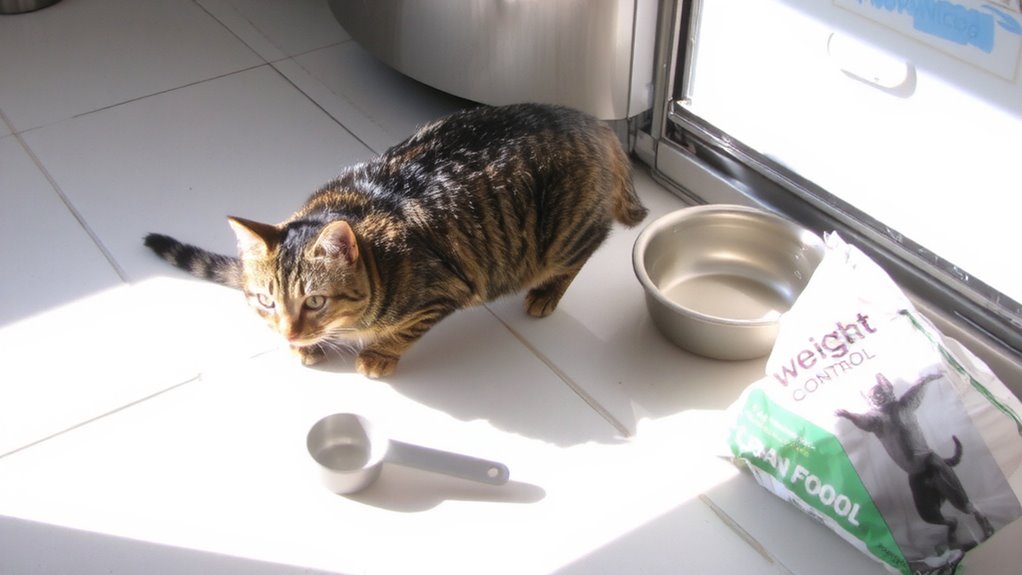
Although neutering your cat offers health and behavioral benefits, it also triggers hormonal changes that directly affect metabolic rate. These hormonal changes reduce lean muscle mass and lower resting energy expenditure by up to 20–30%. As a result, your cat needs fewer calories to maintain body weight. Testosterone decline post-neutering slows fat metabolism and increases appetite signals, promoting fat storage. Energy expenditure drops within days after surgery, peaking in the first two weeks. Without dietary adjustment, excess calorie intake leads to weight gain. Metabolic rate stabilizes at a lower baseline, making long-term calorie management essential. You must reduce daily caloric intake by approximately 25% compared to pre-neutering levels. This precise adjustment counters reduced energy expenditure. Failure to respond to these physiological shifts increases obesity risk. Proper portion control and activity support metabolic health.
Switch to High-Protein, Low-Carb Cat Food
You are reading the article: How to Adjust Diet for Neutered Male Cats
Previous section: Why Neutering Slows Your Cat’s Metabolism
Current section: Switch to High-Protein, Low-Carb Cat Food
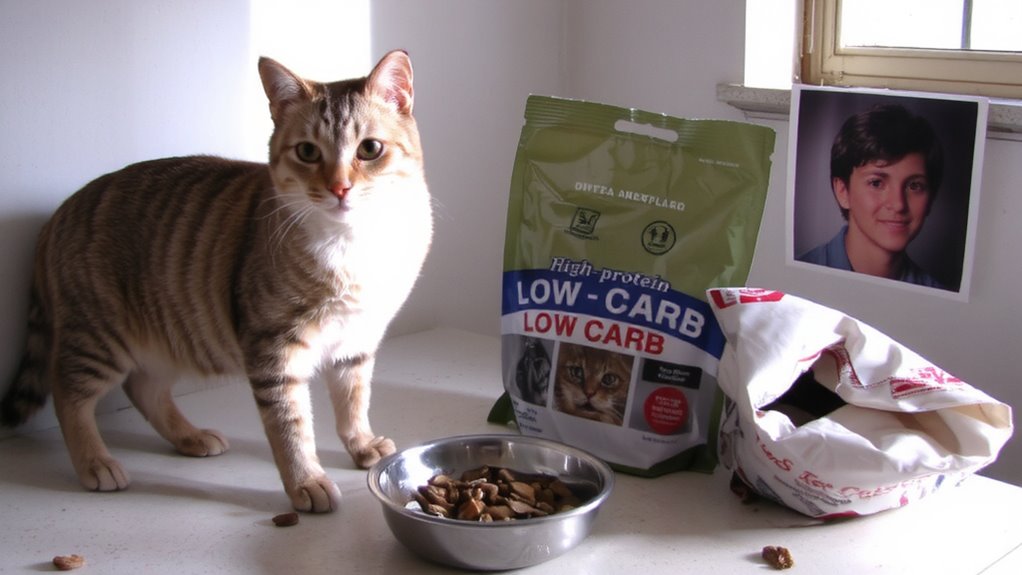
Protein isn’t just a nutrient-it’s a necessity for your neutered cat’s long-term health. Cats are obligate carnivores; their bodies require high levels of animal-based protein for muscle maintenance and metabolic function. Prioritize diets with protein quality derived from whole meats like chicken, turkey, or fish-ingredients listed first on the label indicate higher concentrations. Look for crude protein levels of at least 40% on a dry matter basis in dry food, or 10% or higher in wet food. Reduce intake of unnecessary carb sources such as corn, wheat, or potatoes, which contribute empty calories. Carbohydrates should not exceed 10–15% of total caloric content. High-carb diets promote fat storage, especially in less active, neutered males. Opt for formulas specifically labeled as low-carbohydrate and high-protein to match your cat’s evolved digestive needs.
Feed Controlled Portions at Set Times Daily
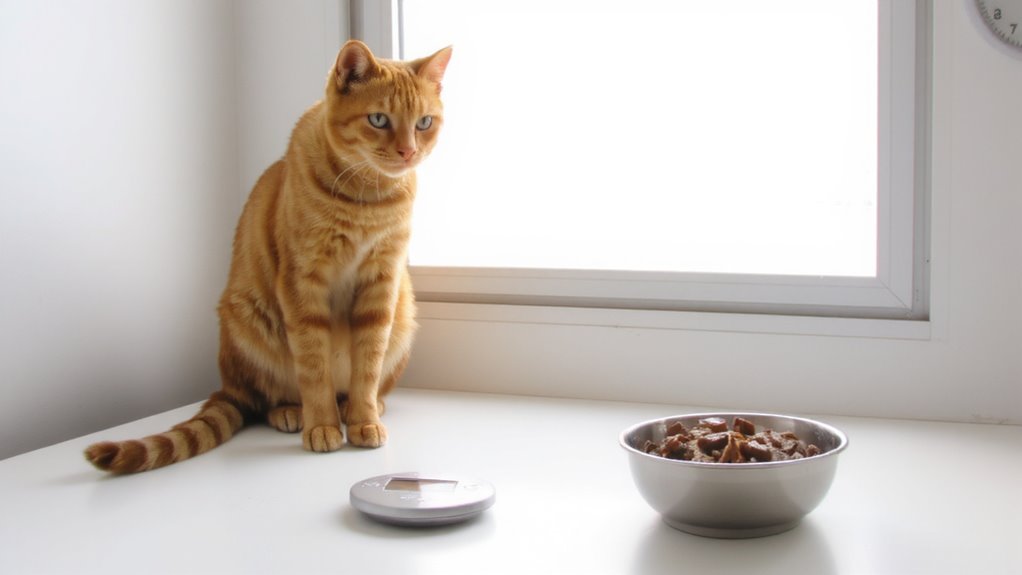
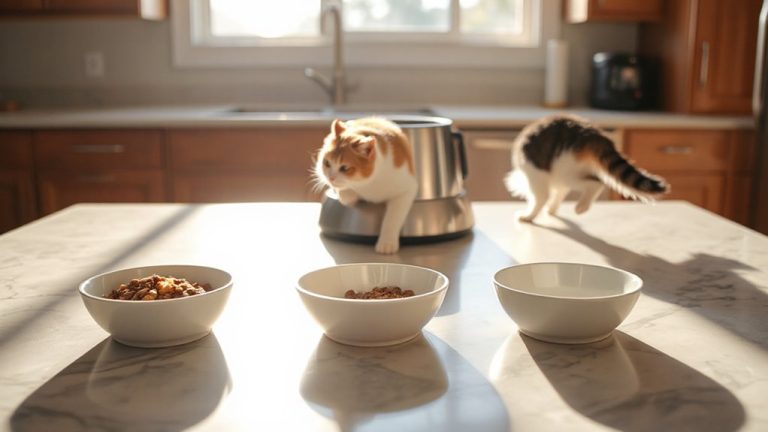
When free-feeding ends, consistent portion control becomes essential for managing your neutered male cat’s weight and metabolic health. Feed measured amounts of food at scheduled meals to regulate calorie intake. Portion timing aligns with natural feline digestion, which thrives on predictability. Divide the daily recommended intake into two or three meals, spaced 8–12 hours apart. This prevents energy spikes and supports fat metabolism. Use a calibrated measuring scoop or digital scale to guarantee accuracy-many overfeed by up to 30% without one. Scheduled meals also allow monitoring of appetite changes, which can signal health issues early. Controlled portions reduce the risk of insulin resistance, a common concern in neutered males. Avoid ad-lib feeding, as it disrupts portion timing and encourages overconsumption. Precision in meal frequency and quantity enhances metabolic rate and long-term weight management. A reliable automatic cat feeder can simplify this routine while ensuring consistent portion delivery.
End Free-Feeding and Reduce Treats Now
Ending free-feeding is a critical step in managing your neutered male cat’s long-term health. Free access to food promotes overeating, leading to obesity-related complications. You must establish a consistent feeding schedule with measured portions, typically 60–80 kcal per kg of ideal body weight daily, divided into two meals. This supports metabolic regulation and prevents hyperphagia. Treats should contribute no more than 10% of daily caloric intake. Replace high-calorie treats with low-energy treat alternatives such as small pieces of steamed chicken, freeze-dried salmon chips (≤5 kcal each), or commercial dental treats designed for weight management. Avoid calorie-dense fillers like corn syrup. Monitor consumption closely. Consistent meal timing aligns with feline circadian feeding patterns, enhancing satiety and digestion. Immediate reduction in treats and unrestricted feeding curbs excess energy intake effectively.
Track Weight and Adjust Food Every Month
Because metabolic changes after neutering can persist for months, monitoring your cat’s weight monthly is essential for long-term health. Monthly monitoring allows early detection of weight trends, enabling timely dietary adjustments. Use a digital scale accurate to 0.1 lb for consistency. Perform a portion reassessment every 30 days based on weight change, activity level, and body condition score. Incorporating high-moisture foods like best wet food for senior cats can support hydration and satiety, which is especially beneficial for neutered males prone to weight gain.
| Week | Weight (lbs) | Food (kcal/day) |
|---|---|---|
| 1 | 10.2 | 220 |
| 5 | 10.6 | 210 |
| 9 | 10.4 | 215 |
| 13 | 10.8 | 205 |
| 17 | 10.7 | 210 |
Adjust caloric intake by 10–15 kcal if weight increases. Reduce by 5–10 kcal if no change occurs over two months. Portion reassessment prevents overfeeding and supports metabolic balance. Track data diligently to maintain ideal body condition.
On a final note
You must adjust your neutered cat’s diet to prevent weight gain. Metabolism drops 20–30% post-neutering, requiring fewer daily calories. Feed high-protein (35–45% crude protein), low-carbohydrate diets to match feline nutritional needs. Measure meals precisely-typically ¼ to ½ cup daily, split into two portions. Eliminate free-feeding and limit treats to under 10% of caloric intake. Monitor weight monthly using a digital scale; adjust portions by 5–10% as needed.