How to Safely Reduce Treat Intake Without Causing Behavioral Issues in Dogs
You should limit treats to no more than 10% of your dog’s daily calories-just 100 kcal for a 50-pound dog needing 1,000 kcal/day. Track every treat using an app or log, noting type, quantity, and calories. Replace up to 70% of food rewards with praise, play, or petting, delivered within 1–2 seconds of good behavior. Use small, high-protein treats like freeze-dried liver only during training. Stick to this plan consistently across all family members to prevent confusion. There’s a proven method to adjust rewards based on behavior phase and household dynamics.
Notable Insights
- Gradually replace treats with praise or play to maintain positive reinforcement without excess calories.
- Limit treats to 10% of daily caloric intake to support health without disrupting behavior.
- Use low-calorie, high-frequency treats to satisfy routines while reducing overall intake.
- Apply intermittent reinforcement schedules to maintain learned behaviors with fewer rewards.
- Reserve high-value treats for new or difficult tasks to preserve their motivational impact.
Track How Often You’re Over-Treating Your Dog
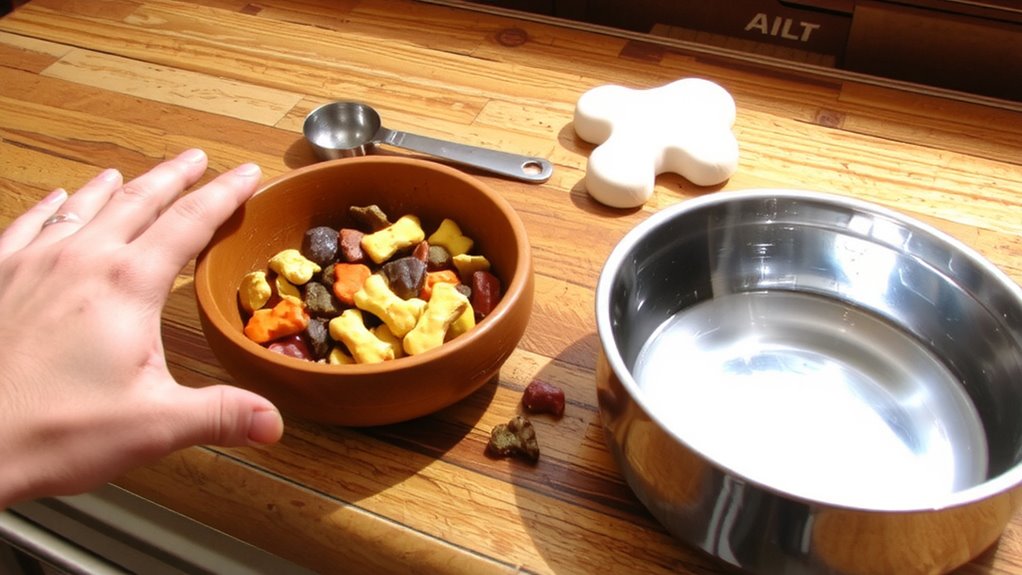
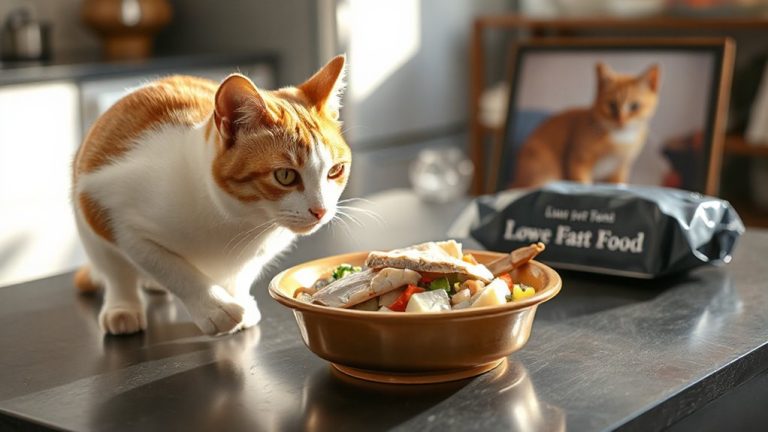
How often are you giving your dog treats without really tracking them? You might not realize how quickly treat frequency adds up. Each extra treat contributes to overfeeding patterns, which can lead to obesity and metabolic issues. On average, dogs should get no more than 10% of their daily calories from treats. For a 50-pound dog needing 1,000 kcal/day, that’s just 100 kcal in treats. A single 10-kcal milk-bone every few hours exceeds this limit. Use a log or app to record each treat, including type, quantity, and kcal count. Treats vary markedly-soft chews range from 5–25 kcal, while biscuits can exceed 40 kcal. Tracking reveals hidden patterns, such as reward clustering during training or feeding treats at family mealtimes. Awareness stops accidental overfeeding. Consistent documentation lets you adjust behavior before health risks arise.
Set Your Dog’s Daily Treat Calorie Limit
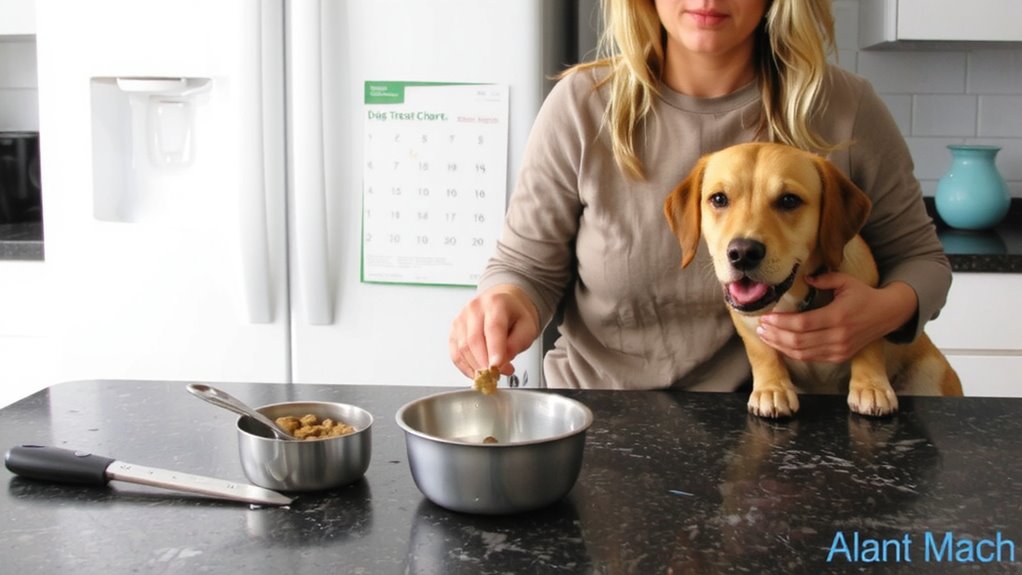
You’ve started logging every treat your dog receives, and that record is now the foundation for setting a firm daily calorie limit. Treats should not exceed 10% of your dog’s total daily caloric intake. For a 50-pound dog needing 1,000 kcal/day, this means no more than 100 kcal from treats. Review your log to assess current treat frequency - you might be overfeeding without realizing it. High-frequency, low-calorie treats are preferable to infrequent high-calorie ones. Use calorie awareness to make informed choices: a standard milk-bone biscuit contains about 35 kcal, while a single piece of commercial soft treat ranges from 10–20 kcal. Measure every treat using standardized portions. This precision prevents accidental overfeeding. Adjust based on your dog’s weight, activity level, and health status. Consistent limits support long-term dietary control.
Replace Treats With Praise and Playtime
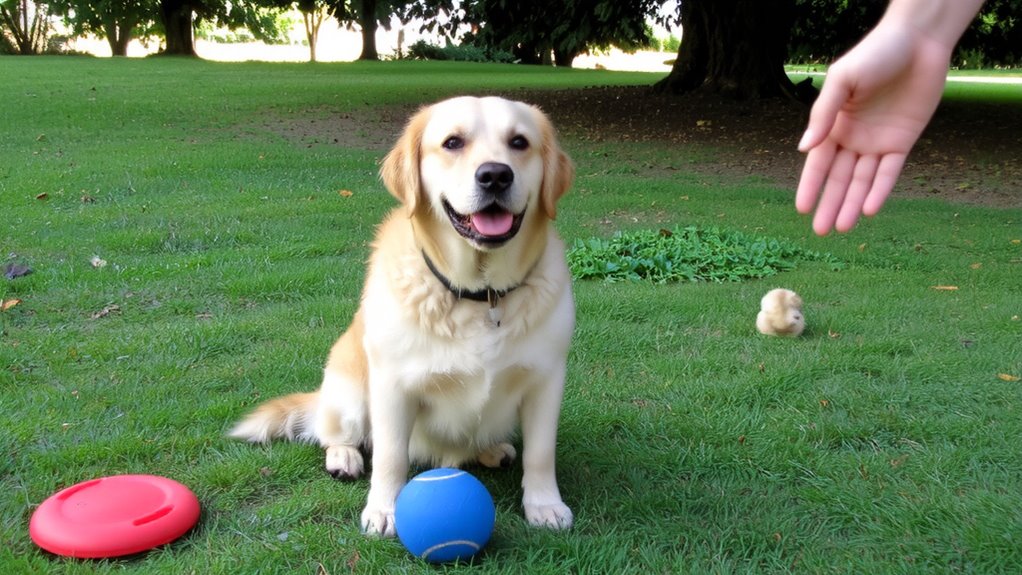
Why rely on food when behavior can be reinforced without calories? You can use praise and playtime as effective tools for positive reinforcement. Verbal cues like “good dog” paired with petting deliver immediate feedback, strengthening desired behaviors. Studies show dogs respond best when praise follows actions within 1.5 seconds. Pair this with interactive games-such as quick fetch sessions or tug-of-war-to increase mental stimulation and physical activity. These games act as non-food rewards, maintaining motivation during training. Rotate between short bursts of play and verbal affirmation to sustain engagement. Unlike treats, these methods contribute zero calories while supporting behavioral health. Over time, your dog associates obedience with play, reducing dependency on food rewards. This approach aligns with canine learning theory, which emphasizes timely, consistent feedback. Replace up to 70% of treat-based rewards with these techniques to maintain results without excess intake.
Choose High-Value Treats for Training Only
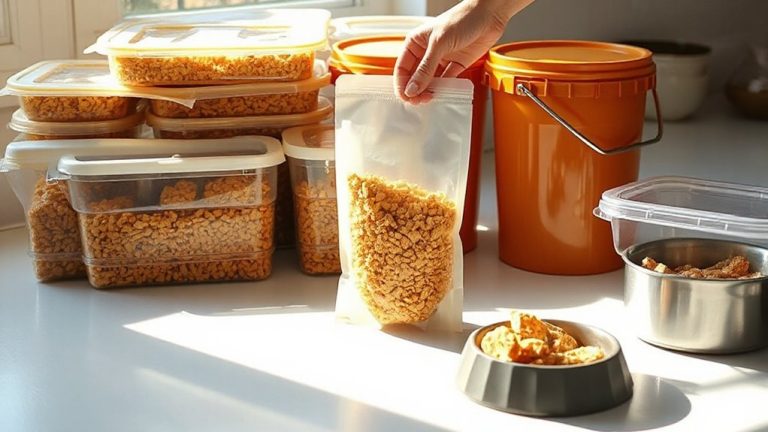
Not every treat carries the same behavioral weight, and selecting the right one matters when shaping your dog’s responses. Reserve high-value treats exclusively for training sessions to maximize training reinforcement. These treats should be small-no larger than ½ inch in diameter-to allow for frequent delivery without excess calories. High treat quality is essential: choose those rich in animal protein, low in fillers, and free from artificial additives. Freeze-dried liver, dehydrated beef lung, or small pieces of cooked chicken meet these criteria. Dogs respond more reliably to biologically relevant rewards, which increases cue compliance. Limit these treats to 10% of daily caloric intake to prevent dietary imbalance. By restricting high-value options to training only, you maintain their effectiveness and prevent habituation. This targeted approach sharpens focus, improves response consistency, and supports long-term behavioral success without overfeeding. For best results, consider the best dog training treats based on nutritional quality and size suitability.
Use Treats Wisely: When to Reward and When to Skip
One effective strategy for maintaining training efficacy is intermittent reinforcement, where you reward desired behaviors only part of the time after they’re well-learned. This method improves long-term compliance by reinforcing behavior without constant treats. You should use precise timing rewards-delivering the treat within 1–2 seconds of the action-to clearly associate behavior with consequence. As skills solidify, gradually reduce frequency: switch from continuous (every time) to variable ratio schedules (e.g., reward every 3rd or 4th correct response). This shift supports avoiding dependency on food incentives. Use verbal praise or petting as secondary reinforcers during unrewarded trials. Prioritize high-value treats only for novel or challenging tasks. Overuse dilutes effectiveness and increases caloric intake. Strategic omission trains reliability under distraction. Properly timed, reduced rewards maintain performance while minimizing consumption. Plan sessions systematically to sustain learning with fewer treats.
Watch for Signs of Stress or Confusion
You’ve learned how to structure reward schedules to maintain behavior with fewer treats, but success also depends on recognizing when your dog isn’t responding well to training pressure. Monitor your dog’s body language and vocal cues closely during shifts in reinforcement. Stress or confusion can manifest subtly, affecting learning and compliance. Key indicators include avoidance behaviors, lip licking, and abrupt changes in activity level. Vocal cues like whining or growling may signal discomfort. Use the table below to identify common signs:
| Behavior | Interpretation |
|---|---|
| Averted gaze | Stress or avoidance |
| Low tail carriage | Anxiety or submission |
| Whining | Confusion or desire for reassurance |
Adjust training intensity or revert to higher reinforcement rates if these signs persist. Early detection prevents escalation. Observing body language guarantees humane, effective training. Incorporating a pet stress relief device can further support your dog’s emotional well-being during transitions in training routines.
Get Everyone in the Household on the Same Page
Consistency across all handlers is essential when reducing treat intake in dogs. Inconsistent practices lead to confusion and behavior regression. You must establish consistent communication among all household members to maintain uniform feeding protocols. Designate one person to manage treat distribution and schedule. Use a shared log to record daily treat amounts, timing, and behavior responses-this supports household collaboration. For example, if one person gives a 5-calorie treat while another gives a 15-calorie one, the metabolic impact varies greatly. Standardize treats to clinically tested, low-calorie options (e.g., Greenies Pill Pockets Lite, ~9 kcal per piece). Train all handlers to use non-food rewards-like praise or petting-during shifts. Behavioral reinforcement must match across individuals. Just as a training program fails with mixed signals, dietary changes require unified implementation. Your dog’s response depends on predictable input. A reliable Best Treat Pouches for Dog Owners ensures convenient, consistent access to measured treats for every handler.
On a final note
You must monitor your dog’s daily treat intake to prevent obesity and behavioral issues. The ideal treat allowance is 10% of your dog’s total daily calories-roughly 25–75 kcal, depending on size and activity level. Replace frequent treats with verbal praise or brief play sessions using durable toys. Use high-value treats only during training, such as small freeze-dried liver pieces (≤3 kcal each). Consistency across all household members guarantees clear reinforcement signals, minimizing confusion.