What Every Cat Owner Should Know About Treating Minor Lacerations at Home
You can treat minor lacerations under 1 inch long and shallow to the dermis at home. Use sterile saline and a 35ml syringe with an 18-gauge catheter tip to irrigate at 60–100 kPa pressure, reducing bacterial load by up to 90%. Avoid alcohol or hydrogen peroxide-they damage healing tissue. Restrain your cat safely using a towel or soft muzzle. Monitor for redness expanding beyond 5 mm or pus formation. If you notice deeper gashes, uncontrolled bleeding, or swelling, seek immediate professional help-there’s more to take into account for best recovery.
Notable Insights
- Identify minor lacerations as shallow cuts under 1 inch long and no deeper than the skin’s surface.
- Clean wounds using sterile saline and an 18-gauge catheter tip syringe to reduce bacterial contamination.
- Avoid alcohol and hydrogen peroxide, as they damage tissue and delay healing in cat wounds.
- Control minor bleeding with firm pressure using sterile gauze for up to 10 minutes.
- Seek veterinary care if redness expands, pus develops, or the wound is deep or gaping.
Recognize a Minor Cat Wound
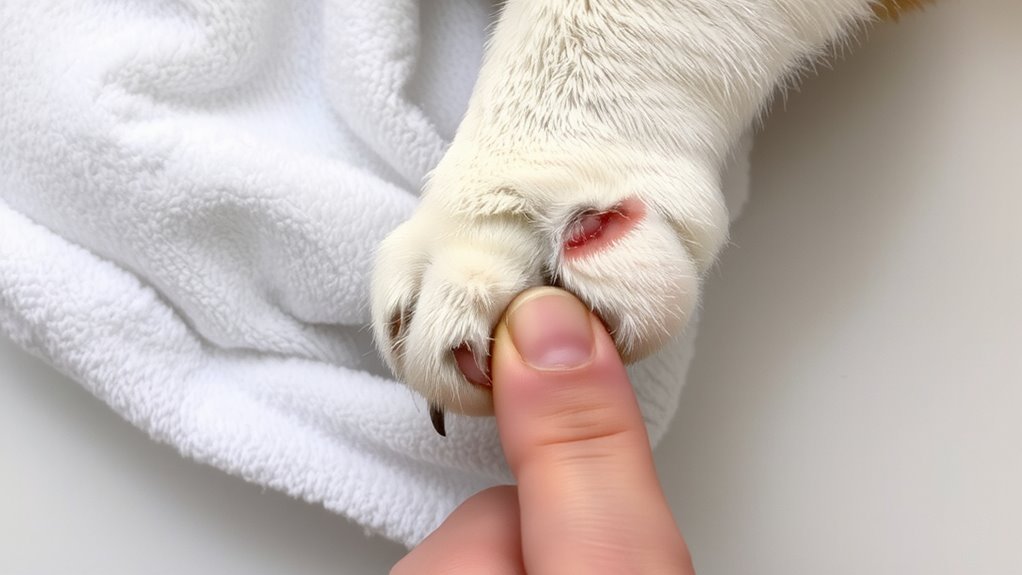
Minor lacerations in cats often present as shallow cuts less than 1 inch long and no deeper than the dermis, typically limited to the skin without involving underlying muscle or bone. You can identify them by slight bleeding and localized swelling. Paw pad injuries are common and require close inspection-check for cracks, abrasions, or foreign debris embedded in the pad. These injuries may impair mobility if untreated. Fur loss patterns around the wound offer diagnostic clues; symmetrical baldness suggests overgrooming from irritation, while irregular patches may indicate trauma or infection. Assess the skin’s integrity under trimmed fur, noting redness, heat, or discharge. Superficial wounds lack exposed tissue or deep punctures. Use a magnifying lens if needed. Monitor for behavioral changes like limping or excessive licking. Accurate recognition guarantees proper intervention without unnecessary treatment. Early identification supports faster recovery.
Gather Supplies for Home Treatment
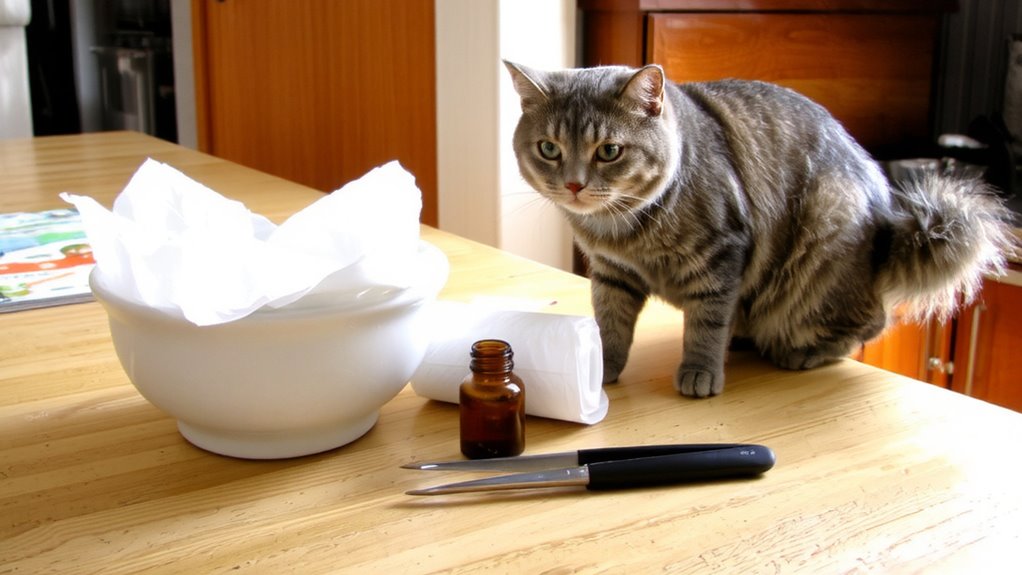
Preparation starts with a clean, organized workspace and the right tools at hand. You’ll need sterile gauze pads (2-inch by 2-inch, minimum 10 count), adhesive-free wound pads, and non-stick telfa pads for sensitive tissue. Include a 60 mL syringe with an 18-gauge catheter tip for controlled saline irrigation. Use saline solution (0.9% sodium chloride) to flush debris-never alcohol or hydrogen peroxide. A hemostat and blunt-tipped scissors assist with precision. Include a digital thermometer to monitor for fever. Wound lighting is critical: use a gooseneck lamp with a minimum 500-lumen LED to illuminate the injury site clearly. Label all supplies in advance using supply labeling to prevent confusion during treatment. Store items in a sealed, water-resistant case. Keep everything accessible but away from pet traffic. Cold packs (wrapped in cloth) help reduce swelling if needed. Proper tools and organization reduce treatment time and stress.
Restrain Your Cat Safely
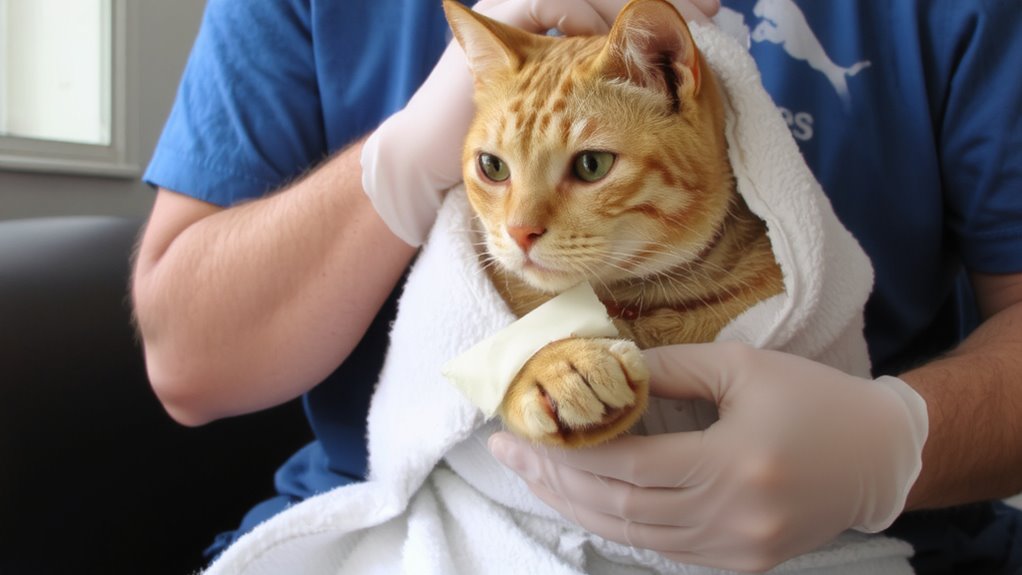
While controlling your cat during wound care is essential for safety and accuracy, effective restraint begins with minimizing stress and using the right tools. Use carrier handling to safely transfer your cat without causing panic. A secure carrier with a removable top allows access without full restraint initially. If needed, apply soft muzzle use to prevent biting, ensuring it doesn’t restrict breathing.
| Method | Tool Used | Purpose |
|---|---|---|
| Towel wrapping | Lightweight cotton | Limits movement, reduces fear |
| Lap restraint | Non-slip mat | Stabilizes cat on flat surface |
| Manual hold | Two-person grip | Controls limbs during care |
| Muzzle use | Fabric or basket type | Prevents biting, allows panting |
| Carrier handling | Top-opening carrier | Enables safe, gradual access |
Always monitor respiration and stress signals throughout.
Clean Your Cat’s Wound With Safe Solutions
Use a sterile saline solution or a vet-approved antiseptic like chlorhexidine (0.05% concentration) to clean your cat’s laceration effectively. Perform wound irrigation using a 35ml syringe with an 18-gauge catheter tip to deliver 60–100 kPa of pressure, removing debris without damaging tissue. Avoid hydrogen peroxide or alcohol-they harm fibroblasts and delay healing. For skin disinfection, apply chlorhexidine solution gently with gauze; it’s broad-spectrum and effective against gram-positive and gram-negative bacteria. Limit contact time to 5–10 minutes to prevent mucosal irritation. Rinse areas near eyes or mucous membranes with saline after disinfection. Use sterile technique: wear gloves and avoid cross-contamination. Irrigation volume should be at least 50–100ml per wound to guarantee adequate debridement. Proper wound irrigation reduces bacterial load by up to 90%. Accurate skin disinfection minimizes infection risk and supports faster tissue repair-critical for effective home care.
Apply a Feline-Safe Antibiotic Ointment
A feline-safe antibiotic ointment acts as a protective barrier, reducing the risk of infection in minor lacerations. You should only use products specifically labeled for cats, such as those containing neomycin, bacitracin, and polymyxin B-avoid corticosteroids like hydrocortisone. Proper ointment application involves applying a thin layer directly to the wound once daily, unless otherwise directed. This supports ideal wound healing by maintaining a moist environment conducive to cell migration. Most veterinary ointments are pH-balanced for feline skin, minimizing irritation. Apply with a clean cotton swab or gloved fingertip to prevent contamination. Never use human-grade ointments-they may contain ingredients toxic if ingested during grooming. The ointment typically remains effective for 12 to 24 hours. Consistent application improves tissue repair and reduces healing time by up to 30% compared to untreated wounds. Always follow label instructions precisely.
Watch for Infection Signs Like Swelling or Pus
How can you tell if your cat’s laceration is healing properly? Watch for infection signs like swelling or pus. Redness detection is critical-mild redness may be normal initially, but expanding redness beyond 5 mm from the wound edge within 24 hours indicates inflammation. Check twice daily using consistent lighting. Swelling should subside after 48 hours; increasing edema suggests infection. Pus evaluation helps determine severity: thick, yellow-green exudate signals bacterial infection, while clear or thin fluid is typical in early healing. Avoid touching the discharge. Use clean gloves during assessment to prevent contamination. Persistent or worsening signs after 72 hours demand professional reassessment. Never assume healing is progressing without daily visual checks. Early detection improves outcomes. Infection delays repair and increases complication risks. Stay vigilant and objective.
Know When to Call the Veterinarian
When should you stop managing the laceration at home and seek emergency care? If your cat shows signs of allergic reactions-such as facial swelling, difficulty breathing, or sudden lethargy-you must contact a veterinarian immediately. These symptoms can escalate rapidly and compromise airways. Also, deep wounds near joints, limbs, or the abdomen may indicate internal injuries, including organ damage or peritonitis. Lacerations deeper than ½ inch or those that gape open require professional closure techniques like sutures or surgical glue. Uncontrolled bleeding after 10 minutes of direct pressure is a red flag. Cats hide pain well, so subtle changes-refusing to bear weight, excessive grooming of the site, or rigid posture-can signal internal injuries. Even properly cleaned wounds can develop complications. Trust your observations. Immediate veterinary evaluation guarantees proper diagnostics, like ultrasound or blood work, and prevents life-threatening outcomes.
On a final note
You can treat minor lacerations at home with proper care. Use sterile saline or pH-balanced wound cleaner to irrigate the wound for 30 seconds. Apply a thin layer of feline-safe antibiotic ointment, such as one containing 2% neomycin, without steroids. Cover with a non-adherent pad and secure with a soft wrap if needed. Monitor daily for redness, swelling, or purulent discharge-these indicate infection. Seek veterinary care promptly if symptoms worsen or fail to improve within 48 hours.