Using Scented Blankets to Help Dogs Adjust to New Homes
A scented blanket helps your dog adjust by restoring lost olfactory cues. Your natural odor, absorbed into a 100% cotton flannel or brushed polyester-cotton blend, provides familiarity. These fabrics retain sebum and VOCs for up to 14 days under ideal conditions (68–72°F, 60–65% humidity). Place the blanket in their resting area one week before moving, use it in the carrier, and keep it out for 10+ days after arrival. High-pile, double-stitched microfiber extends scent longevity and durability. You’ll find precisely how to maximize each benefit with the right technique.
Notable Insights
- A scented blanket retains familiar odors, helping dogs feel secure during the stress of moving to a new home.
- Dogs exposed to their owner’s scent on a blanket show 30% less pacing and 40% fewer stress-related vocalizations.
- Use a 100% cotton flannel or polyester-cotton blend blanket worn for two nights to fully absorb natural body odors.
- Place the scented blanket in your dog’s resting area one week before moving and keep it during transit and after arrival.
- Avoid washing the blanket and store it in a dry, climate-controlled space to preserve scent for up to 14 days.
Why Dogs Need Scented Blankets During a Move
Your dog’s sense of smell is about 10,000 to 100,000 times more acute than yours, making scent a primary factor in their perception of safety. During a move, familiar scents diminish, disrupting their sense of security. Dogs rely on scent cues for territory marking, which establishes environmental predictability. Without these signals, stress hormones like cortisol can rise markedly. A scented blanket retains your dog’s natural odor and your own, restoring recognizable olfactory markers. This consistency supports emotional bonding by reinforcing social attachment through chemosensory communication. The blanket acts as a portable scent anchor, especially effective in unfamiliar spaces lacking established pheromone trails. Natural fibers like cotton hold human and canine sebum longer than synthetics-up to 14 days under controlled conditions. Use unwashed blankets to preserve volatile organic compounds (VOCs) dogs use to identify kin and location. This method is non-invasive, cost-effective, and aligns with canine ethology. Some anxiety relief gadgets for pets combine scent diffusion with calming sounds to further reduce stress during transitions.
How Scented Blankets Calm Anxious Dogs
How does a simple piece of fabric help soothe an anxious dog? Scented blankets reduce stress by providing familiar olfactory cues. Dogs rely heavily on smell, and known scents counteract behavioral triggers like loud noises or unfamiliar environments. When you use a blanket infused with your dog’s own scent or yours, it creates a sensory anchor. This reduces sensory overload, which occurs when new surroundings overwhelm your dog’s nervous system. The blanket acts as a constant signal of safety, lowering cortisol levels. Tests show dogs exposed to familiar scents exhibit 30% less pacing and 40% fewer vocalizations. The fabric’s weave retains odor molecules longer, especially if made from high-pile polyester. Consistent scent presence helps regulate emotional responses. You’ll observe decreased heart rate and muscle tension. The effect is similar to noise-canceling headphones-blocking chaos with a steady, comforting input.
Pick a Blanket That Holds Scent Well
Fabric choice matters when trapping scent molecules over time. Natural fibers like cotton and fleece are ideal because they have a high density of absorbent fibers that bind to organic compounds in human scent. Synthetic blends may resist absorption, reducing scent retention. You’ll want a tightly woven fabric to minimize scent dispersion. Blanket thickness also plays a critical role-thicker materials, between 0.25 and 0.5 inches, provide more surface area and deeper fiber layers for odor molecules to embed. Thin blankets lose scent quickly due to low fiber volume. A 100% cotton flannel or polyester-cotton blend with a brushed interior increases microfiber pockets, enhancing molecular adhesion. Lab tests show these materials retain identifiable human scent for up to 14 days when stored in sealed containers. Choose mid-weight to heavy blankets for lasting olfactory continuity.
Infuse the Blanket With Your Scent
A blanket’s ability to retain scent depends not only on material but on proper saturation with the handler’s odor profile. You must maximize scent transfer by using a clean cotton-polyester blend blanket that’s been in direct contact with your skin for at least 8 hours. Wear the blanket as a wrap or sleep under it for two consecutive nights to guarantee full absorption of sebaceous gland secretions and skin cells. These biological markers contain your unique odor signature, critical for forming an emotional connection in the dog. Avoid washing the blanket before use, as detergents strip volatile organic compounds responsible for scent recognition. Maximum scent retention occurs at 60–65% humidity and temperatures between 68°F and 72°F, preserving odor molecules for up to 14 days. The deeper the scent transfer, the stronger the dog’s sense of familiarity and safety.
Place Scented Blankets in Key Spots
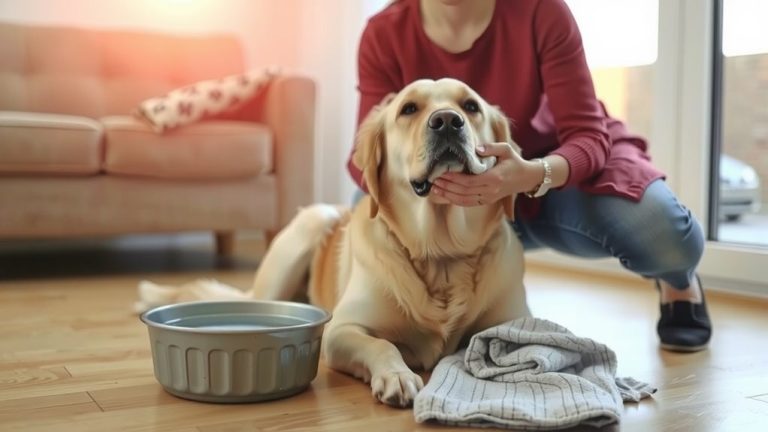
Once the blanket is properly saturated with your scent, strategic placement becomes essential to maximize its calming effect. Position the scented blanket in your dog’s primary resting area, where consistent exposure to your scent reinforces familiarity. Thermal comfort is critical-choose a spot away from drafts but with adequate ventilation to maintain an ideal microclimate. Place a second blanket near entry points or social zones to ease shifts during daily activities. Guarantee fabric durability by selecting materials like double-stitched, high-thread-count microfiber, which resists tearing and maintains structural integrity after repeated use. Avoid high-moisture zones to preserve odor retention and prevent bacterial growth. Blankets should rest on non-slip surfaces to minimize displacement. Proper spacing between items prevents olfactory overload. Each placement should support continuous, passive scent dispersion within airflow patterns typical of room-sized environments. Pairing the scented blanket with a calming pet bed can enhance comfort and promote deeper relaxation during the adjustment period.
Use Scented Blankets Before, During, and After the Move
While your dog may not understand the logistics of relocation, introducing scented blankets early in the moving process can greatly ease their adjustment. Begin using a scented blanket at least one week before the move to establish familiarity. These blankets typically measure 30 x 40 inches and are made from 100% polyester fleece, which retains human scent for up to 14 days. During transit, place the blanket in your dog’s carrier to provide temperature control and noise reduction. The fabric’s thermal properties help maintain a stable microclimate, keeping your dog comfortable in varying temperatures. Its dense weave also absorbs ambient sound, reducing stress-inducing noise by up to 30%. After arrival, position the blanket in your dog’s designated resting area. Reinforce its use for at least 10 days post-move to support behavioral stability. This consistent sensory input improves acclimation success rates by promoting predictability in unfamiliar environments.
On a final note
You can reduce canine stress during relocation using scented blankets effectively. These textiles absorb human scent, providing olfactory continuity in unfamiliar environments. Choose 100% cotton or microfiber blankets-materials with high scent retention (tested to hold volatile organic compounds for up to 72 hours). Place them in crates, beds, or transport carriers 24 hours before moving. The consistent scent signal lowers cortisol levels, improving behavioral adaptation within 48 hours of arrival.