How to Address Fear of Stairs in Older or Injured Dogs
Your older or injured dog may avoid stairs due to joint pain or vision loss. Install non-slip treads with a coefficient of friction above 0.5 and flush edges to prevent slipping and claw snags. Use LED lighting at 3000–4000K under handrails for clear step visibility, especially with cataracts. Support mobility with a harness and 20-degree ramps. Train with treats and verbal markers in short daily sessions. Sudden stair refusal warrants veterinary assessment for arthritis or injury-further details reveal effective solutions for long-term confidence.
Notable Insights
- Assess for pain or injury with a veterinarian, as stair fear may stem from arthritis or joint dysfunction.
- Install non-slip treads with high-contrast edges to improve grip and visibility for dogs with poor vision.
- Use LED lighting at riser level to illuminate steps and enhance depth perception in dim environments.
- Implement positive reinforcement training with immediate treats and verbal markers to build stair-climbing confidence.
- Provide ramps or harnesses to reduce joint strain and support mobility during stair negotiation.
Why Your Older Dog Is Scared of Stairs
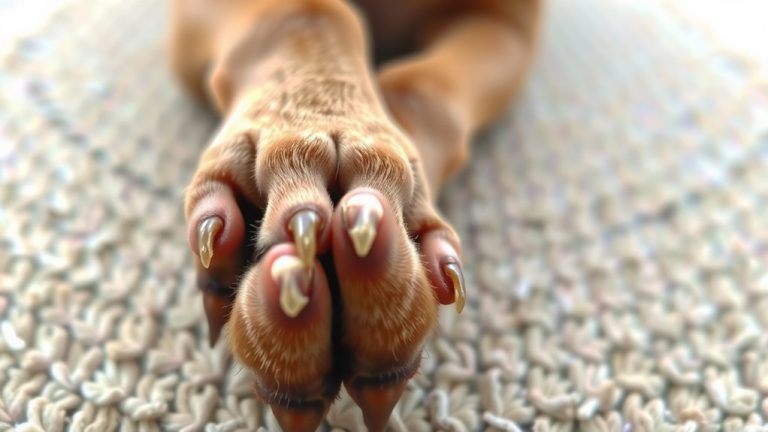
Age-related physical decline is often the root cause of your older dog’s hesitation around stairs. Joint pain, particularly from osteoarthritis, reduces mobility and stability on inclines. Degeneration of cartilage in hips and knees increases discomfort during weight-bearing activities. Stair climbing requires flexion angles of 110–130 degrees, which arthritic joints cannot safely achieve. Vision loss further compromises depth perception, making step edges indistinct. Dogs rely on visual cues to gauge distance; impaired sight increases fall risk. Cataracts and nuclear sclerosis affect 75% of dogs over nine years. Combined, joint pain and vision loss create biomechanical and sensory obstacles. Neural processing of spatial orientation slows, delaying motor responses. The fear response isn’t behavioral alone-it’s physiological. Altered gait patterns, like shortened stride length, indicate pain avoidance. You’ll observe hesitation, paw lifting, or refusal. These are diagnostic indicators, not defiance. Understanding these factors helps guide targeted interventions for safer navigation. Using a properly designed dog ramp for beds can significantly reduce joint strain and improve accessibility for older or injured dogs.
Add Non-Slip Treads and Better Lighting on Stairs
Improving stair safety starts with enhancing traction and visibility. Non-slip treads reduce slip risk by providing grip; choose rubber or textured vinyl with a coefficient of friction above 0.5. Install treads on every step, ensuring edges are flush to prevent catching claws. Tread color should contrast with flooring to help dogs with poor eyesight distinguish steps-high-visibility hues like gray on carpet or black on light wood work well. Install lighting on both sides of the staircase. Use LED strips or wall sconces with a color temperature of 3000–4000K for ideal clarity. Proper light placement means illuminating each tread evenly without glare shadows. Place lights at riser level or beneath handrails to direct light downward. Combine motion sensors with nightlights for constant visibility. These modifications increase safety and reduce fear by creating predictable, stable stair conditions.
Use Treats and Praise to Build Stair Confidence
Positive reinforcement with treats and praise forms the cornerstone of behavioral conditioning when helping dogs overcome stair anxiety. You can shape confident stair navigation through consistent training and immediate rewards. Deliver high-value treats within 1 second of desired behavior to strengthen associations. Use verbal markers like “yes” to pinpoint success. Start at the base of the stairs, rewarding each forward step. Gradually increase criteria-step by step-only when your dog shows relaxed body language. Choosing the right best dog training treats can significantly enhance motivation and response during these sessions.
| Step | Behavior Desired | Reward Type |
|---|---|---|
| 1 | Approaches stair base | Treat + Praise |
| 2 | Places paw on first step | Click + Treat |
| 3 | Stands on first step | Double treat |
| 4 | Completes one ascent | Extended praise + toy |
Consistent training sessions lasting 3–5 minutes, conducted 2–3 times daily, deliver measurable progress within 2–3 weeks.
Try Ramps, Harnesses, and Simple Home Changes
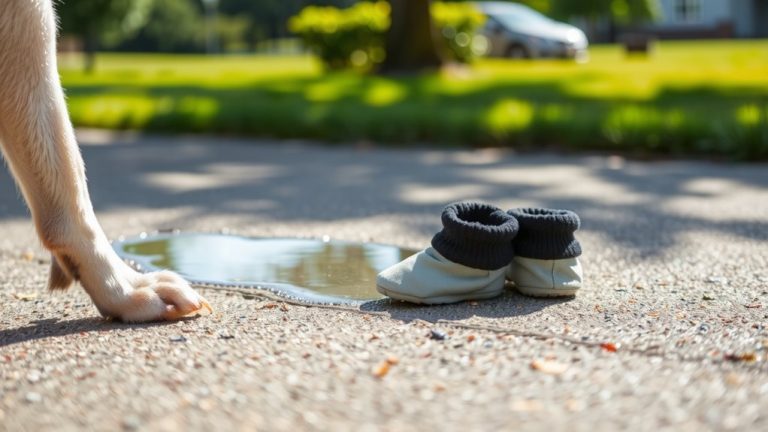
How do you help a dog with mobility limitations navigate stairs safely? Use stair alternatives like ramps, which reduce joint strain. Opt for ramps with non-slip surfaces and side rails; ideal incline should not exceed 20 degrees for safe ascent and descent. For dogs with rear limb weakness, mobility aids such as harnesses with handle supports-like the Help ‘Em Up or GingerLead-provide stability. These harnesses distribute weight evenly, reducing pressure on the spine. Install carpet runners on stairs to improve traction. Rearrange frequently used areas to ground level: place beds, water, and food bowls downstairs to minimize stair use. Choose ramp materials like aluminum or reinforced plastic for durability; portables should weigh under 10 pounds but support up to 200 pounds. These home modifications reduce fall risks and improve daily function. Dachshund owners should consider breed-specific needs when selecting a ramp, as their long backs are prone to injury-opting for a low-angled ramp with good traction can prevent strain during daily use. Best Ramps for Dachshunds offer tailored solutions that balance portability, stability, and ease of use.
When to See the Vet for Stair Anxiety
Why does your dog hesitate at the top of the stairs, trembling or refusing to move? This behavior may signal underlying physical issues, not just fear. Sudden stair anxiety often stems from pain or mobility decline. You should schedule a vet visit for a thorough pain assessment. Arthritis, hip dysplasia, or soft tissue injuries can make stairs painful. A veterinarian will evaluate joint range of motion, palpate for tenderness, and may recommend radiographs. A neurological evaluation is equally important. Conditions like degenerative myelopathy or spinal cord compression affect coordination and confidence. The vet will test reflexes, proprioception, and gait symmetry. Early diagnosis improves outcomes. Ignoring symptoms can lead to muscle atrophy or increased fall risk. Medications, physical therapy, or mobility aids may be prescribed based on findings. Do not assume it’s just age-rule out medical causes first.
On a final note
Stair anxiety in older or injured dogs requires immediate intervention. Install non-slip treads with 0.6 mm grip texture and guarantee lighting exceeds 300 lux to reduce slipping and improve visibility. Use high-value treats like freeze-dried liver to reinforce positive behavior. Deploy ramps with a 15-degree incline, made from textured aluminum or rubber. Harnesses with rear support aid mobility. Persistent hesitation may signal degenerative joint disease-consult your vet promptly.