Treating Chronic Conjunctivitis in Cats With Topical Antibiotics and Hygiene
You should use topical antibiotics like 0.5%–1% chloramphenicol to target bacterial agents such as *Chlamydia felis* and *Mycoplasma spp.*. Apply drops every 8–12 hours for consistent therapeutic levels. Use preservative-free, pH-balanced (6.5–7.8) formulations to minimize irritation. Clean eyes daily with veterinary wipes, moving from inner to outer corner. Replace contaminated bedding and use HEPA air purifiers. Proper hygiene reduces recurrence and supports treatment efficacy-further details expand on long-term management strategies.
Notable Insights
- Use topical antibiotics like chloramphenicol to target bacterial infections commonly associated with chronic conjunctivitis in cats.
- Apply medications consistently every 8–12 hours to maintain effective therapeutic levels in the eye.
- Clean the eyes daily with veterinary-approved, pH-balanced wipes to reduce discharge and prevent secondary infection.
- Identify and manage underlying causes such as FHV-1 or Chlamydia felis using PCR testing and appropriate antiviral or antibacterial treatments.
- Minimize environmental irritants with HEPA air purifiers and stress reduction to support long-term ocular health.
What Causes Chronic Conjunctivitis in Cats?
Why does your cat keep blinking excessively or squinting as if something’s bothering their eyes? Chronic conjunctivitis often stems from persistent infection or inflammation. Feline herpesvirus-1 (FHV-1) is a primary cause, leading to prolonged ocular discomfort. Once infected, your cat may experience viral shedding intermittently, especially during stress. This shedding spreads the virus to other cats and reactivates symptoms in your pet. Immune suppression, whether from FIV, FeLV, or chronic illness, increases susceptibility. Compromised immunity reduces the ability to control latent infections. Bacterial agents like Chlamydia felis and Mycoplasma spp. commonly co-infect, worsening inflammation. Environmental irritants-dust, smoke, allergens-can also perpetuate symptoms. Anatomical defects, such as entropion, mechanically irritate the cornea. Persistent squinting indicates ongoing pain or discomfort. Histopathology often reveals lymphoplasmacytic infiltration, confirming chronicity. Diagnosis requires PCR testing, Schirmer tear test, and fluorescein staining to rule out ulcers.
Choosing the Right Eye Meds for Your Cat
Your cat’s persistent eye discomfort requires targeted treatment once the underlying cause is identified. Eye sensitivity varies among felines, so selecting the right medication demands caution. Topical antibiotics like chloramphenicol (0.5%–1% solution) offer broad-spectrum coverage with minimal irritation. For viral components, idoxuridine 0.1% may be prescribed, though it requires frequent application. Medication absorption is ideal with ointments in mild cases; their longer contact time enhances bioavailability. Drops, however, penetrate faster and are better for acute inflammation. Always confirm pH compatibility-most feline eye meds range between 6.5 and 7.8 to reduce stinging. Preservative-free formulations limit allergic reactions, especially in chronic use. Avoid human medications; their tonicity often disrupts feline ocular surfaces. Your vet will match drug properties-viscosity, half-life, and solubility-to your cat’s condition. Selection isn’t one-size-fits-all-precision guarantees efficacy, safety, and consistent dosing compliance.
How to Apply Cat Eye Drops and Ointments
Though proper technique is essential, applying eye medications to cats can become routine with practice and the right approach. Begin with proper restraint: gently hold your cat’s head between your fingers, stabilizing just behind the ears to limit movement. For eye drops, tilt the head slightly upward and avoid touching the dropper to the eye. Administer one drop directly into the lower conjunctival sac. Ointments require a 1/4-inch ribbon squeezed onto the eye surface without contact. Follow medication timing strictly-most treatments require intervals of 8 to 12 hours for maximum drug concentration. Consistency maintains therapeutic levels. Positioning your body to limit escape routes increases success. Use the same location and routine daily. With repetition, even reluctant cats adapt. Immediate release formulations act within 5 minutes; sustained-release ointments last up to 6 hours. Accuracy and timing are critical for effective treatment.
Cleaning Your Cat’s Eyes: A Daily Routine
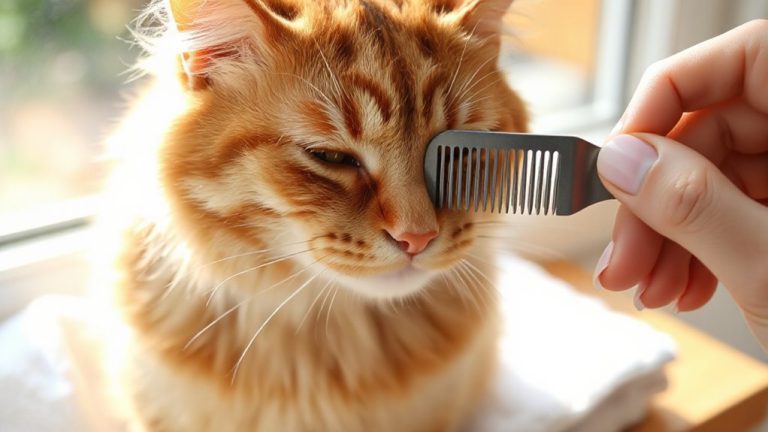
When keeping your cat’s eyes clean, consistency and proper technique are essential to prevent irritation and support treatment. Use veterinary-approved eye wipes designed for cats, which are pH-balanced and free of alcohol or fragrances. Gently wipe from the inner corner of the eye outward to remove discharge and debris. Do this daily to minimize tear staining, a common sign of chronic conjunctivitis caused by porphyrin pigments in tears. Dampen a cotton ball with sterile saline if wipes aren’t available, but avoid reuse. Limit each wipe to one pass per eye to prevent cross-contamination. Most eye wipes contain mild cleansers like benzalkonium chloride at 0.01% concentration for safe ocular use. Apply gentle pressure-never rub. Daily cleaning reduces bacterial load and supports antibiotic efficacy. Consistent hygiene improves clinical outcomes and decreases recurrence rates in treated cats.
Hygiene Habits to Prevent Recurring Eye Infections
Beyond daily eye cleaning, maintaining a hygienic environment plays a critical role in preventing recurrent conjunctivitis in cats. Regularly clean surfaces your cat contacts using veterinary-approved disinfectants-those with accelerated hydrogen peroxide are effective at neutralizing pathogens without residue. Environmental allergens like dust, pollen, and mold spores can trigger immune responses that exacerbate eye inflammation; use HEPA-filter air purifiers to reduce airborne particulates by up to 99.97% in the 0.3-micron range. Consider choosing one of the best pet air purifiers to effectively remove dander, odors, and allergens specific to household pets. Launder bedding weekly in hot water (130°F minimum) to eliminate allergen buildup. Stress management is equally essential-chronic stress suppresses immune function, increasing infection susceptibility. Provide consistent routines, vertical spaces, and pheromone diffusers (e.g., Feliway) to promote psychological stability. Minimize overcrowding and introduce new pets gradually. These targeted hygiene habits reduce reinfection risks by addressing both microbial load and systemic vulnerabilities.
Do Antibiotic Drops Work for Cat Eye Infections?
Why do some cat eye infections clear up with antibiotic drops while others show little improvement? The answer often lies in proper diagnosis and treatment duration. Antibiotic drops effectively treat bacterial conjunctivitis but fail against viral or fungal causes. Misuse can lead to antibiotic resistance, reducing future effectiveness.
| Infection Type | Responds to Antibiotics? | Typical Treatment Duration |
|---|---|---|
| Bacterial | Yes | 7–14 days |
| Viral | No | Supportive care only |
| Fungal | No | Antifungals required |
| Allergic | No | Identify trigger |
Always complete the full treatment duration, even if symptoms improve. Stopping early encourages antibiotic resistance. Dosing frequency usually ranges from 2–4 times daily, depending on the medication’s half-life and viscosity. Drops must cover the conjunctival sac uniformly. Use only veterinary-formulated products to guarantee correct pH and osmolarity for feline eyes.
When to Call the Vet: Warning Signs of Complications
How can you tell when a cat’s eye issue is worsening instead of healing? Look for increased redness, swelling, or discharge that becomes yellow-green and thick. If your cat squints constantly or avoids light, it could signal corneal ulcers-open sores on the eye’s surface that need immediate treatment. A cloudy or bluish tint to the cornea is another red flag. You should also watch for bulging of the eye or excessive tearing, both of which raise glaucoma risks. Elevated intraocular pressure in glaucoma damages the optic nerve and can cause blindness. If you notice these signs, contact your vet within 24 hours. Delaying care may worsen outcomes. Regular exams and prompt intervention reduce complications and support better recovery.
On a final note
You must treat chronic conjunctivitis with consistent hygiene and targeted antibiotics. Topical chloramphenicol or tetracycline ointments, applied every 12 hours, reduce bacterial load effectively. Administer drops at a 30-degree angle to avoid corneal touch. Clean discharge daily using sterile saline and cotton swabs, wiping from medial to lateral canthus. Poor compliance increases resistance risk. If ocular redness or squinting persists beyond ten days, bacterial culture and cytology are necessary to rule out resistant strains or underlying disease.