Teaching Your Cat to Come to a Specific Room on Cue Using Food Lures
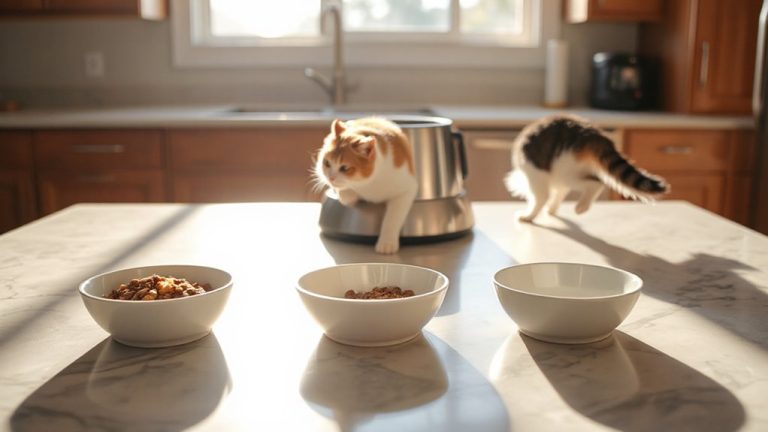
Choose a quiet room with nonslip flooring and a perch within 24 inches of the ground. Say your cue-like “kitchen”-the instant your cat enters. Deliver a ¼-inch soft treat within 1–2 seconds every time. Train during calm periods, using 3–5 minute sessions. Reinforce with high-value food initially, then shift to variable rewards. Maintain precise timing to build a reliable recall response. Consistency and immediate feedback strengthen long-term cue compliance. You’ll soon see how environmental control enhances learning speed.
Notable Insights
- Choose a quiet, low-distraction room with nonslip flooring and a secure perch to create an ideal training environment.
- Say the cue word the instant the cat enters and immediately deliver a high-value treat within 1–2 seconds.
- Train during calm times of day to maximize focus and reinforce the cue with consistent, timely rewards.
- Use food lures initially, then gradually reduce treats by transitioning to a variable reinforcement schedule.
- Introduce distractions slowly after five correct responses and maintain reliability with periodic high-value rewards.
Pick A Room And Reward To Call Your Cat To
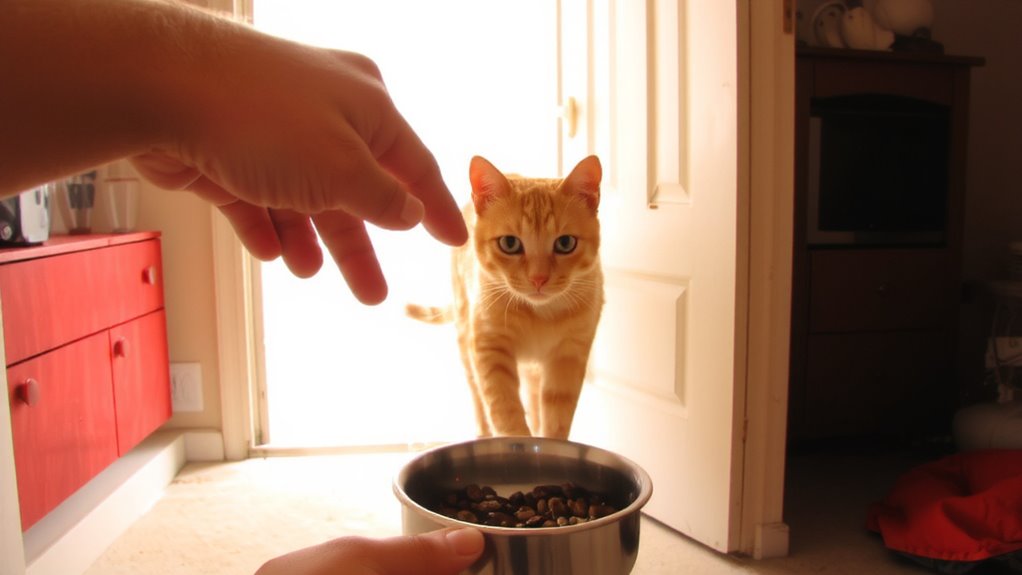
While choosing the right environment can considerably influence training success, start by selecting a quiet, distraction-free room where your cat feels safe and relaxed. Room layout plays a critical role-choose a space with minimal escape routes, such as a bedroom or small study with one entrance. Guarantee walls are clear of obstacles, allowing unobstructed movement. Flooring should provide traction; avoid slick surfaces like hardwood without a nonslip mat. Cat preferences vary, but most favor enclosed spaces with elevated observation points. Include a low shelf or perch within 24 inches of the ground for security. Use a room with consistent lighting to reduce sensory stress. Temperature should remain between 68–72°F, the ideal thermal neutral zone for domestic cats. Eliminate auditory distractions-keep noise levels below 50 decibels. This controlled environment enhances cue association by reducing environmental interference during initial training repetitions. Adding a tall cat tree can further enrich the space and support vertical territory needs.
Say The Cue And Deliver A Treat Immediately
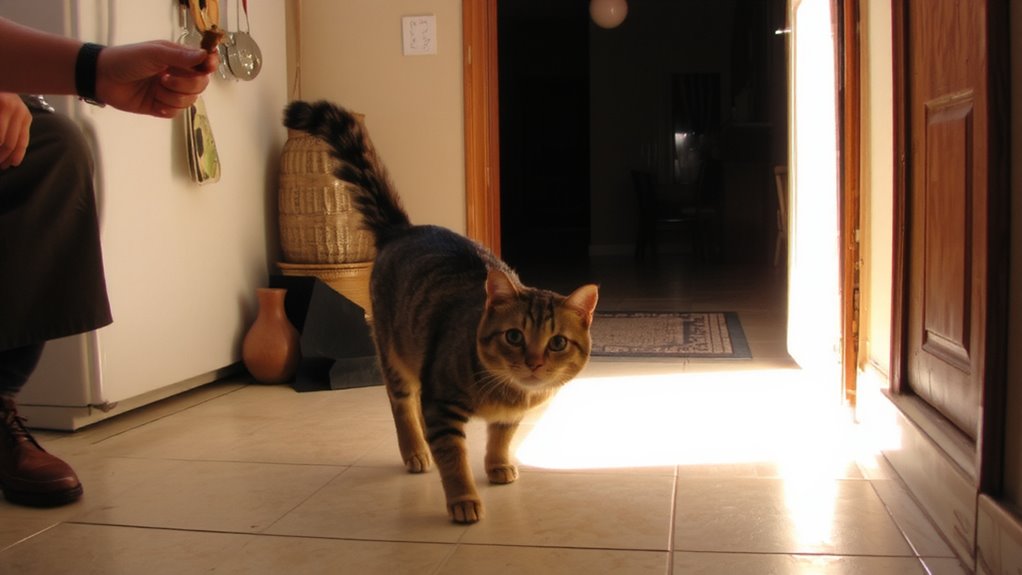
You’ve set up the ideal environment-quiet, secure, and free of distractions-so now it’s time to begin reinforcing the behavior you want. Say the cue word-such as “come” or “kitchen”-the moment your cat enters the designated room. Use positive reinforcement by delivering a small, high-value treat immediately. Immediate timing is critical: the treat must follow within one to two seconds of entry. Delays weaken association and reduce learning efficiency. Consistency strengthens signal recognition. Use the same cue each time, paired without exception with a reward. The treat should be soft, bite-sized (approximately ¼ inch), and palatable-like freeze-dried chicken. Deliver it directly from your hand to create a clear connection. Repeat this sequence five to ten times per session, holding no longer than five minutes to maintain focus. Accurate timing and repetition establish reliable stimulus-response bonds. A well-structured training routine can benefit from tools like dog training vests, which are designed to support focused, consistent learning in service animals.
Train The Call Response In Quiet Moments
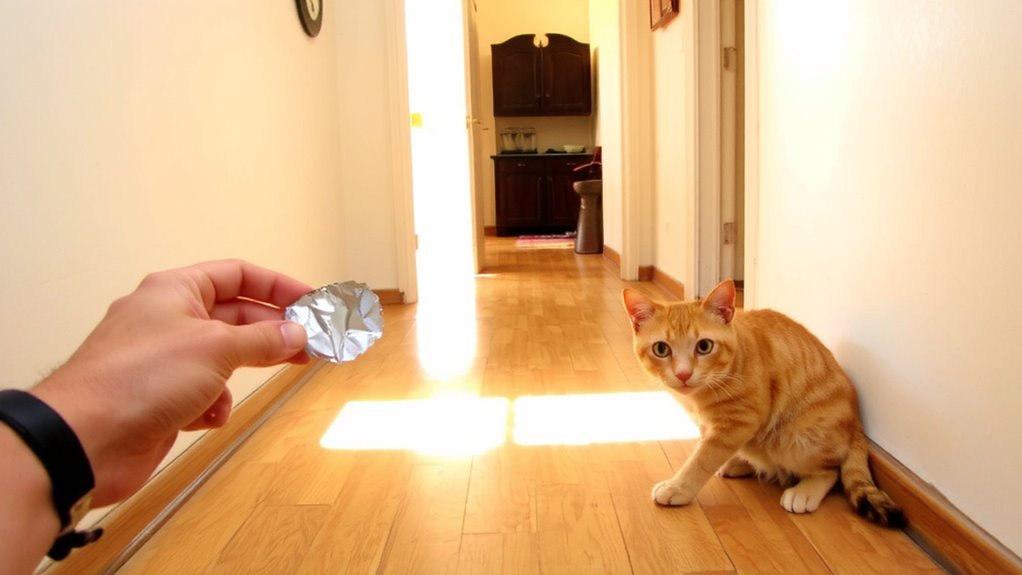
Often, the best time to reinforce your cat’s response to a recall cue is during naturally calm periods, when their attention is easier to capture. Use quiet training sessions to strengthen reliability without environmental distractions. Begin by calling your cat in low-stimulus settings, such as early morning or late evening, when activity levels are minimal. Deliver the cue clearly and consistently-use one word like “come” or “here” each time. Immediate reinforcement is critical; timing cues within 1–2 seconds of arrival guarantees accurate association. Conduct three daily sessions of 3–5 minutes to maintain focus without fatigue. Accuracy improves when stimuli are controlled, allowing your cat to link the cue with action and reward. Over time, this precision builds neural pathways similar to how repeated electrical signals strengthen circuit pathways. Quiet training establishes a baseline for performance under distraction later.
Wean Off Treats Without Losing Progress
A small percentage of cats retain flawless recall after consistent treat-based training, but most need a structured plan to maintain the behavior without constant food rewards. You can preserve progress by gradually reducing treat delivery while emphasizing timing consistency and treat variety. Begin fading treats using a scheduled ratio, not randomly. Use the following plan:
| Phase | Treat Frequency | Reinforcement Type |
|---|---|---|
| 1 | Every time | High-value treat |
| 2 | Every 2nd call | Treat variety (dry/wet) |
| 3 | Every 3rd–4th | Occasional praise + treat |
| 4 | Random intervals | Verbal praise only |
Deliver verbal markers like “good” with perfect timing consistency during reinforcement. Eventually, the cue itself becomes the conditioned reinforcer. Use treat variety in early phases to sustain motivation. Overuse of predictable patterns reduces response reliability. Stick to the schedule without reverting, ensuring steady progress.
Fix It: When Your Cat Ignores The Call
Cats may stop responding to recall cues if the reinforcement history becomes inconsistent or the motivation fails to match environmental distractions. Ignoring signals often stems from weak associative learning or inadequate reward value. Attention resistance typically emerges when prior training lacked sufficient reinforcement density. Reestablish reliability by increasing the magnitude and immediacy of rewards-use high-value treats delivered within 1–2 seconds of compliance. Implement a continuous reinforcement schedule (CRF) for five sessions to rebuild response strength. Make certain the cue is distinct, such as a unique verbal sound or clicker, presented only during training. Avoid repeating the cue; instead, reset and retry to prevent signal extinction. Reduce environmental variables temporarily to maximize focus. Reinforcement efficacy is measured by response latency-target under three seconds. Revert to initial training conditions if noncompliance persists. Precision in timing and reward consistency corrects attention resistance.
Practice The Cue With Distractions Around
Once your cat reliably responds to the recall cue in low-distraction environments, you can begin introducing controlled distractions to strengthen stimulus control. Start with mild auditory or visual stimuli, such as soft noises or movement in peripheral vision. Gradually increase distraction intensity only after consistent success-typically five correct responses in a row. Incorporate play time immediately after successful recalls to build positive reinforcement. Use toy rotation to maintain novelty and engagement, introducing a new toy every three days to prevent habituation. Conduct sessions in rooms where background activity occurs, like the living area during family gatherings, but keep the environment predictable. Limit distractions to one added variable per session. Measure progress by response latency; aim for under three seconds. Guarantee food lures remain higher in value than surrounding stimuli. Practice two to three times daily for five minutes to reinforce reliability without overfatigue.
Keep Your Cat Coming When You Call
You’ve built a reliable response in varied environments, but maintaining that consistency over time requires strategic reinforcement planning. Cat behavior thrives on predictability, so schedule random reinforcement sessions every 2–3 days. Use high-value treats like freeze-dried chicken (minimum 85% animal protein) to sustain motivation. Training consistency hinges on eliminating variable delays between cue and reward-deliver treats within 1.5 seconds of arrival. Phase in intermittent reinforcement: shift from continuous (every response rewarded) to variable-ratio schedules (every 2nd or 3rd response). This prevents behavioral extinction and mimics natural foraging. Avoid cue overuse; limit recall calls to five times daily to prevent habituation. Replace missed rewards with tactile praise to maintain cue value. Monitor response latency weekly; a drop below 3 seconds indicates strong retention. Consistent data tracking guarantees long-term reliability in cat behavior.
On a final note
You’ve taught your cat a reliable room-response cue using operant conditioning. Consistency strengthens the association between cue and reward. Start with high-value treats, delivered within one second of correct behavior. Gradually shift to intermittent reinforcement-every third or fifth response-maintaining performance. Test with low-level distractions before advancing. Success means 90% compliance over ten trials. This protocol mirrors clicker-training efficacy, proven in feline behavior studies. Your cat now responds reliably, even without food.