Rehearsing How to Carry an Immobilized Dog Down Stairs Safely Together
You need two people to safely carry an immobilized dog down stairs. One stabilizes the torso, the other supports the hindquarters, keeping the spine aligned on a rigid board. Shoulder-to-shoulder positioning with hip-width stance guarantees balance. During descent, 60% of the weight shifts to the lower carrier. Use palms-up grips, locked elbows, and bent knees. Dogs over 40 pounds require a stretcher rated for 150% of their weight. Never lift by limbs. Maintain eye contact to monitor for pain responses. Practicing this drill builds muscle memory for real emergencies.
Notable Insights
- Use two people: one stabilizes the torso, the other supports the hindquarters to maintain spinal alignment.
- Position handlers shoulder-to-shoulder, facing same direction, with the dog on a rigid board aligned to their backs.
- Keep the dog’s spine neutral and body centered on the board for balanced weight distribution during descent.
- Descend backward step-by-step, bending knees, keeping back straight, and maintaining secure grips with palms up.
- Rehearse coordination and communication to ensure synchronized movement and immediate response to signs of pain.
Why You Need Two People to Carry an Injured Dog
You shouldn’t attempt to carry an injured dog down stairs alone-two people are essential to maintain control and prevent further injury. One handler stabilizes the torso; the other supports the rear limbs, maintaining spinal alignment. A single person can’t adequately monitor dog behavior and perform proper injury assessment simultaneously. Signs of pain, like taut muscles or shallow breathing, must be observed without distraction. Two-person teams allow one to focus on stabilization while the other evaluates neurological responses, such as limb withdrawal or vocalization. Missteps increase the risk of secondary trauma, especially with suspected spinal or pelvic injuries. Proper coordination reduces load imbalance-critical on narrow, 7.5-inch-deep stair treads. Using a rigid backboard increases safety, limiting motion to less than 2 degrees during descent. Team-based transport maintains consistent speed: roughly 0.5 steps per second, minimizing jostling.
How to Position Yourself and Your Dog for Stair Transport
Positioning correctly guarantees stability during descent, especially when maneuvering through tight stairwells with limited clearance. Stand shoulder-to-shoulder with your partner, faces parallel, maintaining a hip-width stance for balance. Your dog should lie flat on a rigid board or stretcher, spine aligned with handlers’ backs to preserve body alignment. Center the dog’s mass to optimize weight distribution-approximately 60% of the load rests on the carrier at the lower end during descent. Grip the edges securely with palms upward, arms locked, elbows close. Keep your back straight and squat at the knees, not the waist. Position the stronger person at the head to manage direction. This posture reduces torque on your spine and secures smooth, controlled movement. Each step lowers incrementally, maintaining even pressure. Coordination minimizes shifts in weight distribution, preventing instability. Proper body alignment in both you and your partner decreases injury risk and increases transport efficiency.
Choose the Best Method Based on Your Dog’s Size
Size determines the safest method for transporting an injured dog down stairs. Your dog size directly influences whether you can carry them safely or need assistive equipment. For dogs under 20 pounds, a secure two-handed carry-with one arm supporting the chest and the other under the hindquarters-remains feasible. Larger dogs exceed typical human weight limits for safe stair descent, requiring alternatives. Most adults can’t safely carry more than 30–40 pounds on stairs without losing balance. Exceeding this weight limit increases injury risk for both you and your dog. For dogs over 40 pounds, use a sturdy stretcher or a rigid board with handles. Guarantee the device supports at least 150% of your dog’s weight for safety. Match the transport method precisely to dog size and strength capacity. Never attempt manual lifting when the dog’s mass compromises control or stability.
Lower an Injured Dog Down Stairs Safely
A safe descent begins with selecting the right technique for your dog’s size and condition, especially when stairs add risk. For stair safety, keep movements slow and controlled to prevent slipping or jolting. If your dog is small, cradle them close with one arm under the chest and the other supporting the hindquarters. For larger dogs, use a harness or towel sling to distribute weight evenly. Maintain eye contact to monitor dog behavior-signs of distress like panting or whining mean pause and reassess. Step down backward, heel first, to improve balance. Keep your back straight and knees bent, minimizing strain. Each step should be fully planted before descending further. Two people are ideal: one to support the front, one the rear. This method guarantees stability, reduces injury risk, and maintains alignment of the spine during transport.
Avoid These Common Carrying Mistakes
Many dog owners make critical errors when carrying injured dogs, and avoiding these mistakes can mean the difference between safe transport and further harm. Improper lifting is a leading cause of secondary injury. Never lift a dog by the arms or legs-this strains joints and spinal alignment. Always support the chest and hindquarters with both arms, keeping the spine level. An uneven balance increases risk during stair descent. Position the dog’s weight centered between carriers; if alone, use a rigid stretcher or board to maintain stability. Keep your back straight and bend at the knees to avoid personal injury. Do not rush-maintain controlled, deliberate steps. Missteps due to poor coordination often result from unbalanced loads. Use nonslip footwear and guarantee clear stair access. Even a 10-pound dog requires proper mechanics to prevent falls. Correct technique preserves both canine and human safety.
Practice These Emergency Drills Before You Need Them
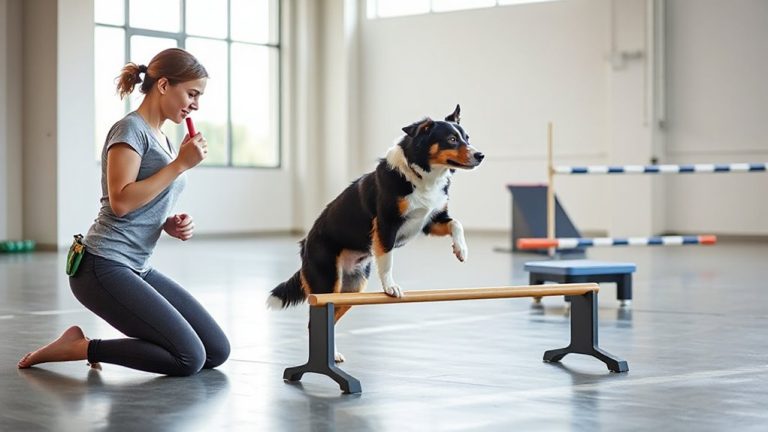
Regularly practicing emergency carrying techniques guarantees you’ll respond correctly under stress. You reduce response time and increase effectiveness through repetition. Use an emergency prepared游戏副本 to simulate real-life scenarios, including stair navigation and canine immobility. Simulation training with a weighted dummy mimicking your dog’s mass-typically 40–70 lbs for medium to large breeds-builds muscle memory. Perform drills monthly, ensuring grip placement remains stable: one arm supporting the chest, the other under the hindquarters. Maintain a 90-degree bend at the knees and engage your core to prevent injury. Test communication signals if working with a partner. Ascend and descend stairs at a controlled pace of 0.5 steps per second to mimic real emergencies. These protocols mirror search-and-rescue standards. Consistent simulation training elevates readiness. You won’t panic-you’ll perform.
On a final note
You must act decisively during an emergency. Two-person carries guarantee balanced weight distribution and reduce injury risk. Use a rigid support like a backboard for spinal protection. Position one person at the head, another at the pelvis, maintaining a 30-degree incline. Descend stairs slowly, heels first, to prevent slipping. Practice drills quarterly to maintain coordination and confidence.