What Nail and Paw Inspection Can Reveal About Your Pet’s Health
Your pet’s nails and paws reveal health clues like nutritional deficits or infections. Cracked, discolored nails may signal biotin or protein deficiency, weakening keratin structure. Red, swollen pads suggest trauma, burns from surfaces over 125°F, or embedded foreign objects. Persistent licking, pus, or brownish residue indicates yeast or bacterial invasion, often in warm, moist interdigital zones. Swelling, limping, or nail-bed separation demands evaluation-understanding these signs helps identify underlying issues early.
Notable Insights
- Cracked or discolored nails may signal nutritional deficiencies or fungal infections affecting keratin integrity.
- Red, swollen paw pads can indicate burns, embedded debris, or underlying bacterial and yeast infections.
- Persistent limping or excessive licking often reveals pain, inflammation, or early signs of nail bed infection.
- Pus, foul odor, or brownish residue between toes suggest active bacterial or fungal proliferation requiring treatment.
- Regular paw and nail inspections help detect early signs of trauma, disease, or systemic health issues.
Cracked or Discolored Nails? What They Mean?
Why are your pet’s nails cracked or discolored? A nutrition deficiency often underlies brittle, splitting nails. Insufficient biotin, zinc, or protein disrupts keratin synthesis, weakening nail structure. Deficiencies reduce tensile strength, increasing fracture risk during normal activity. Alternatively, a fungal infection may be responsible. Look for thickened, crumbly nails with yellow or green discoloration-signs consistent with dermatophytes like *Malassezia* or *Trichophyton*. These organisms degrade keratin, promoting fissures and deformation. Diagnosis requires cytology or fungal culture. Environmental humidity above 70% fosters fungal growth. Preventive care includes balanced diets meeting AAFCO standards and routine nail inspection. Trim nails every 3–4 weeks using stainless steel clippers with a 20-degree blade angle. Early detection limits complications. Address underlying causes promptly. A healthy gut microbiome supports nutrient absorption, including biotin, which can be enhanced with a high-quality probiotic for dogs.
Red, Swollen, or Bleeding Paw Pads: Common Causes
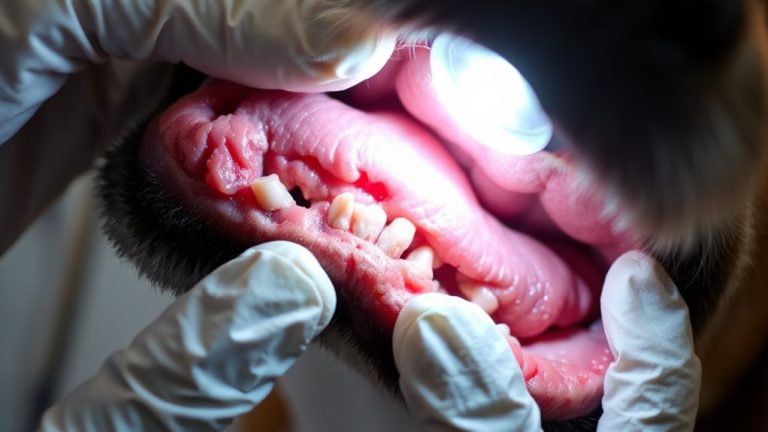
Red, swollen, or bleeding paw pads often signal underlying trauma, infection, or environmental injury. You might see swelling from embedded foreign objects like glass, thorns, or gravel trapped between toes. These cause localized inflammation, often with redness and tenderness on pressure. Heat rash develops when walking on hot pavement, leading to thermal irritation and superficial lesions. Paw pads exposed to surfaces above 125°F can sustain burns within 60 seconds. Infections from bacteria or yeast follow breaks in the skin, worsening swelling and sometimes producing pus. Allergic reactions or autoimmune conditions also manifest as pad inflammation, though less commonly. You should check for lacerations, blisters, or crusty sores. Persistent bleeding or swelling lasting over 24 hours warrants veterinary evaluation. Early identification of causes-such as foreign objects or heat rash-improves recovery outcomes greatly.
How to Examine Your Pet’s Paws Safely
Your pet’s paw health begins with regular, careful inspection. Begin in a quiet space, gently holding one paw at a time. Use a non-slip surface to prevent anxiety or injury. Examine between the toes and pads for debris, swelling, or foreign objects. Check claws during routine pet grooming to assess length and integrity. Overgrown nails can alter gait and lead to joint stress. Perform nail trimming every 3–4 weeks using sharp, species-appropriate clippers. Avoid the quick-the pink vascular core-especially in light-colored nails. Dark nails require extra caution; trim small sections to prevent bleeding. Use styptic powder as a safety measure. Inspect paw pads for cracks, blisters, or abrasions. Handle paws frequently to build tolerance. Consistent inspection supports early detection and maintenance of mobility, preventing complications related to overgrowth or trauma. Document changes for veterinary review. For optimal results, choose from the best dog nail clippers based on your pet’s size and nail thickness.
Infection Alerts: Limping, Licking, or Pus
Could something as subtle as a change in your pet’s stance signal an underlying infection? Yes-limping often indicates pain from a localized issue like a nail bed infection or deeper tissue inflammation. Excessive licking of paws is more than a grooming habit; it may point to yeast overgrowth, especially in moist, warm environments between toes. Redness, swelling, or a brownish residue suggest microbial imbalances. Pus discharge confirms bacterial or fungal invasion, requiring prompt attention. Yeast overgrowth, commonly caused by *Malassezia*, thrives in oily, humid areas and produces a musty odor. Fungal invasion, such as dermatophytosis, mimics other skin conditions but features circular lesions with crusting. These signs are clinical indicators of compromised skin barriers. Early detection through regular inspection limits spread. Note texture changes, discharge color, and behavioral shifts. Each symptom provides diagnostic value. Address moisture, debris, and microclimate to reduce reinfection risks.
When to See the Vet for Paw or Nail Issues
How soon should you act when something seems off with your pet’s paws or nails? Immediately. Persistent limping or reluctance to bear weight often signals joint pain, especially in older pets or breeds prone to arthritis. Swelling, warmth, or crepitus in the joints require diagnostic evaluation. If your pet suffers toenail trauma-such as a partial avulsion, deep fracture, or nail bed laceration-bacterial or fungal invasion is likely. These injuries cause acute pain and may lead to chronic infection. You should also seek veterinary care if you notice discharge, discoloration, or separation of the nail from the bed. Avoid delaying treatment, as unresolved issues can alter gait and increase stress on adjacent limbs. Radiographs may be needed to rule out underlying bone involvement. Early intervention improves outcomes markedly.
On a final note
Check your pet’s nails and paws monthly. Cracked or discolored nails may signal fungal infections or trauma. Red, swollen, or bleeding paw pads often indicate abrasions, burns, or allergic dermatitis. Limping, excessive licking, or pus suggests infection. Use a soft restraint if needed. Examine between toes and pad surfaces under bright light. Trim nails to within 2 mm of the quick. Persistent issues require veterinary evaluation. Early detection prevents complications.