Using a Wide-Tooth Comb to Prep a Long-Haired Dog for Professional Grooming
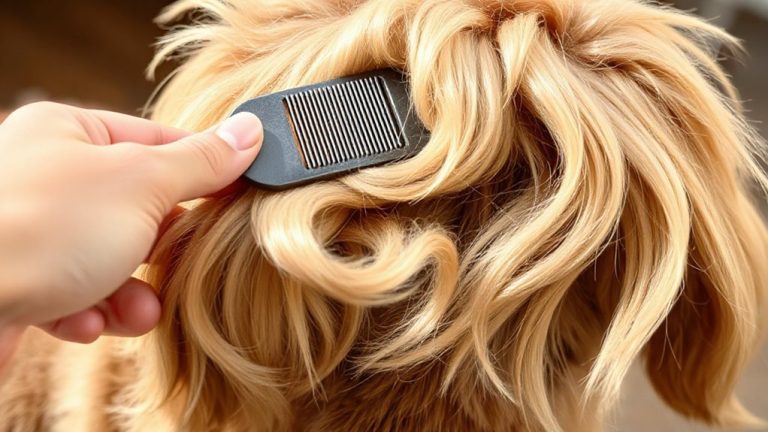
Start with a calm dog to reduce movement during detangling. Use a wide-tooth comb with 3–5 mm tine spacing to gently work through the coat. Begin at the fur tips, advancing upward in 1-inch sections. Apply light pressure and stop if resistance occurs-use detangling spray as needed. Rounded tine tips protect skin, especially in long-haired breeds. Pre-combing reduces grooming time by up to 30% and prevents mat damage. You’ll soon see how proper tool use improves overall coat condition.
Notable Insights
- Start detangling with a wide-tooth comb at the fur ends, working upward in 1-inch sections to prevent breakage.
- Use light pressure and detangling spray when resistance occurs to protect the dog’s skin and coat.
- Section the coat into 1-inch parts and secure with clips for thorough, organized combing.
- Hold the base of each section near the skin to minimize follicle tension during detangling.
- Pre-comb daily with a wide-tooth comb to reduce grooming time and prevent mats before professional sessions.
How to Detangle Your Dog With a Wide-Tooth Comb
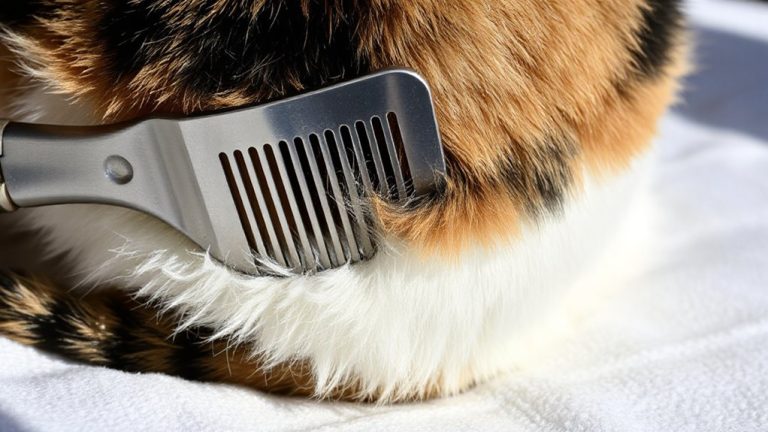
While starting the detangling process, always begin with a calm, relaxed dog to minimize stress and movement during grooming. Use a wide-tooth comb with tines spaced 3–5 mm apart to gently separate mats without pulling. Start at the ends of the fur, working upward in 1-inch sections to avoid breakage. These grooming techniques prevent skin irritation and maintain coat integrity. Apply light pressure; if resistance occurs, stop and use a detangling spray. The comb’s rounded tips protect delicate skin, making it ideal for long-haired breeds like Shih Tzus and Maltese. Effective detangling tips include consistent stroking motions and frequent comb cleaning to remove trapped hair. Never force the comb through tight knots-this causes pain and damage. Instead, hold the base of the tangle to stabilize the fur. A stainless steel comb resists rust and guarantees long-term durability. This method prepares the coat for seamless professional grooming. For best results, choose from the best dog grooming combs based on coat type and grooming needs.
How to Comb in Sections Without Hurting Your Dog
Start by dividing your dog’s coat into manageable sections using your fingers or a tail comb to part the fur down to the skin. The section technique prevents overwhelming your dog and guarantees thorough detangling. Work with strips of hair no wider than 1 inch, securing each section with a clip. This precision minimizes pulling and allows focused attention on tangles. Use gentle handling throughout-hold the base of each section near the skin to reduce tension on the follicles. Begin combing from the tip of the hair, gradually moving upward in 1-inch increments. Apply steady, light pressure with the wide-tooth comb, avoiding sudden jerks. If resistance occurs, pause and carefully work through the knot using your fingers or a detangling aid. Consistent, small strokes are more effective than forceful pulls. This method maintains coat integrity and guarantees a stress-free experience before professional grooming. For long-haired breeds, using the right dog grooming brushes can significantly improve detangling efficiency and coat health.
Wide-Tooth Comb vs. Brush: Which Should You Use?
A wide-tooth comb handles detangling with precision, especially in thick or matted coats, while a brush serves better for general coat maintenance and surface smoothing. You should use the comb as your primary detangling technique before bathing, when the coat is dry and most prone to breakage. The wide teeth-typically spaced 3 to 6 mm apart-glide through dense fur, minimizing pulling. A slick intervener or pin brush, with closer wire spacing, works best after combing to smooth the topcoat. For long-haired dogs, your grooming frequency should be daily, combining both tools: start with the comb at the skin level in 1-inch sections, then finish with a brush. Using only a brush on tangled fur risks pressing mats closer to the skin. The comb’s design allows you to detect tangles early, improving coat health and reducing shedding. Choose tools based on coat density, not preference. When selecting grooming tools, consider how important size and accessibility are for maintenance, similar to choosing best litter box for big cats based on the animal’s specific needs.
What to Do If You Find Mats
Even a single mat can lead to skin irritation, so address it immediately using the right tools and technique. Use a stainless steel wide-tooth comb to isolate the mat without pulling surrounding hair. For minor tangles, gently work through with short, back-and-forth motions to avoid breakage. If the mat is firm or close to the skin, switch to specialized mat removal tools like a dematting comb with rounded tips to reduce skin risk. Never cut directly through a mat with regular scissors-this risks serious injury. Instead, use a safety-blade tool designed for knot cutting, inserting the blade at a 15-degree angle beneath the mat, slicing parallel to the skin. Mats larger than 1 inch typically require professional handling. Regular maintenance prevents severe matting and reduces the need for invasive removal.
How Pre-Combing Helps Your Groomer
When you pre-comb your dog before a professional grooming session, you’re not just simplifying the process-you’re directly improving the efficiency and safety of the groom. Pre-combing removes surface tangles and loose undercoat, reducing the workload during the groom. This preparation enables time savings of up to 30% in brushing and drying phases. Mats and dense undercoat increase friction on the groomer’s tools, accelerating blade wear and requiring more frequent replacements. By eliminating these issues beforehand, you extend tool life and maintain ideal cutting performance. Stress reduction occurs for both the dog and groomer-fewer tugs and pulls mean calmer behavior. A smooth coat allows consistent shearing, minimizing the risk of accidental skin contact. Less time spent detangling reduces exposure to heat stress from dryers. You’re not just maintaining coat health-you’re enhancing procedural precision, lowering operational strain, and supporting a safer, more predictable grooming environment.
Why Your Long-Haired Dog Needs a Wide-Tooth Comb
Why struggle with painful tugs when a simple tool can prevent coat damage and stress? You need a wide-tooth comb for effective tangle prevention and peak coat health. Its teeth, spaced 3–5 mm apart, glide through dense fur without pulling. Unlike brushes, it detangles without breaking or thinning hair. Start at the ends, working upward in 1-inch sections to catch matting early. The stainless steel or smooth plastic teeth reduce static and resist corrosion. A 7–9 inch comb suits most long-haired breeds. Regular use removes loose undercoat, debris, and distributes natural oils. It’s a precise diagnostic tool-catching knots invisible to the eye. Professional groomers recommend daily combing pre-appointment. This prep saves time, reduces shaving risks, and guarantees a smoother trim. You’re not just grooming-you’re maintaining structural integrity of the coat. Invest in a quality comb. Your dog’s comfort and coat health depend on it.
On a final note
You should use a wide-tooth comb to detangle your long-haired dog before grooming. It separates knots without damaging hair or skin. Teeth spaced 2–4 mm apart glide through thick coats, reducing breakage. Unlike brushes, which pull tightly, combs lift debris gently. Pre-combing cuts grooming time by up to 30%. Mats hide beneath surface fur; catching them early prevents surgical removal. A steel, fine-polished comb guarantees durability and smooth passage. This step guarantees a clean, efficient, professional trim.