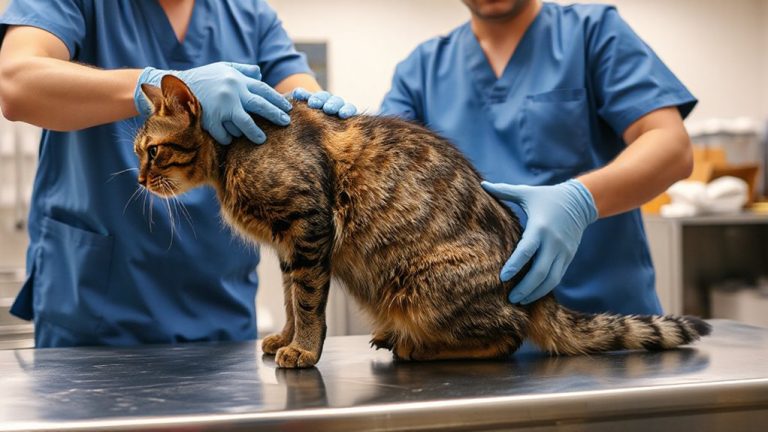
Training Your Cat to Accept a New Baby or Pet With Gradual Introduction
Watch for signs of stress like hiding, litter box changes, or excessive grooming. Begin preparations early by maintaining your cat’s routine and using baby gates to create safe zones. Swap scents with bedding or cloth wipes every 24 hours, introducing only one new scent per day. Use 36-inch barriers for 5–10 minute visual sessions twice daily. Progress to supervised meetings only after neutral responses, keeping the new pet or baby 6–8 feet away. Reward calm behavior immediately with treats. Consistency reduces redirected aggression. A structured, phased approach aligns with feline social dynamics-further refinements can enhance success.
Notable Insights
- Begin preparations before the baby or pet arrives by gradually introducing associated sounds and scents.
- Use scent swapping with bedding or cloths to familiarize your cat with the newcomer over 24-hour intervals.
- Allow visual exposure through barriers like baby gates for 5–10 minutes twice daily in neutral spaces.
- Maintain your cat’s routine and provide safe zones, high perches, and escape routes to reduce stress.
- Progress to supervised in-person meetings only after the cat shows no fear or aggression during visual introductions.
Spot Early Signs of Cat Stress
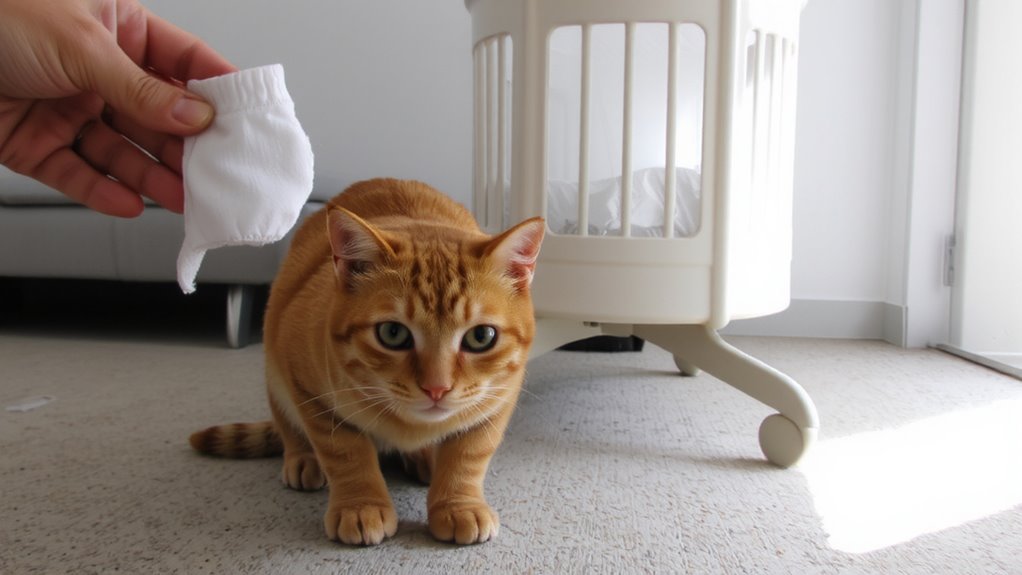
How do you know when your cat’s calm exterior masks inner tension? Subtle shifts in behavior often signal stress before visible agitation occurs. Litter box changes are a primary indicator-urination outside the box or inconsistent usage may reflect anxiety. Normal elimination patterns shift when stress alters routine; even a single missed day is statistically significant. Hiding behavior increases during environmental shifts. Cats retreat to enclosed spaces, reducing visibility by up to 70% in recorded studies. This withdrawal is a self-protective mechanism, triggered when perceived threats exceed coping thresholds. Observe duration and frequency: hiding longer than four hours or repeated concealment in novel locations indicates distress. Monitor for appetite reduction, excessive grooming, or vocalization changes. Early detection allows timely intervention. These behavioral markers-litter box changes and hiding behavior-are reliable, quantifiable signs. Track them systematically. Intervention at this stage prevents escalation, ensuring smoother adaptation when life changes occur.
Prepare Your Cat for a New Pet

While introducing a new pet into a household with a cat, success depends on controlled exposure and environmental management. Begin by designating separate zones using baby gates or closed doors to limit initial contact. Use positive reinforcement to reward calm behavior-offer treats, praise, or affection when your cat remains relaxed near the new pet’s sounds. Interactive play with wand toys or laser pointers for 10–15 minutes twice daily reduces redirected aggression and builds confidence. Rotate shared objects like bedding only after both animals show neutral responses in proximity trials. Maintain consistent routines to minimize stress-induced territorial marking. Introduce auditory cues-recordings of the new pet’s sounds-played at low volume for 15-minute intervals, increasing over 5–7 days. Monitor pupil dilation, tail flicking, or ear position to assess stress levels. Each session should last no more than 20 minutes to prevent overstimulation. Gradual acclimation increases long-term cohabitation success.
Swap Scents Before the First Meeting
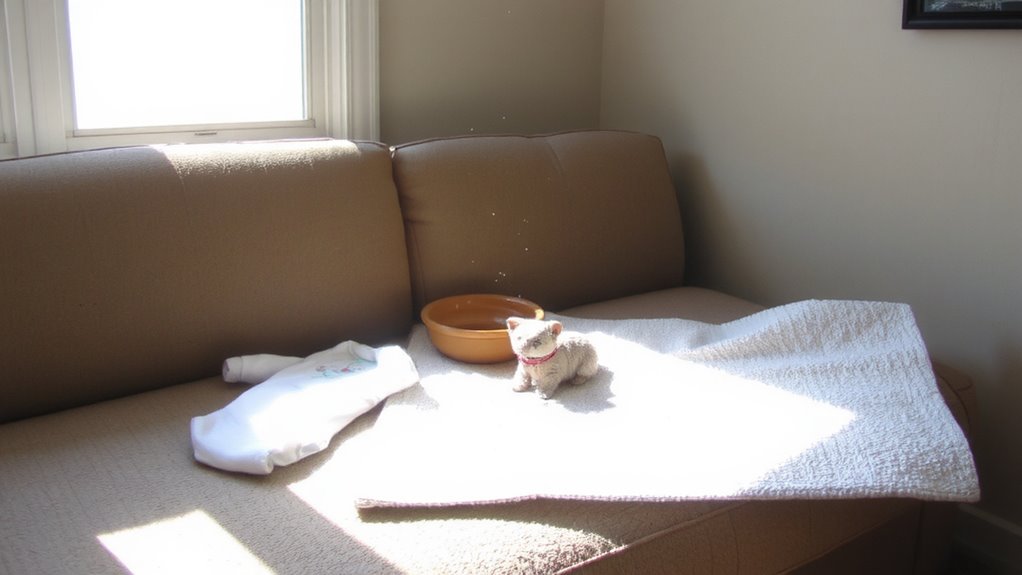
Start the introduction process by exchanging scents between your cat and the new baby or pet before they physically meet. Scent swapping reduces territorial stress and supports familiarity building through non-threatening sensory input. Use a soft cloth to gently rub each individual-focus on cheeks and behind ears where scent glands concentrate. Allow 24-hour exposure per item to maximize olfactory recognition.
| Method | Application Time |
|---|---|
| Cloth rub | 2–3 minutes |
| Shared blanket | 12–24 hours |
| Toy rotation | 6–8 hours |
| Pillowcase transfer | 24 hours |
| Scented collar | 4–6 hours |
Rotate scented items every 24 hours to maintain freshness. Introduce no more than one new scent source daily to prevent sensory overload. This controlled exposure guarantees a stable environment while promoting neural habituation. Scent swapping bridges social gaps without direct confrontation, laying a foundation for future coexistence. Do not rush the process-adequate familiarity building prevents aggression and supports long-term adjustment.
Let Them See Each Other Safely
Once your cat has been exposed to the newcomer’s scent, you can begin visual introductions using a barrier that guarantees physical separation while allowing clear line of sight. Use visual barriers like baby gates, exercise pens, or tall transparent dividers to create controlled environments. The barrier must be tall enough-minimum 36 inches-to prevent jumping over, and sturdy enough to resist displacement. Position the barrier in a neutral area, avoiding proximity to food, water, or litter zones. Allow 5–10 minute sessions of safe viewing, twice daily. Monitor your cat’s body language: flattened ears or tail flicking indicate stress; relaxed posture suggests tolerance. Maintain distance of at least 4 feet between parties during viewing. Make certain the baby or pet remains calm and motionless to minimize overstimulation. Consistent, brief exposures under these controlled conditions condition non-threatening associations. Repeat daily until no signs of aggression or fear appear. Avoid forcing prolonged exposure. A space-saving option like an exercise pen can be ideal for creating a temporary, secure viewing zone in smaller living areas.
Supervise First In-Person Meetings
If your cat shows no signs of aggression or fear during visual introductions, you can proceed to supervised in-person meetings. Always use safety barriers like baby gates or leashes initially. Monitor body language cues closely-flattened ears, puffed fur, or hissing indicate stress. Maintain control by keeping the new pet or baby at a safe distance, typically 6–8 feet. Sessions should last 5–10 minutes, twice daily. Use a harness rated for at least 25 lbs if direct handling is needed. Never leave them unattended during early meetings. Below are key indicators to guide your assessment:
| Behavior | Meaning | Action |
|---|---|---|
| Tail twitching | Irritation | Increase distance |
| Slow blinking | Calmness | Maintain proximity |
| Crouching low | Fear | End session |
| Ears forward | Curiosity | Allow observation |
| Raised hackles | Anxiety | Use safety barrier |
Reward Calm Reactions Immediately
You’ll get the best results by reinforcing calm behavior the moment it happens. Positive reinforcement strengthens desired responses in cats. Deliver immediate rewards-such as treats, praise, or gentle petting-within one to two seconds of calm reactions. This precise timing guarantees accurate behavioral association. Use high-value treats like freeze-dried chicken, approximately 1/4-inch cubes, to maximize motivation. Administer one treat per calm instance to prevent overfeeding. Clicker training can enhance accuracy; the click sound marks the exact moment of calmness, followed by a treat. Conduct sessions during low-stress interactions, limiting each to three to five minutes. Repeat consistently across ten to fifteen exposures. Immediate rewards increase the likelihood of repeat behavior by up to 70%. This method leverages operant conditioning, forming reliable behavioral patterns without coercion. Stay observant and responsive.
Stick to the Same Routine
Consistency in daily scheduling supports your cat’s emotional stability, especially when new stimuli like a baby or pet arrive. Maintaining fixed feeding time each day regulates your cat’s internal clock, reducing anxiety. Cats thrive on predictability; even a 15-minute deviation can trigger stress behaviors like hiding or overgrooming. Schedule meals at the same times daily-ideally before baby naps or pet activity peaks. Preserve established play sessions to reinforce security. Conduct two 10- to 15-minute interactive play periods per day using wand toys to simulate hunting, depleting energy and boosting confidence. Disruptions in play sessions correlate with increased aggression and territorial marking. Use automated feeders with precise 24-hour timers to guarantee feeding time accuracy, even during baby care routines. Keep lighting, noise levels, and room access constant during these routines. Environmental consistency stabilizes cortisol levels. Follow this structured approach for at least four weeks post-introduction to guarantee long-term behavioral adaptation. For reliable meal scheduling, consider models highlighted in reviews of the best timed pet feeders.
On a final note
You must remain consistent and patient throughout the introduction process. Each step builds on the last, ensuring your cat adjusts without prolonged stress. Monitor behavior closely-signs like hiding or aggression indicate setbacks. Maintain routines to provide stability. Use positive reinforcement: treats and praise after calm interactions strengthen desired responses. Proper timing-10- to 15-minute supervised sessions-prevents overexposure. Success is measured in gradual progress, not immediate acceptance.