How to Use Positive Reinforcement to Encourage Litter Box Consistency
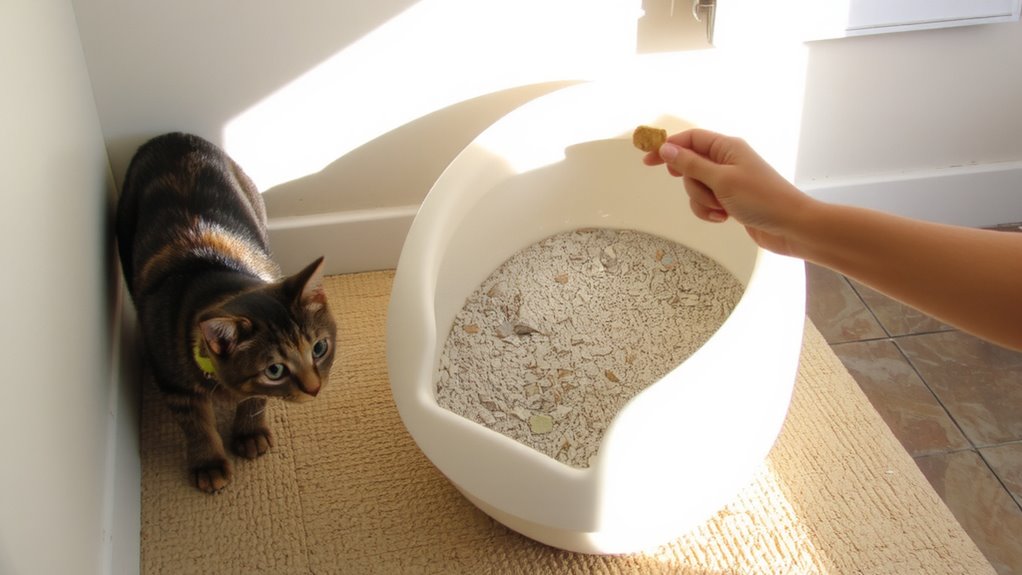
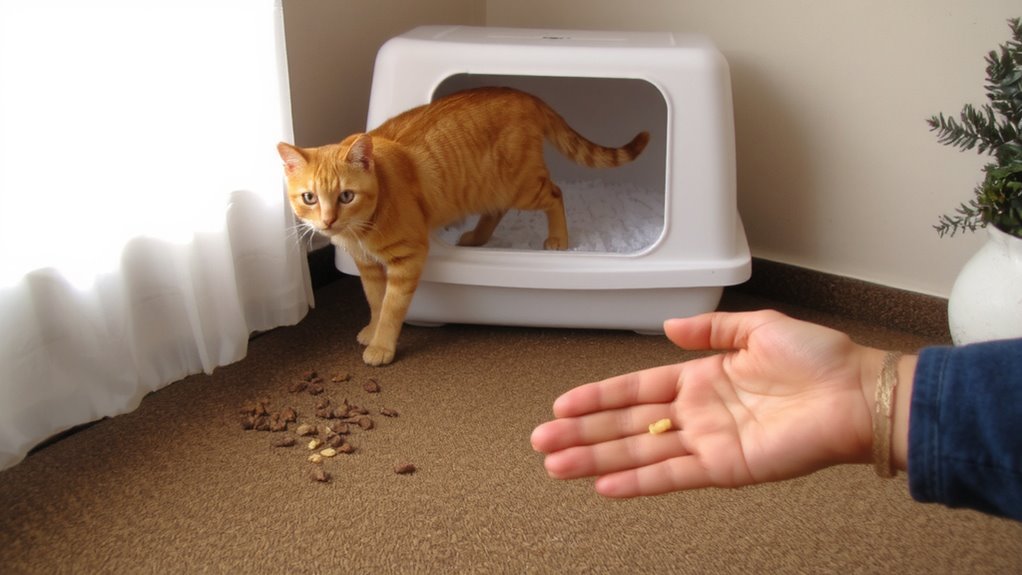
Use positive reinforcement immediately after your cat uses the litter box to strengthen the behavior-reward connection. Offer a small, soft treat or brief play session within 0–3 seconds for maximum effectiveness. Pair verbal praise consistently with rewards. Repeat every time during initial training, then shift to intermittent reinforcement. Choose unscented, clumping litter at 1.5–2 inches deep and scoop twice daily. Guarantee the box is quiet, accessible, and one per cat plus one extra. Immediate, consistent rewards build reliable habits-discover how to adjust when progress stalls.
Notable Insights
- Reward your cat immediately after litter box use with treats, play, or praise to strengthen the behavior.
- Use clicker training or a verbal marker within 0–3 seconds of exiting the box for maximum effectiveness.
- Choose high-value, individualized rewards like soft treats or short play sessions to increase motivation.
- Reinforce every correct use during initial training, then shift to intermittent reinforcement once behavior is consistent.
- Maintain a clean, accessible litter box and support training with a stable routine and stress-reducing measures.
Why Cats Avoid the Litter Box
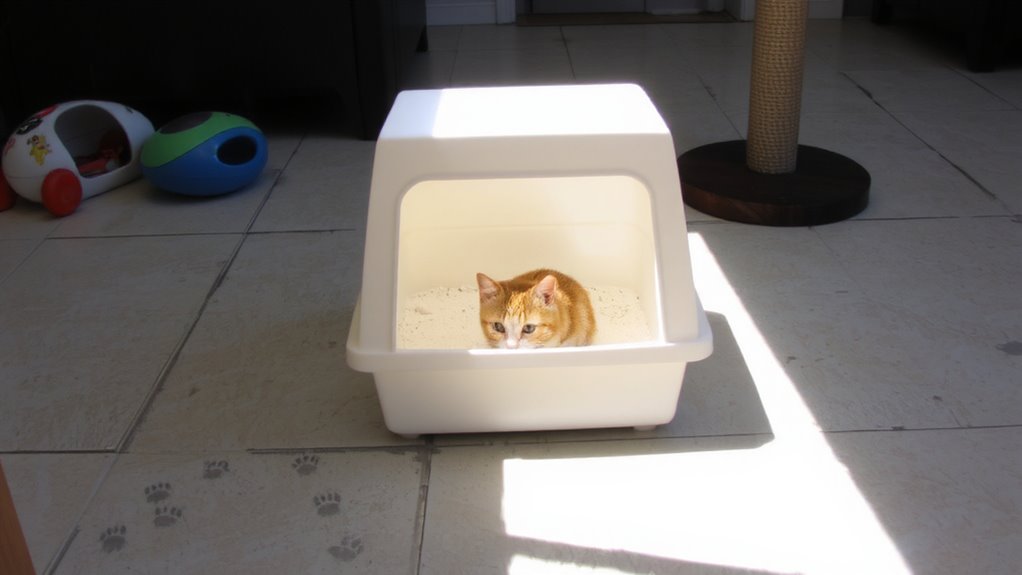
Why does your cat suddenly avoid the litter box? Medical issues are a primary cause. Conditions like urinary tract infections, kidney disease, or arthritis can make elimination painful, leading your cat to associate the box with discomfort. A veterinary exam, including urinalysis and blood work, is essential to rule out pathology. Stress triggers are another key factor. Changes in routine, new pets, or household disruptions elevate cortisol levels, altering litter habits. Cats are sensitive to environmental shifts-even subtle ones like new cleaning products. These triggers can lead to avoidance behaviors within 48 hours of exposure. Litter box aversion isn’t defiance; it’s communication. Identifying underlying medical issues and mitigating stress triggers promptly improves compliance. Use pheromone diffusers (Feliway®) to reduce anxiety. Monitor behavior closely. Early intervention prevents habit formation. Address both physiological and psychological causes systematically for effective resolution. Choosing the right best cat litter boxes can significantly reduce litter box avoidance by accommodating your cat’s preferences for cleanliness, space, and ease of access.
Choose the Right Litter Box and Location
Size matters when selecting a litter box-your cat needs room to move. Choose a box that accommodates your cat’s size preference: ideally 1.5 times their body length. Enclosed boxes offer privacy but may trap odors, discouraging use. Place the box in a quiet, low-traffic area with stable footing, away from loud appliances. Guarantee easy access for older or arthritic cats by selecting low-entry designs. Litter material plays a key role; most cats prefer unscented, clumping clay or silica-based litter with a depth of 1.5–2 inches. Avoid liners or hoods if your cat shows avoidance. For large breeds like Maine Coons, choosing best litter boxes for Maine Coon cats ensures comfort and long-term use.
| Feature | Recommendation | Reason |
|---|---|---|
| Box Length | 1.5 × cat’s body length | Allows full turn and digging |
| Litter Depth | 1.5–2 inches | Supports natural digging behavior |
| Location | Quiet, accessible area | Reduces stress and avoidance |
| Litter Material | Unscented, clumping | Matches natural texture preference |
Fix Accidents Without Punishment
How do you respond when your cat misses the litter box? Clean the accident immediately using an enzymatic cleaner to eliminate odors that could attract repeat incidents. Avoid ammonia-based products, as they mimic urine and may worsen the problem. Maintain strict litter box cleanliness by scooping waste at least twice daily and changing litter completely every 7–10 days. A dirty box deters use and increases stress. Place multiple boxes in multi-cat households-one per cat, plus one extra. Guarantee boxes are large enough (minimum 1.5 times your cat’s length) and have low entry points. Stress reduction is critical; sudden changes in routine, noise, or household dynamics can trigger avoidance. Use pheromone diffusers like Feliway to ease anxiety. Never punish your cat-this heightens stress and damages trust. Consistency and a clean, calm environment support reliable litter box use. For tough stains and lingering odors, consider a dog urine enzyme cleaner specifically formulated to break down organic matter at the molecular level.
Reward Your Cat Right After Success
You can strengthen your cat’s litter box habits by delivering a reward the moment they finish using it. Immediate reinforcement increases the likelihood of repeat behavior. Use verbal praise in a calm, consistent tone right after elimination. Follow with playtime after to further reinforce success. Timing is critical-delays reduce associative learning. Below are key reinforcement methods and their effectiveness:
| Method | Timing Window | Effectiveness (Scale 1–10) |
|---|---|---|
| Verbal praise | 0–5 seconds | 8 |
| Playtime after | 5–10 seconds | 9 |
| Clicker + play | 0–3 seconds | 10 |
| Delayed treat | >30 seconds | 3 |
Playtime after engages natural behaviors, improving habit retention. Verbal praise works best when paired with immediate, predictable consequences. Reinforce every correct use during training. Consistency guarantees operant conditioning remains effective. Over time, reduce frequency gradually to maintain behavior without dependency.
Reward Litter Box Use With Treats and Affection
A well-timed treat and brief affection session can substantially reinforce proper litter box use. Treat timing is critical-deliver the reward within 1–2 seconds of exiting the litter box to create a clear associative link. Use small, palatable treats (no more than 1–2 calories each) to avoid excessive caloric intake; consider freeze-dried chicken pieces or commercially formulated bite-sized cat treats (approximately 0.25 oz per treat). Affection frequency should be consistent but brief: 10–15 seconds of gentle petting focused on the head and neck maximizes positive reinforcement without overstimulation. Avoid prolonged interaction, which may distract from the targeted behavior. Immediate, predictable rewards strengthen operant conditioning, increasing the likelihood of consistent litter box use. Pair verbal praise (“Good job!”) with each reward to enhance stimulus clarity. This structured approach guarantees your cat associates litter box success with positive outcomes.
Keep a Routine That Supports Litter Box Success
Consistently maintaining a predictable daily schedule greatly enhances litter box reliability. A fixed feeding schedule guarantees digestive regularity, prompting consistent elimination patterns. Feed your cat at the same times daily-ideally morning and evening-to align waste production with predictable intervals. This timing allows you to monitor bathroom habits and reinforce success promptly. Pair play timing with these meals; engage your cat in 10–15 minutes of activity immediately after eating. This stimulates bowel movement and increases the likelihood of post-meal litter box use. Conduct play sessions at consistent hours to establish circadian cues. Avoid sudden changes in routine, as disruptions impair behavioral conditioning. Environmental predictability supports neural reinforcement of desired habits. A stable routine-tied directly to feeding schedule and play timing-optimizes litter box conditioning by aligning physiological signals with learned behavior, increasing compliance through repetition and biological alignment.
Fix When Rewards Don’t Work
Why do some rewards fail to shape litter box behavior despite perfect timing and routine? Behavioral triggers like stress, territorial changes, or litter texture aversion can override positive reinforcement. Even well-timed treats won’t work if your cat associates the box with discomfort. Rule out health issues first-urinary tract infections, arthritis, or gastrointestinal pain commonly cause avoidance. A vet exam can confirm or eliminate medical causes. If health is clear, analyze the environment. Is the box near a loud appliance? Did you recently switch litter brands? Scented litter or a covered box may repel sensitive cats. Use unscented, clumping silica or paper-based litter in a quiet, accessible location. Guarantee one box per cat, plus one extra. Adjust for mobility: low-entry boxes help arthritic cats. Consistency matters, but only when underlying triggers are resolved.
On a final note
Consistency is key to litter box training. Reward your cat immediately after correct use-within seconds-to create a strong behavioral link. Use high-value treats like freeze-dried chicken or tuna flakes, offering no more than 10 calories per reward to avoid overfeeding. Combine verbal praise with physical affection only if your cat responds positively. Perform daily scooping and full litter changes weekly, using unscented clumping litter to 2–3 inches depth. If avoidance persists, consult a vet to rule out urinary tract issues.