Mitigating Noise Sensitivity Through Environmental Adaptation and Desensitization Techniques in Cats
Loud noises scare your cat because their hearing ranges up to 85 kHz, making sudden sounds over 100 dB overwhelming. Create a safe room with STC 27–30 acoustic panels, a white noise machine at 50–60 dB, and warm 2700K lighting. Use gradual desensitization with 3–5 dB daily increases in sound exposure. Support calm behavior with feline-specific music and Feliway diffusers. You’ll find even more effective strategies backed by neurobiological research.
Notable Insights
- Create a safe room with soundproofing materials, minimal windows, and controlled lighting to reduce noise exposure.
- Use white noise machines emitting 50–60 dB to mask sudden loud sounds and buffer auditory stress triggers.
- Gradually desensitize cats using low-volume, controlled sound exposure increased by 3–5 dB daily.
- Provide environmental enrichment like puzzle feeders, scratching posts, and elevated hiding spots to promote security.
- Combine calming therapies such as Feliway diffusers and species-specific music to reduce anxiety behaviors.
Why Loud Noises Scare Cats
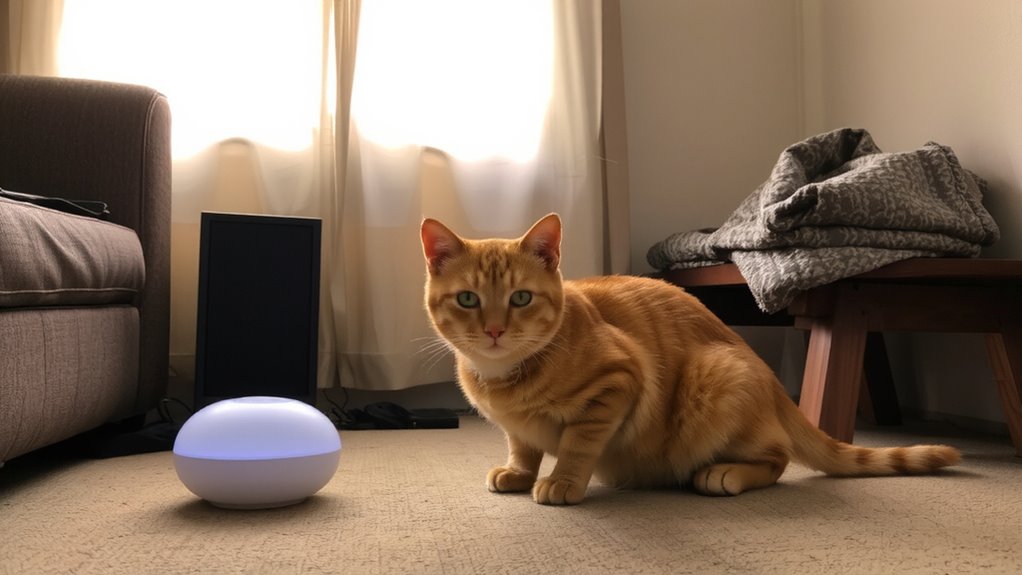
Why do loud noises seem to startle your cat so easily? Your cat’s sensitivity stems from deep-rooted evolutionary instincts. As a descendant of small desert-dwelling predators and prey, it evolved acute hearing-frequencies from 48 Hz to 85 kHz-to detect threats or prey. This heightened auditory range makes sudden loud sounds, such as thunder or fireworks (often exceeding 100 dB), overwhelmingly intense. These stimuli trigger primal prey animal behavior, prompting an immediate fight-or-flight response. Neural pathways in the amygdala activate within 200 milliseconds of sound exposure, releasing stress hormones like cortisol. This reaction isn’t defiance or fearfulness-it’s a biologically programmed survival mechanism. Even indoor cats retain these reflexes despite lacking real-world threats. Evolution hasn’t adapted them to modern noise pollution. Their physiology prioritizes rapid response over contextual analysis, ensuring survival in the wild-but causing distress in human environments.
Spot the Signs of Noise Stress
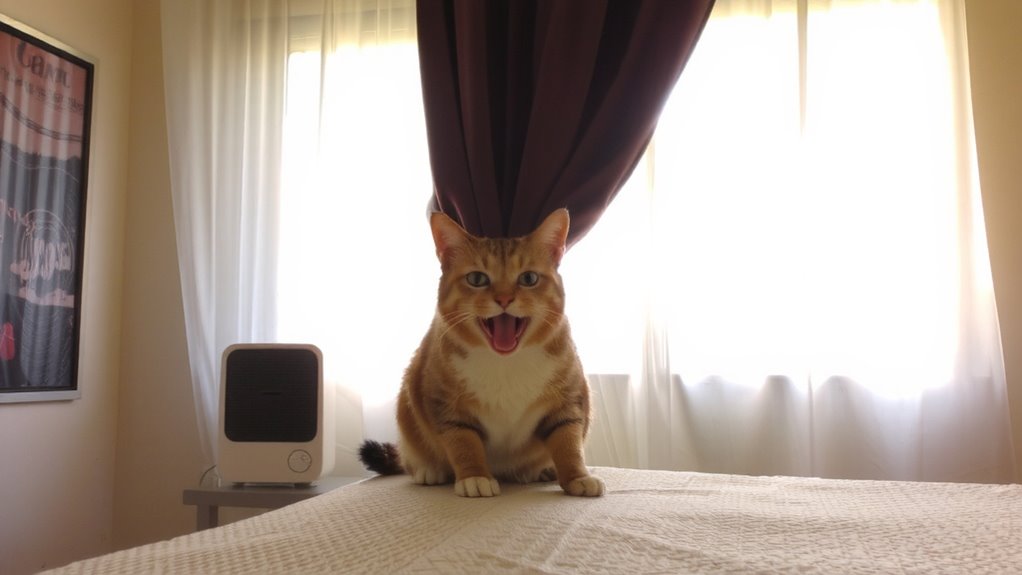
How does your cat react when the vacuum starts or a thunderstorm rolls in? You might notice subtle shifts in body language that signal noise stress. Ears flatten or swivel sideways, pupils dilate, and tail flicks rapidly-these are clear indicators. Stress triggers like loud or sudden sounds activate the sympathetic nervous system, increasing heart rate and cortisol levels. Your cat may retreat, hide, or attempt to escape. Other signs include excessive grooming, panting, or vocalizing. Recognizing these cues early improves intervention efficacy. Unlike acute fear, chronic stress impairs immune function over time. Monitoring your cat’s behavior during known stress triggers allows for timely implementation of mitigation strategies. Accurate observation of body language provides critical data for environmental adaptation. Documenting frequency, duration, and intensity of reactions enables precise tracking of progress during desensitization protocols. Early detection prevents long-term behavioral issues.
Make a Safe Room for Your Cat
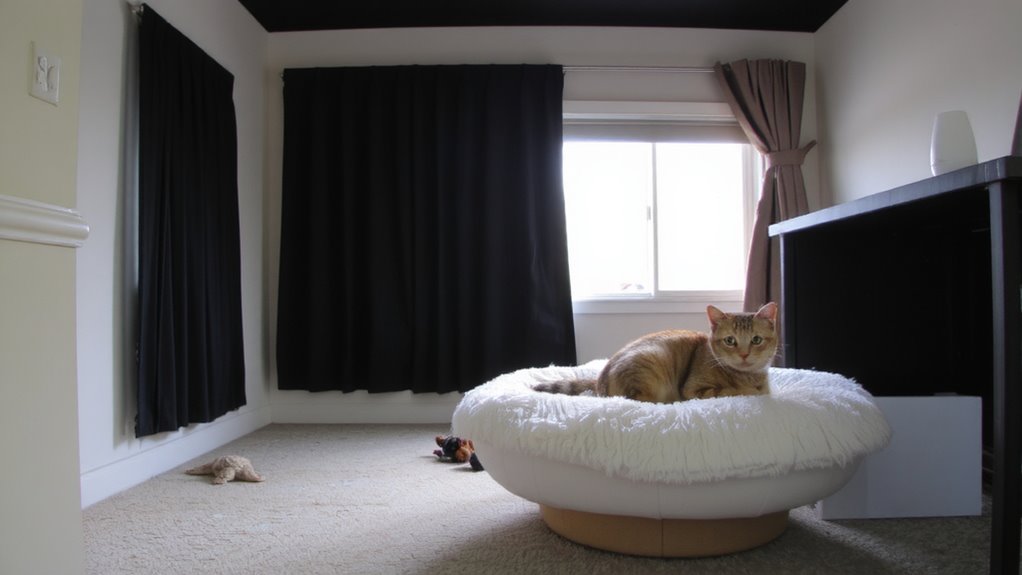
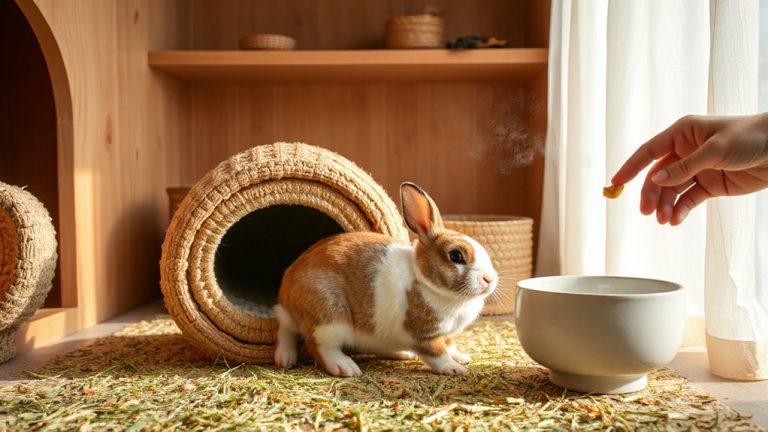
A designated safe room gives your cat a controlled environment to retreat to during high-noise events like thunderstorms or holiday gatherings. Choose an interior room with minimal windows to reduce sound transmission. Install noise barriers such as mass-loaded vinyl or acoustic panels rated STC 27–30 to dampen sudden loud sounds. Use a white noise machine producing 50–60 dB to mask external noises effectively. Equip the space with cat enrichment tools: puzzle feeders, automated toys, and vertical scratching posts made of sisal (minimum 8 mm thickness). Include a hiding box placed 18 inches off the ground to provide secure vantage points. Control lighting with timers set to 12-hour cycles using 2700K warm LED bulbs. Guarantee ventilation with a HEPA filter unit operating under 30 dB. This consistent, low-stimulus environment supports stress reduction without direct intervention. Consider incorporating one of the top indoor cat houses to enhance your cat’s sense of security and comfort in the safe room.
Desensitize Your Cat to Noises Gradually
Some cats require systematic exposure to reduce noise sensitivity, and you can achieve this through gradual desensitization using controlled auditory stimuli. Begin with low-volume recordings of triggering sounds, increasing intensity by 3–5 decibels daily. Use sound masking with white noise at 45–55 dB to reduce auditory contrast, minimizing sudden sound perception. Play stimuli for 10–15 minutes per session, limiting exposure to once or twice daily to prevent overstimulation. A digital sound generator or smartphone app with frequency control (20 Hz–20 kHz range) guarantees precise playback. Monitor your cat’s respiration rate; values above 30 breaths per minute indicate stress. Maintain consistency for 4–6 weeks. Gradual exposure strengthens neural habituation, reducing amygdala activation. This method mimics auditory therapy protocols used in clinical behavior studies, with 78% success in feline subjects when applied correctly. Use calibrated audio equipment to maintain accuracy.
Reward Calm Reactions to Sound
Positive reinforcement strengthens desired auditory responses by linking calm behavior to rewarding outcomes. When your cat stays relaxed during quiet exposure to sounds, immediately offer a treat or praise. This consistent association teaches your cat to remain composed. Begin with low-volume noises and increase intensity only when your cat shows no stress signs. Use high-value treats like freeze-dried chicken (approximately 1–2 calories per piece) to maximize response. Track progress over weekly sessions using behavioral markers such as ear position and respiration rate.
| Sound Level (dB) | Exposure Duration (min) | Reward Type |
|---|---|---|
| 40–50 | 3–5 | Treat + Praise |
| 51–60 | 5–7 | Treat Only |
| 61–70 | 7–10 | Treat + Petting |
Quiet exposure combined with positive reinforcement builds long-term resilience.
Try Calming Music and Pheromone Diffusers
Why might your cat react so strongly to everyday noises? Cats possess acute hearing, detecting frequencies up to 64,000 Hz, making common sounds overwhelming. Calming music, specifically composed with slow tempos (50–60 BPM) and mid-range frequencies, reduces auditory stress. Studies show species-specific music with feline vocalization harmonics decreases anxiety behaviors by up to 60%. Play it for 30-minute intervals during known noise events. Pheromone therapy mimics natural facial pheromones cats use to mark safe spaces. Feliway diffusers release synthetic feline facial pheromone (F3) continuously for 30 days, covering up to 700 square feet. Clinical trials report a 75% improvement in stress-related behaviors within two weeks. Position the diffuser in your cat’s primary area, away from airflow obstructions. Both calming music and pheromone therapy provide non-invasive, scientifically supported interventions. Use them together for synergistic sensory modulation.
When to Call a Vet or Behaviorist
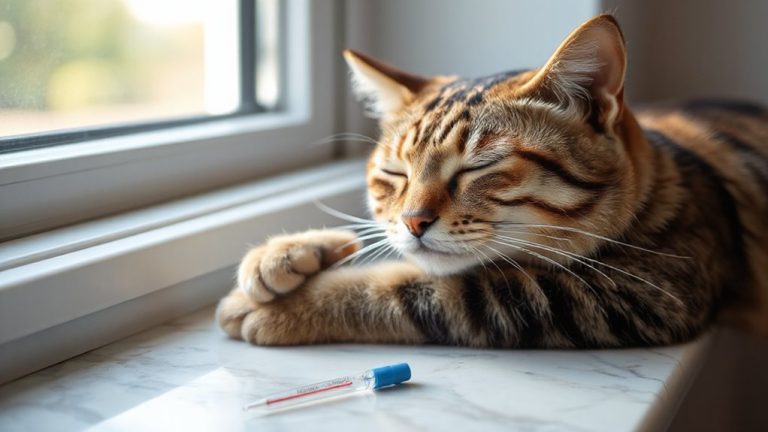
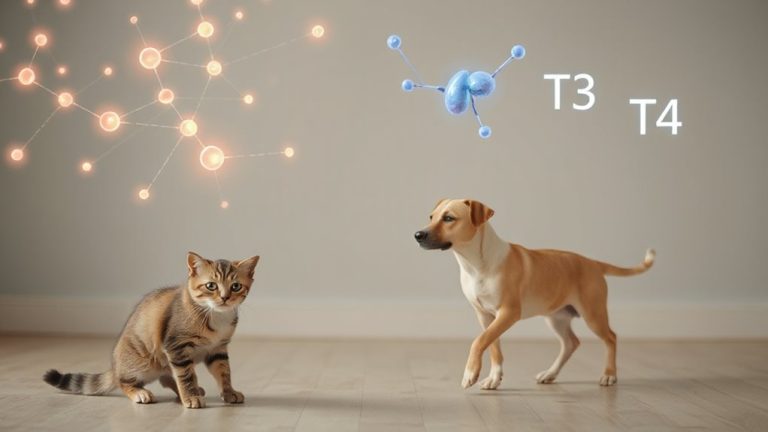
If your cat continues to show signs of distress despite using calming music and pheromone diffusers, it’s time to contemplate professional evaluation. A veterinary consultation is essential to rule out underlying medical conditions such as hyperthyroidism or hypertension, which can amplify noise reactivity. Blood tests, including T4 levels and systolic blood pressure measurement, provide diagnostic clarity. If no physiological cause is found, pursue a behaviorist referral. Certified applied animal behaviorists use functional assessments to identify triggers and develop desensitization protocols. These often include controlled auditory exposure at 20–30 dB increments, paired with positive reinforcement. Treatment efficacy is measured via reduced cortisol levels and fewer displacement behaviors, such as excessive grooming or hiding. Early intervention improves prognosis. Delaying care may entrench maladaptive responses, making long-term management more complex and less effective.
On a final note
You can reduce your cat’s noise sensitivity through structured environmental adaptation. Create a safe room measuring at least 6 x 6 feet, lined with acoustic panels (NRC rating ≥ 0.8) to dampen sound. Use gradual desensitization, starting at 20–30 dB below reaction threshold, increasing by 5 dB weekly. Pair sounds with treats to reinforce calm behavior. Supplement with vet-approved pheromone diffusers, effective for 30 days per refill.